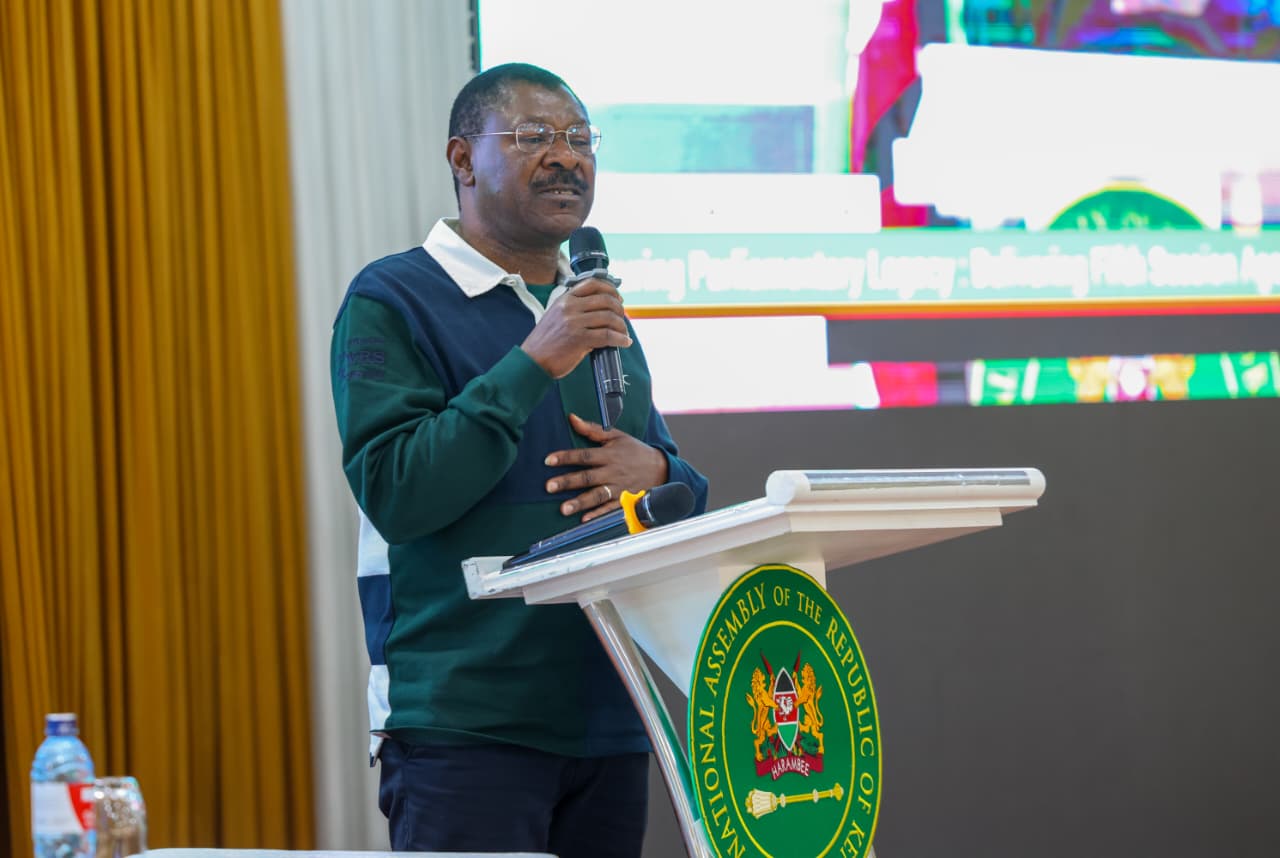
National Assembly Speaker Moses Wetang’ula has accused sections of the media of misrepresenting his recent remarks on parliamentary attrition, clarifying that he did not predict that half of sitting Members of Parliament would fail to return to the House after the next General Election.
In a statement, Wetang’ula said his comments were taken out of context and wrongly portrayed as a personal forecast, when in fact he was referencing findings from an independent actuarial assessment based on historical trends in parliamentary turnover.
“The media picked the information and twisted it wrongly. I did not tell members that half will not come back,” Wetang’ula said.
According to the Speaker, the assessment—conducted by professional actuaries—shows that historically, nearly half of Members of Parliament fail to retain their seats from one election to the next.
Projections for the current 13th Parliament indicate that as many as 56 per cent of MPs may not return after the next polls, a figure he stressed was purely statistical and not his opinion.
Wetang’ula was responding to widespread media reports following his remarks during the 2026 National Assembly Legislative Retreat held on Monday, where he urged lawmakers to prioritise pension planning.
He warned that many MPs exit Parliament with significantly reduced incomes, making life after public office difficult.
He reiterated the same position on Wednesday during TV47’s Daily Report segment, The Insight, hosted by Debarl Inea.
The Speaker said all legislators are required to contribute to the parliamentary pension scheme to safeguard their financial stability after leaving office.
He cautioned that MPs who serve only one term are not eligible for parliamentary pensions, as pension rules require at least two terms of service and attainment of the age of 45 before benefits can be accessed.
“If you leave Parliament after one term, Parliament will tell you it was a pleasure meeting you, here is your contribution to the pension which does not amount to a pension and off you go,” he said.
Wetang’ula noted that high attrition rates are not unprecedented, recalling past parliaments where electoral outcomes were even more severe.
“I’ve been in Parliament for quite some time. There was a parliament where only 30 per cent came back; 70 per cent were voted out. That is the nature of electoral contests; you win, you lose,” he said.
He added that his remarks were intended to motivate, not discourage, MPs—particularly first-term and younger legislators—to strengthen engagement with constituents and prepare early for re-election.
“I was actually energising my members by telling them: they are saying 56 per cent may not come back. Let it not be you,” Wetang’ula said, urging MPs to “up your game, pull up your socks, run like never before and get ready to come back.”
The Speaker expressed concern that young former MPs often struggle to reintegrate into the job market after leaving office, warning that early exits from Parliament can carry serious social and economic consequences.
“For young MPs, those are five years thrown away if you are not properly planned,” he said.
Wetang’ula reiterated that his message was advisory and protective in nature, aimed at safeguarding lawmakers’ political futures and personal welfare, rather than predicting electoral outcomes.
“I was counselling my members, especially the young ones,” he said, maintaining that his remarks were misunderstood when reported as definitive statements on who would lose their seats.