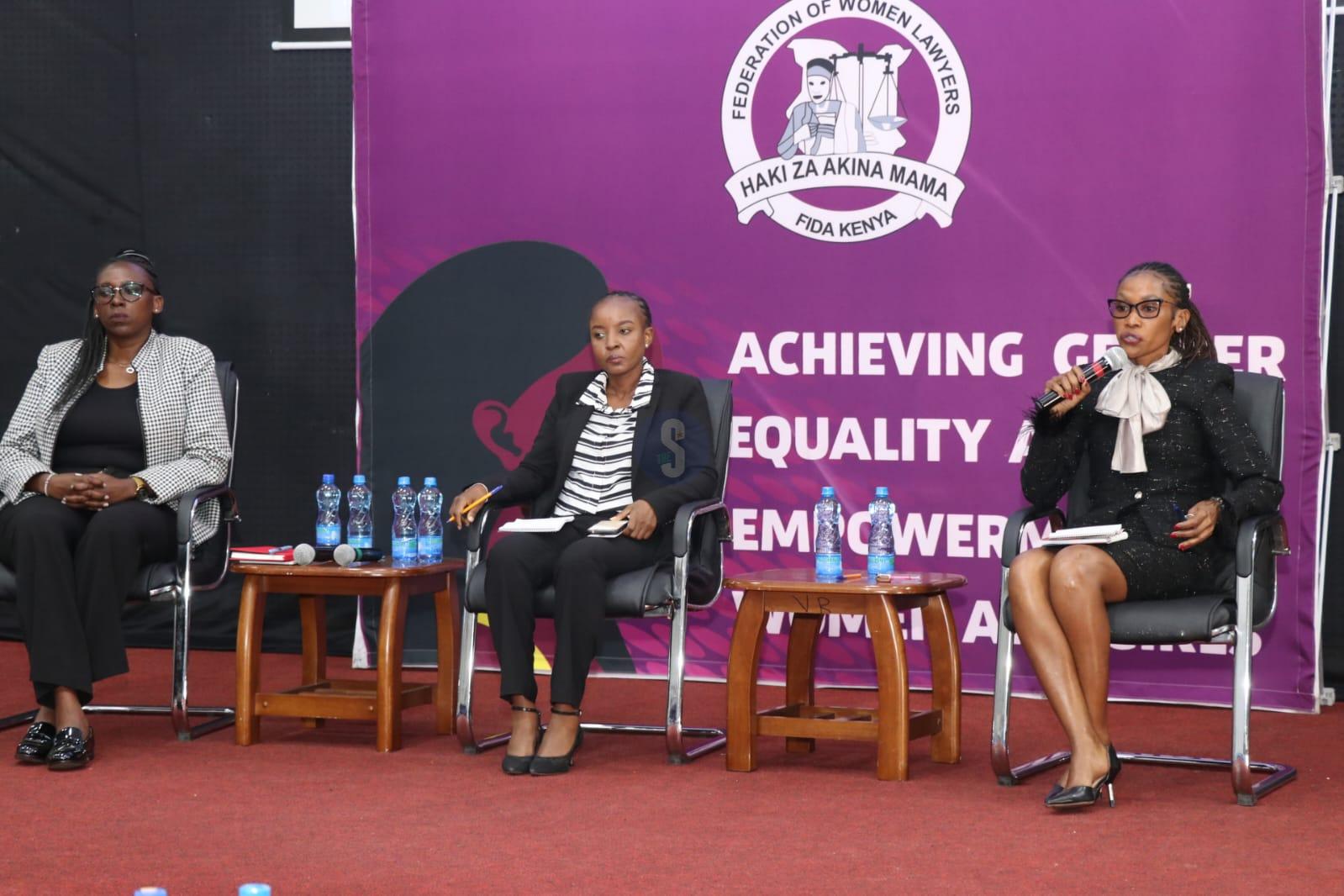
The Law Society of Kenya 2026–2028 council elections entered a critical phase marked by a vice presidential debate on Thursday.
In a significant departure from tradition—where the spotlight typically remains fixed on presidential candidates—this year’s election cycle has elevated the vice chair’s role, signalling a shift toward a more collaborative and policy-driven council.
The primary goal was to elevate the discourse on gender equality and the elimination of all forms of violence against women while providing members with an opportunity to witness leadership in action before the March 2026 polls.
The event, held at Daystar University's Nairobi campus, saw the three contesters—Debora Ajwang, Teresia Wavinya and Elizabeth Wangui—share their visions with the legal fraternity and the public.
The three aspirants are members of Fida Kenya.
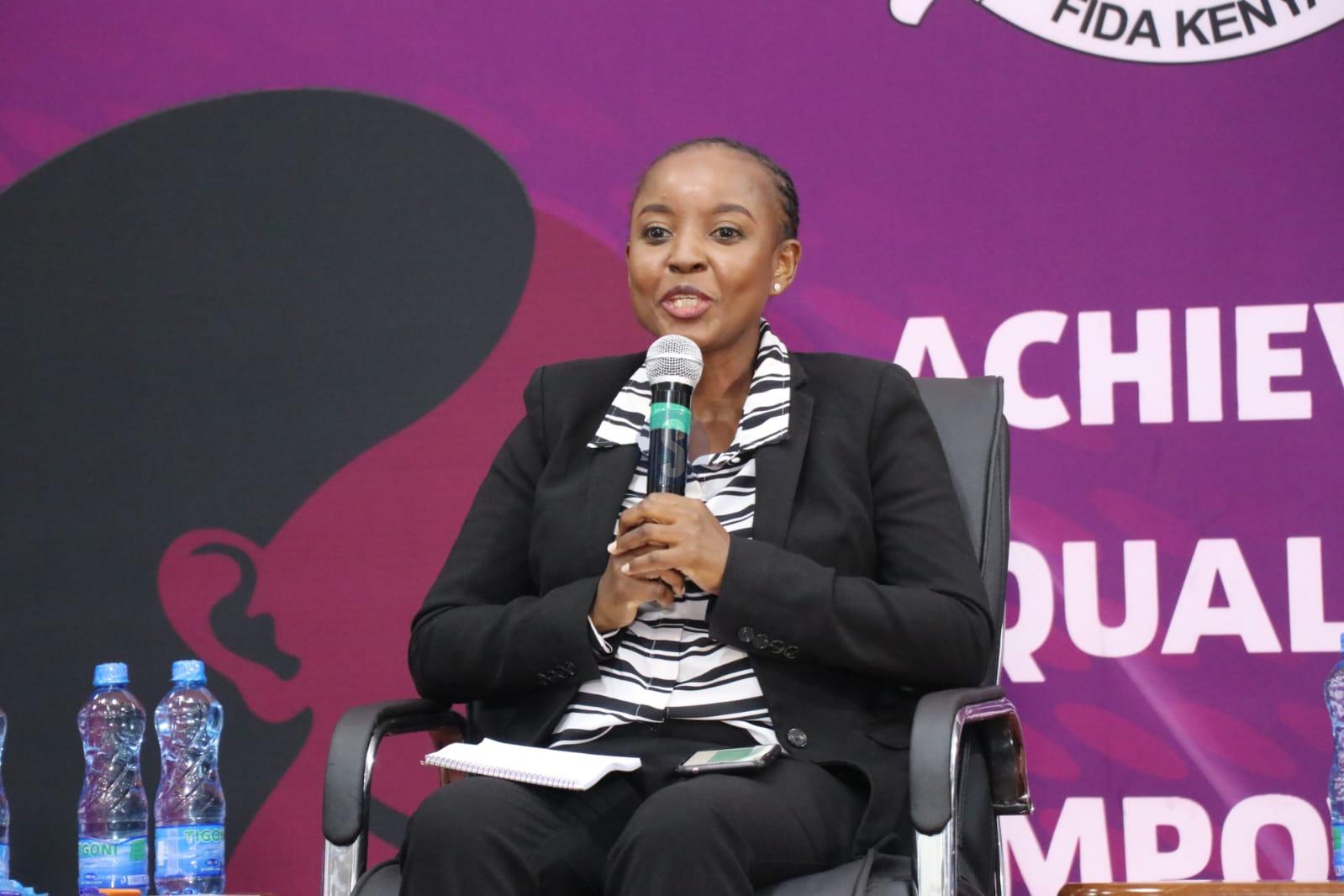
The debate opened with a question on the practical application of feminist leadership.
Wavinya, a current council member, emphasised that her leadership would move beyond rhetoric to tangible institutional reform.
"As a current council member, we have been able to push for inclusivity of female appointments in boards," Wavinya noted.
She argued that this momentum must be decentralised to the branch levels, ensuring that women at the grassroots are not just observers but active participants in decision-making. Wavinya further addressed the "systematic bias" within the profession, calling for the active protection of vulnerable young lawyers.
She pointedly critiqued the slow implementation of the 2019 Sexual Harassment and Anti-Bullying Policy.

"It is high time we sum up awareness with training and encourage trust... ensuring confidentiality to protect whistleblowers from retaliation," she asserted.
With 19 years of legal practice, Ajwang positioned herself as the "governance" candidate.
Having served on both the Young Lawyers and the CBD committees, Ajwang pointed out that the challenges facing women advocates—such as maternity leave and career progression—must be institutionalised through robust HR policies.
Her most striking remarks targeted the culture of "digital hostility" within the legal fraternity.
"We have our own members bullying fellow members and even judicial officers," Ajwang observed, calling for a unified front to tackle cyberbullying.
Ajwang’s pitch centred on structured mentorship.
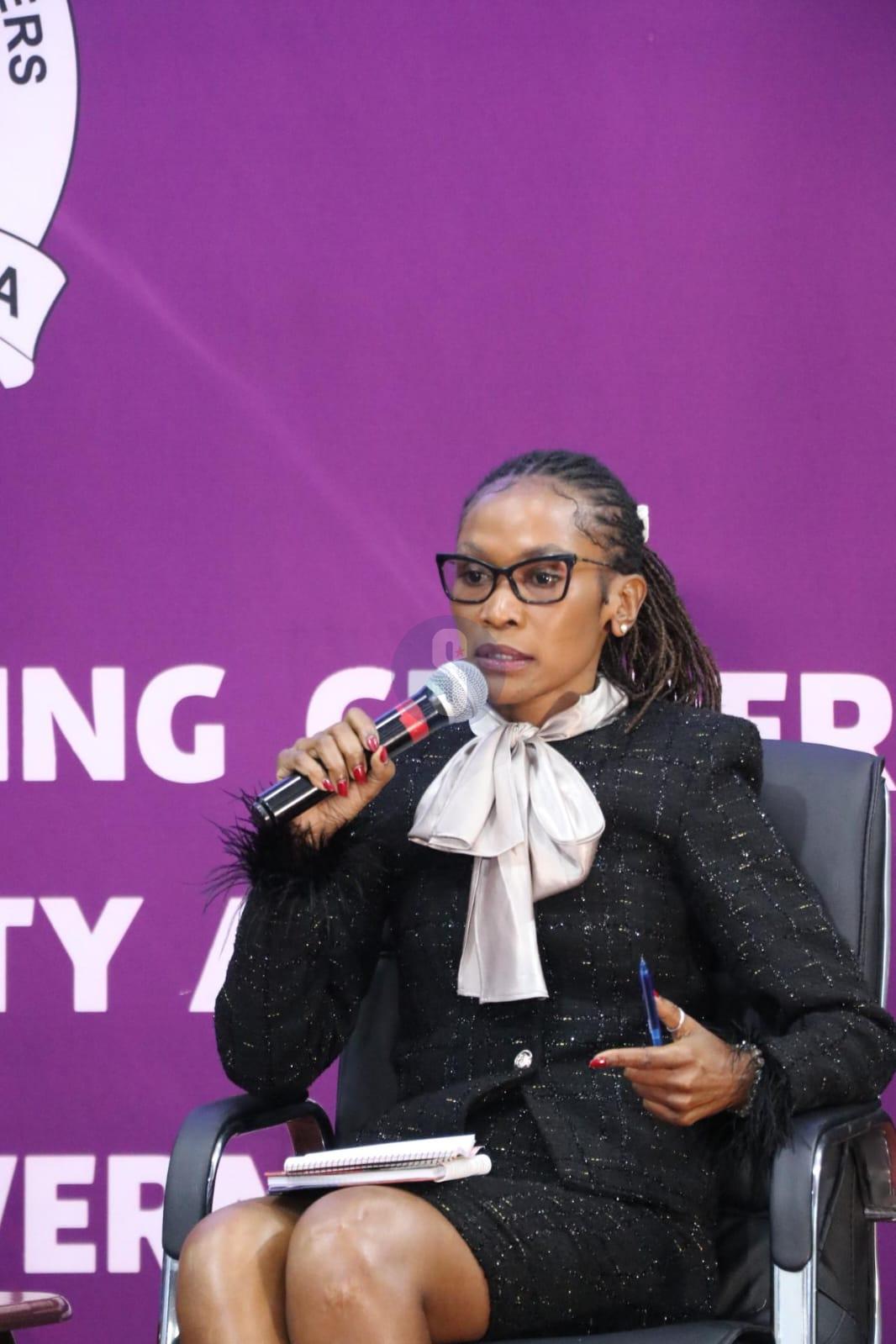
Drawing from her own career growth, she proposed a dedicated pool of women lawyers to guide younger colleagues through the labyrinth of the legal profession.
"I want young upcoming lawyers not to fear being in leadership roles," she said.
While the three candidates agreed that women's representation in the profession has increased numerically, they were unanimous in their assessment of the "implementation gap."
The consensus among Wanjeri and her co-contestants was that while policies exist on paper, the working environment remains unfriendly to the specific needs of female practitioners.
The debate highlighted three critical thematic areas: women’s rights and freedoms-moving from legal theory to workplace reality; cyberbullying - protecting the digital presence and dignity of female candidates and gender-responsive activities that enhance women’s participation and ascension to national leadership.
To combat this, she proposed a framework of structured mentorship.

Drawing from her own professional journey, Ajwang envisions a dedicated pool of experienced women lawyers to guide younger colleagues through the complexities of the profession, ensuring that the next generation does not fear stepping into leadership roles.
Through the debate, a consensus emerged among the aspirants that while the legal profession does not lack for female representation in terms of numbers, the implementation of supportive policies remains disappointingly low.
The debate underscored that the upcoming election is not merely a choice of personnel, but a referendum on how the Law Society will modernise its internal culture.
By focusing on the Vice Presidency as a vital policy driver rather than a ceremonial post, the LSK is redefining its governance ahead of the March polls, challenging its members to vote for a council that will actively protect and empower all its practitioners.