The government has reaffirmed its commitment to the effective implementation of the National Dialogue Committee (Nadco) recommendations, Head of Public Service Felix Koskei said.
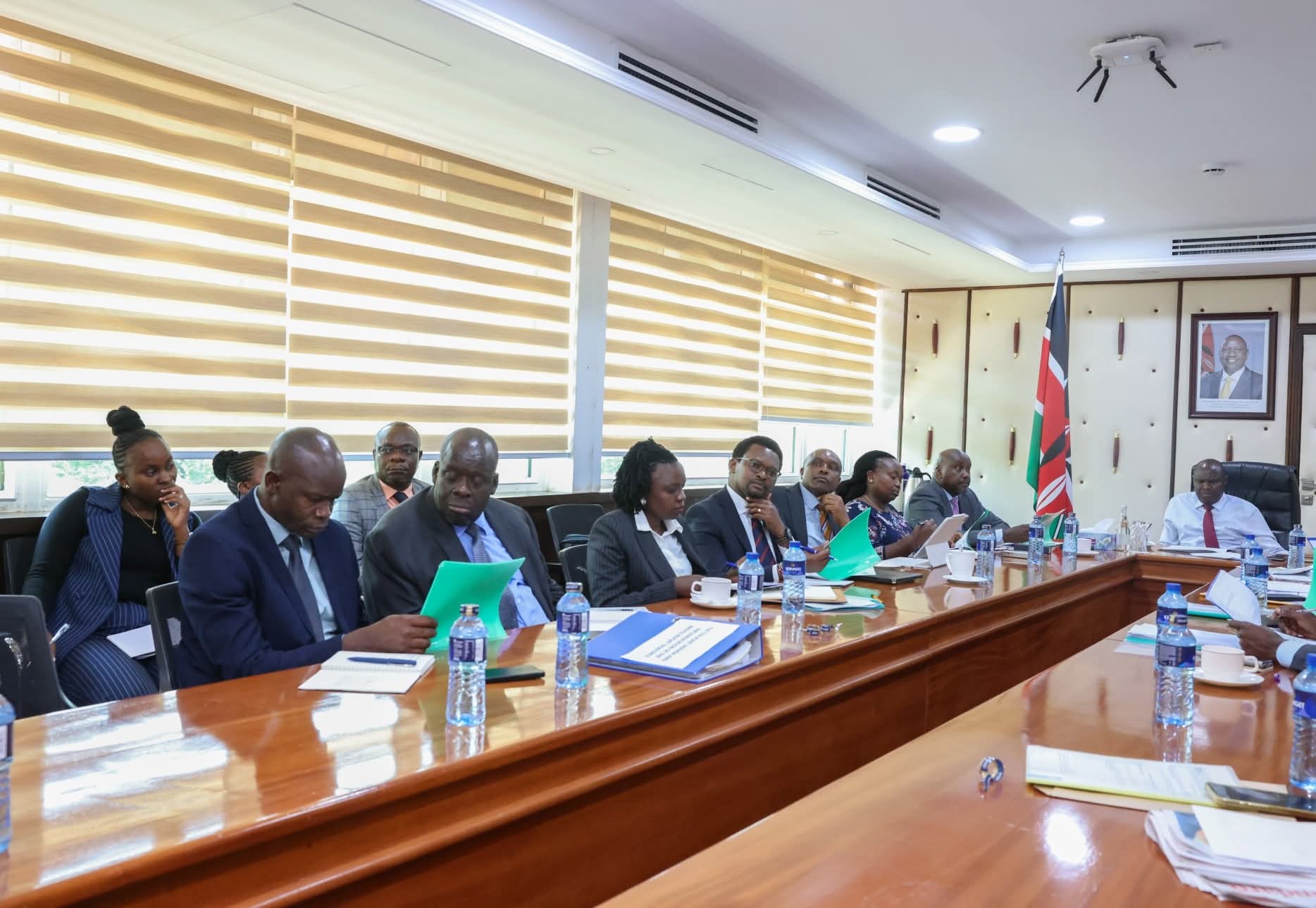
Speaking during a meeting with members of the committee overseeing the implementation of the 10-point agenda (COIN10) and the Nadco report, Koskei described the framework as central to the country’s transformation, with a focus on good governance, economic growth, and national unity.
“Nadco remains a critical framework for Kenya’s transformation,” Koskei said.
“Its recommendations address key areas including governance, the economy, and social cohesion. The government is committed to ensuring their effective implementation in a coordinated and inclusive manner.”
Koskei announced that an upcoming high-level engagement will bring together all Principal Secretaries, whom he described as the government’s key delivery agents.
During the meeting, the implementation team is expected to present a status report on progress and explore ways to better align ministries, departments, and agencies to advance Nadco’s objectives.
“This engagement will ensure that all government departments are aligned and working from the same script in delivering the Nadco agenda,” Koskei said, emphasizing that coordination across government is essential to translate policy commitments into tangible outcomes for citizens.
The Nadco report followed months of dialogue between government and opposition representatives after political tensions in 2023, including protests related to the cost of living, governance concerns, and electoral reforms.
The committee produced a 10-point agenda—COIN10—that outlines priority areas for national reform.
Key recommendations include proposals on electoral justice and reforms, cost-of-living interventions, restructuring of certain constitutional offices, strengthening devolution, public finance accountability, and measures to enhance national cohesion and inclusivity.
The COIN10 agenda also calls for structured engagement between the executive and Parliament, reforms in public appointments, and mechanisms to improve citizen participation in governance. It further seeks to reduce political polarization by institutionalizing dialogue as a tool for resolving national disputes.
Implementation of the Nadco recommendations has been closely observed, with stakeholders urging the government to move from policy pronouncements to measurable action. Some proposals require legislative changes, while others involve administrative reforms across ministries and constitutional bodies.
Koskei acknowledged these challenges and highlighted the government’s commitment to a whole-of-government approach, anchored in accountability and regular progress reviews.
He stressed that the involvement of Principal Secretaries would be critical in ensuring that timelines are met and bottlenecks addressed promptly.
He also emphasized that the successful implementation of Nadco is expected to contribute to political stability, strengthen democratic institutions, improve investor confidence, and support sustainable economic growth.
“The full implementation of Nadco will help steer the country towards inclusive development,” Koskei said.
The meeting marks a continuation of the government’s efforts to institutionalize the Nadco framework and ensure that outcomes from national dialogue translate into reforms that directly impact Kenyans.
It follows a similar engagement between President William Ruto and the implementation team at State House last week.