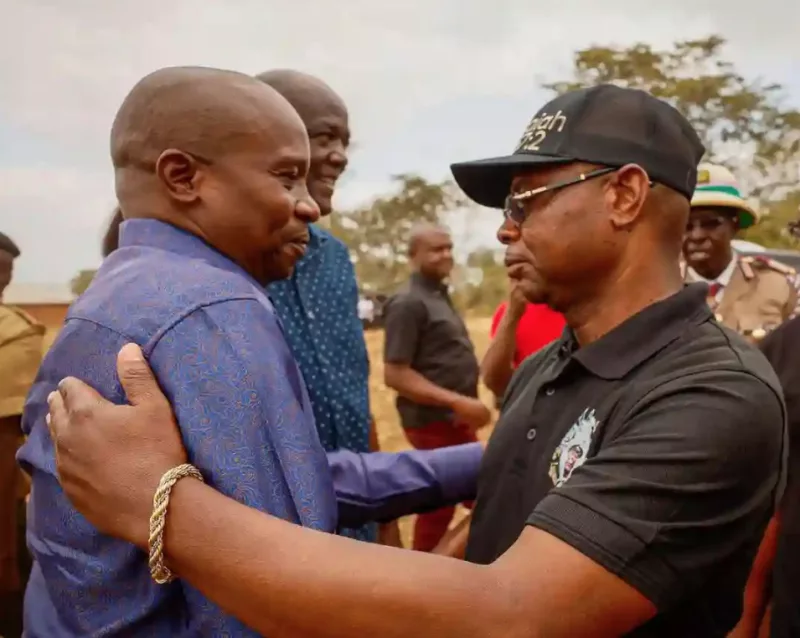
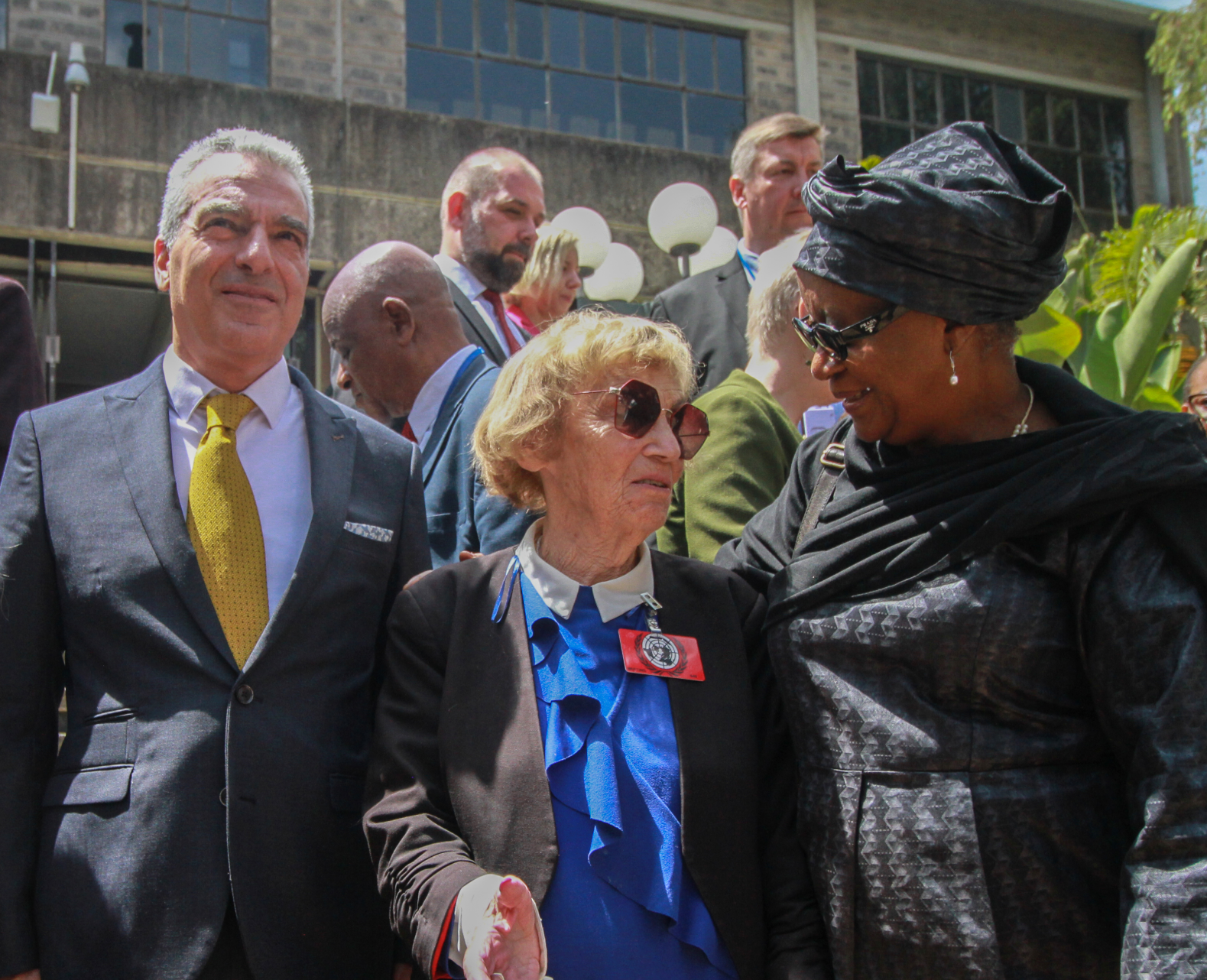
 Holocaust survivor Wanda Albinski, who is now 89 years old (middle), with dignitaries at the UN in Nairobi.
Speakers at a Holocaust memorial in Nairobi warned that silence allows evil to grow and repeat itself.
They said the Holocaust, where six million Jews were killed by Nazi Germany in Europe, may appear distant to a young society like Kenya, but the forces that produced it are growing today, especially through hate speech and disinformation spread online.
Holocaust survivor Wanda Albinski, Israeli Ambassador Gideon Behar and German Ambassador Sebastian Groth said atrocities do not begin with mass killings but with words, stereotypes and silence.
They warned the same patterns have already played out in Rwanda and elsewhere. They spoke at a commemoration held at the United Nations offices in Gigiri and organised by the UN and the Embassy of Israel in Nairobi.
Groth said antisemitism is resurging globally at alarming levels.
“In 2024 alone, global monitoring bodies recorded the highest levels of antisemitic incidents since the Second World War, perhaps with an increase in many countries of more than 300 per cent compared to the year before,” he said.
“Across the world, antisemitism is rising once more, once again, not only in whispers and stereotypes but in intimidation, in violence and in terror.”
He warned that hatred rarely stops with one group.
“If I want you to remember one thing from my speech here today, please remember that. It always starts with the Jews, it will never stop with the Jews,” Groth said.
“Time and again, history has shown that when antisemitism is ignored, other forms of hate are followed, against minorities, against institutions, against religions and ultimately against democracy itself.”
Addressing Kenyan youth, the envoy said the Holocaust may feel remote but its warning is universal.
“The Holocaust may feel distant in time and place. It didn’t happen here, it happened in Europe, it happened with other people. But its warning is universal,” he said.
“It did not start with gas chambers. It started with words. It started with stereotypes, exclusion, political opportunism and with silence.”
Dr David Silverstein, head of the Jewish Community in Kenya, said remembrance is becoming harder as survivors pass on, making vigilance more urgent.
“As time passes, fewer and fewer survivors remain to give testimony and remind us what human beings are capable of when hatred and deeply rooted prejudice are allowed to prevail,” he said.
Ambassador Behar said the number of holocaust survivors are dwindling today.
“I think this is extremely important that Wanda is here with us in this place in Nairobi. Because she carries living memory in a world where survivors really are becoming fewer each year,” he said.
“When she speaks, she does so not only for herself, but for the millions who are no longer with us. Listening to survivors is an act of responsibility. Acting on their testimony is an act of justice.”
Wanda, who is now 89 years old, said she "should not be alive".
“I stand before you today as one of the last living members of the Holocaust,” she said.
“By all logic, I should not be alive. I was meant to disappear in a train wagon, in a gas chamber or in mass graves.”
She described her presence in Nairobi as symbolic and warned young people about the power of lies.
“Lies and false doctrines just rule, and young people cannot discern either what is true and what is just propaganda of kind of ideology,” she said.
Foreign and Diaspora Affairs PS Korir Sing’Oei said the Holocaust remains a warning against indifference.
“The Holocaust was not merely a historical event; it was a profound violation of human rights that stands as a stark warning against indifference and apathy in the face of injustice,” he said in a speech read by Ambassador Lindsay Kiptiness, the Deputy General for the Middle East Directorate at the Ministry of Foreign Affairs.
Sing’Oei said hatred still threatens lives today and drew parallels with Rwanda.
“We saw the phrases that the Nazis began talking about the Jewish people that eventually led to the Holocaust,” he said.
“In the Rwanda genocide, the phrase kill the cockroaches led to the death of over one million Tutsi victims,” he said.