National Assembly majority leader Kimani Ichung’wah Wednesday tore into the Ministry of Education, blaming it of "weak leadership, political posturing and failure to fix systemic inefficiencies hurting learners".
Ichung’wah faulted the ministry’s top bureaucracy, bluntly telling Education Cabinet Secretary Julius Ogamba that, “Your peers, and yourself, have the most clueless Principal Secretary in the Ministry of Education.”
Ichung’wah also dismissed proposals to route education infrastructure funds through NG-CDF, rejecting Education Committee chair Julius Meli’s suggestion as politically driven and impractical for resolving deep-rooted ministry challenges.
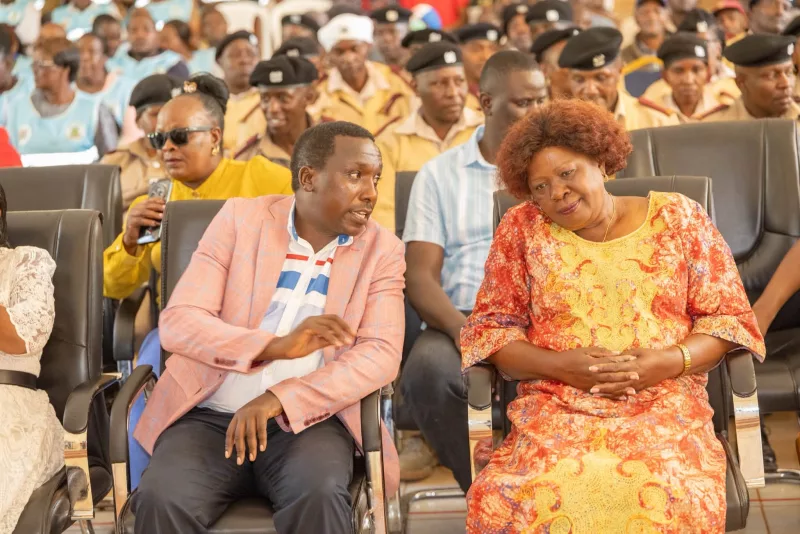
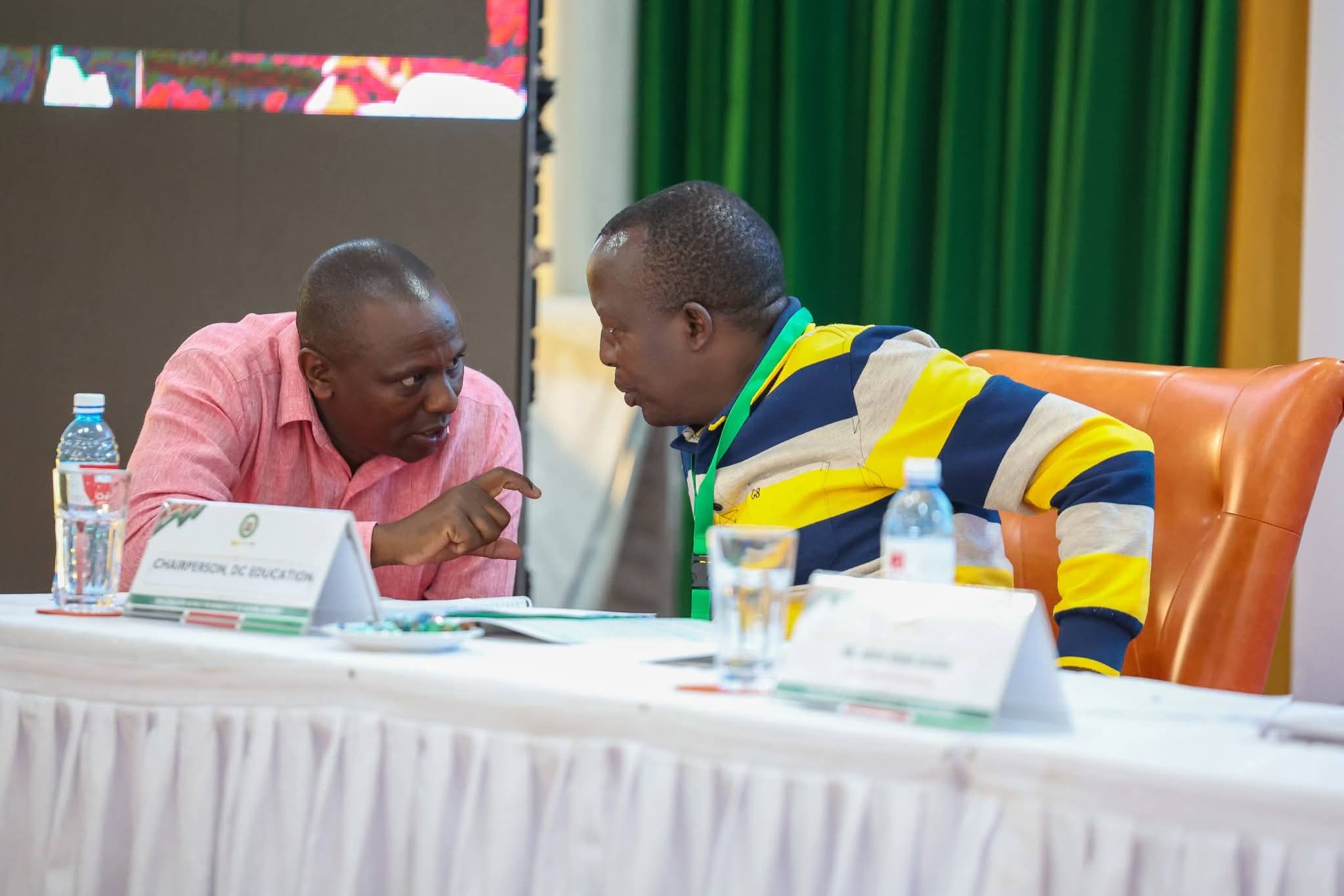
The legislator spoke during an MPs' retreat in Naivasha where Ogamba was present.
He argued that such an approach ignores glaring disparities in the distribution of schools across constituencies.
“Let us be honest with each other,” Ichung’wah said.
“Kikuyu constituency has 38 public secondary schools. Lang’ata has four. Kathiani has about 62. Saying that infrastructure money should be shared equally through NG-CDF is not leadership, it is politics. Equitable allocation is the responsibility of the ministry, guided by Parliament.”
He said infrastructure funding falls squarely under the oversight of Parliament’s Education Committee, where inequities often arise and reminded the House that budgetary shortfalls in the ministry are ultimately a result of parliamentary appropriations.
The Kikuyu MP challenged claims that reallocating NG-CDF funds could plug the ministry’s reported Sh48 billion deficit.
“If you take an average of Sh30 million from each of the 290 constituencies, that is only Sh8.7 billion,” he said.
“Does that solve your problem? The CS should be telling this House the truth, that it is up to the Education Committee and the Budget Committee to ensure adequate funding and equitable distribution.”
Drawing from his own constituency experience, Ichung’wah argued that equal sharing of funds is inherently unfair.
“I do not need infrastructure money in my constituency, but another member here with 78 schools needs far more than I do. That member should get more, not the same,” he said.
Ichung’wah also raised alarm over what he described as entrenched corruption in schools, pointing to uniform procurement, lunch programmes and supply of desks and lockers.
He cited cases where schools charged vastly different amounts for lunch programmes within the same locality, from Sh3,000 to as high as Sh9,000, despite operating under the same ministry.
“Uniform and lunch programmes are the bedrock of corruption in our schools,” he said.
“Under your ministry, you already have a school feeding programme. Why not use those resources to ensure food is available and Gazette the maximum amount that can be charged?”
He further questioned accountability in the use of resources, recounting how a school with just 189 students and 28 teachers continued to request desks despite already receiving 150 through NG-CDF.
“The desks are lumped in a store somewhere. Teachers are given maintenance money, they don’t use it, and nobody takes note,” he said.
Ichung’wah lamented the collapse of effective school inspection, arguing that MPs have been forced to step in where ministry officials have failed.
“You do not have inspectors doing anything on the ground. Members of Parliament have become school inspectors and that should never be the case,” he said.
On teacher deployment, he accused the Teachers Service Commission (TSC) of failing to rationalise staffing, resulting in absurd imbalances.
“Why would a school with 100 students have 28 teachers, while the school next door with 600 students has none?” he asked, adding that political pressure often drives teachers to seek postings in their home areas.
Ichung’wah urged the CS to move beyond Nairobi boardrooms and confront realities on the ground.
“Get out of your offices, go to the field, deal with the problems, then come back and challenge this House to find the Sh48 billion,” he said.
Ichung’wa called on the government to make hard choices in education policy.
“We must decide whether we want to make politics out of education and make everyone happy, or do the right thing for our children,” he said.