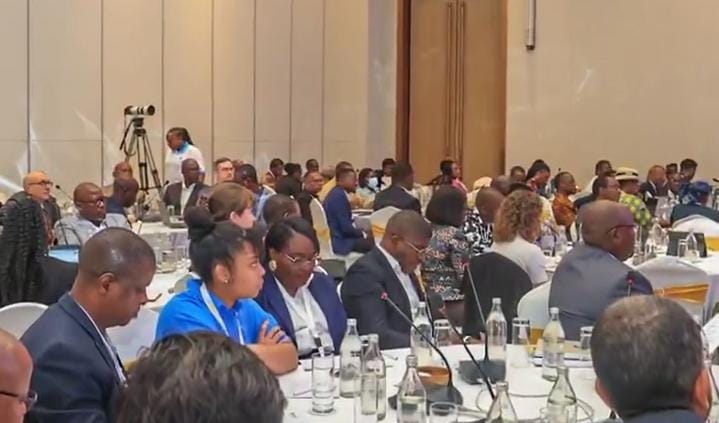
Representatives from 25 African governments have gathered in Nairobi for a pivotal two-day workshop aimed at accelerating action on lead paint regulations.
The event, co-organised by the Lead Exposure Elimination Project (LEEP) and the Kenya Bureau of Standards (KEBS) with support from the United Nations Environment Programme (UNEP), brings together policymakers, regulators, and industry stakeholders to tackle one of the continent’s most pressing public health challenges: preventable lead exposure in children and communities.
Lead poisoning remains one of the most serious yet preventable sources of childhood toxicity globally, affecting an estimated 815 million children, roughly one in three.
Beyond its impact on children, lead exposure contributes to over 1.5 million deaths from cardiovascular disease annually, with more than 90 percent occurring in low- and middle-income countries.
Africa continues to face major regulatory gaps, making regional coordination and harmonized action vital.
“Kenya is proud to host this important regional workshop,” said Peter Kaigwara, Director of Market Surveillance at KEBS.
“As a regional leader in environmental and public health standards, we recognise the urgency of addressing lead paint hazards and are committed to supporting our continental neighbours.
Eliminating lead in paints is not only a moral responsibility, but also a social investment and an economic imperative. It strengthens sustainable industrialisation, robust consumer protection, and environmental conservation.”
The workshop was officially opened by Director of Chemicals and Minerals Industries Purity Kamau, representing Investment Trade and Industry Principal Secretary Juma Mukhwana as the chief guest.
Kamau urged participants to adopt harmonised regulatory approaches to facilitate trade under the African Continental Free Trade Area (AfCFTA), reduce duplication, and strengthen enforcement and information sharing across borders.
Over the next two days, senior officials from ministries of Environment, Health, and Standards Bureaus, as well as representatives from the World Health Organisation (WHO),the paint industry will engage in technical capacity building sessions, share country experiences, and develop national action plans.
Others attending are regional organisations such as the East African Community (EAC) and African Organisation for Standardisation (ARSO) and civil society organisations.
“This workshop represents a pivotal moment for lead paint regulation in Africa,” said LEEP Executive Director Clare Donaldson.
“By bringing together governments from across the continent, we are creating the momentum needed to protect millions of children from preventable lead exposure. LEEP will continue providing long-term technical support to help countries implement effective regulations.”
The workshop aims to spur new government commitments to adopt or strengthen lead paint regulations while simultaneously building technical capacity on effective regulatory approaches and enforcement mechanisms.
It also seeks to enhance regional cooperation through peer learning, establish accountability systems to monitor country progress, and facilitate bilateral technical assistance between governments and implementing partners.
Following the Nairobi workshop, a parallel session for Francophone African countries will take place in Lomé, Togo, on February 11-12, 2026, hosted by Togo’s Ministry of Environment.
Together, the workshops aim to provide comprehensive support to governments across Africa in eliminating lead paint hazards.
LEEP’s mission is to eliminate childhood lead poisoning globally, working with governments and industry to remove lead from paint and other consumer products, enforce regulations, and promote safer alternatives.
Because of these risks, many countries have banned or strictly regulated lead in paints, but in parts of Africa, regulations are still limited or unevenly enforced, which is why initiatives like the Nairobi workshop are crucial.