County governments are set for a major revenue boost in the next financial year if Parliament adopts a proposal by the Commission on Revenue Allocation (CRA) to increase allocations.
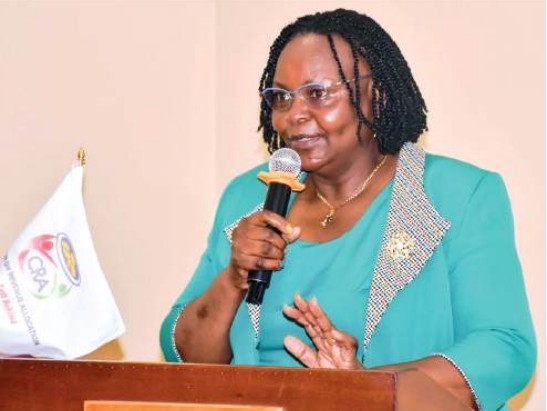
In a report to Parliament, CRA chairperson Mary Chebukati said the commission has proposed that counties receive Sh458.74 billion in the 2026–27 financial year, representing a Sh43 billion increase from the current allocation.
The proposed amount is equivalent to 23.9 per cent of the most recent audited and approved national revenue accounts for the 2021–22 financial year, which stood at Sh1.92 trillion.
CRA’s proposal contrasts sharply with that of the National Treasury, which has recommended an allocation of Sh420 billion, only Sh5 billion more than counties received in the current financial year.
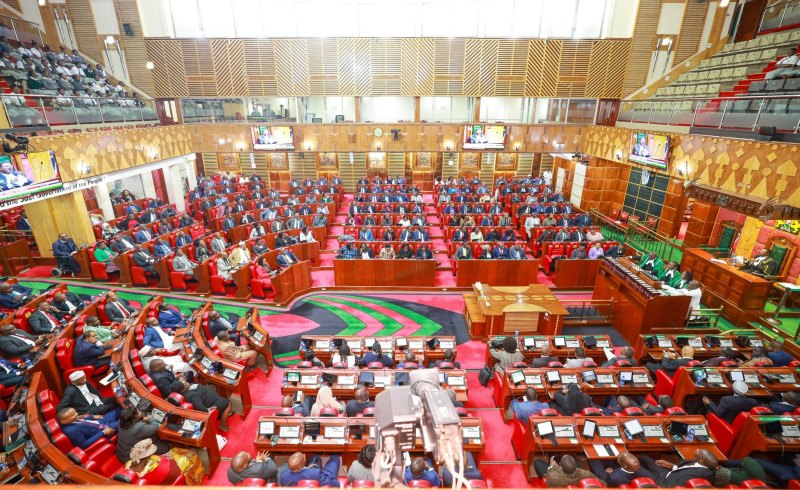
The competing figures are expected to trigger another heated debate in Parliament over how much funding counties should receive. If past trends are anything to go by, the tussle is likely to pit the National Assembly against the Senate once again.
In the previous financial year, the National Assembly sided with the Treasury’s lower proposal, while the Senate pushed for enhanced allocations to counties. The same standoff is expected to play out during consideration of the 2026–27 Division of Revenue Bill.
In its submission to Parliament, CRA proposes that the national government receive Sh2.51 trillion, while counties take Sh458.74 billion as their equitable share.
According to the commission, nationally raised revenue is projected to grow by Sh342.6 billion in the coming financial year.
“The Commission recommends that Sh2.51 trillion be allocated to the national government and Sh458.74 billion be allocated to county governments as equitable shares for the 2026–27 financial year,” the report states.
The national government’s allocation would represent an increase of Sh298.66 billion compared to the current financial year.
CRA says the higher allocation to the national government is necessary to cater for public debt obligations and other national responsibilities.
“The increased allocation to the national government will ensure provisions are made in respect of national debt and other obligations, and that the needs of the national government are objectively met in line with Article 203(1) of the constitution,” the commission says.
CRA notes that its recommendations are guided by expectations of a relatively stable macroeconomic environment, characterised by low inflation, reduced interest rates and a stable exchange rate, alongside a projected economic growth rate of 5.3 per cent in the medium term.
The commission projects revenue growth of 13.1 per cent, which would raise national revenue to Sh2.98 trillion in 2026–27, up from Sh2.63 trillion in 2025–26.
“The proposal takes into account the need to provide adequate resources for each level of government to finance functions assigned to them by the Fourth Schedule of the constitution,” CRA says.
However, the commission cautions that while allocations to counties have increased in absolute terms over the years, their share of ordinary revenue has been steadily declining.
CRA’s analysis shows that revenue performance has generally fallen below targets, despite registering year-on-year growth.
In the 2024–25 financial year, the Treasury projected revenue collections of Sh2.63 trillion but realised Sh2.28 trillion. From this amount, the national government received Sh2.03 trillion, while counties got Sh387 billion.
In 2023–24, the Treasury projected to collect Sh2.46 trillion but raised Sh2.39 trillion. Of this, the national government received Sh1.90 trillion, while counties shared Sh385 billion.
In 2022–23, the government targeted Sh2.14 trillion in revenue but collected Sh2.04 trillion. The national government received Sh1.67 trillion, while counties got Sh370 billion.
“Nonetheless, the sharing of revenue has consistently favoured the national government,” CRA notes.
The commission further observes that the proportion of revenue allocated to the national government has increased significantly over time, while the share going to county governments has continued to shrink—contrary to the spirit of devolution.
Article 202(1) of the constitution provides that nationally raised revenue shall be shared equitably between the national and county governments. CRA argues that maintaining this constitutional balance is critical to ensuring counties have sufficient resources to deliver devolved services and sustain grassroots development.