The government has reaffirmed its commitment to ensuring that every eligible Kenyan in Isiolo and Marsabit counties acquires a national identity card.
Principal Secretary in the State Department for Immigration and Citizen Services, Dr. Belio Kipsang, acknowledged that systemic barriers have for years excluded communities in the two counties from obtaining identity documents.
Lack of the document effectively denies residents access to critical services such as healthcare, education, banking and participation in civic processes.
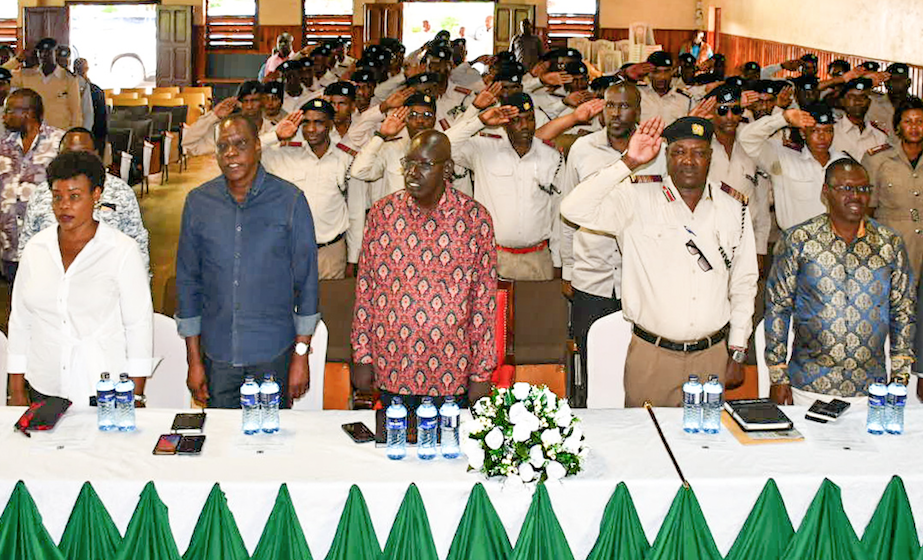
He made the remarks during an intensive sensitisation programme on the revised National Registration guidelines targeting National Government Administrative Officers (NGAOs) in the Upper Eastern region.
The sensitisation forums were held in Marsabit and Isiolo counties, which fall under Northern Kenya’s Arid and Semi-Arid Lands (ASALs) region.
The meetings brought together NGAOs from Marsabit Central, Moyale, North Horr and Laisamis sub-counties, alongside their counterparts from Isiolo, Garbatulla, Merti and Cherab sub-counties.
“We are deliberately putting more focus on counties that were heavily affected by vetting challenges. That is why we are here in Marsabit today. These are communities that have been left behind for a long time due to distance, mobility, drought and historical exclusion,” said Kipsang.
He announced that the government has rolled out intensive, ward-based mobile registration exercises supported by live capture machines to ensure that registration services reach citizens at the grassroots level.
According to the Principal Secretary, the approach is designed to eliminate the need for residents to travel long distances in search of registration centres, a factor that has previously discouraged many from applying for identity cards.
“We are taking services to the wards, closer to the people. Live capture machines will be deployed to intensify registration across these counties,” he added.
Kipsang further revealed that a 10-day mobile registration exercise will soon be conducted in Isiolo and Marsabit counties.
He noted that similar mobile registration drives will also be rolled out in 15 other counties that were previously disadvantaged due to vetting-related challenges.
At the same time, the Principal Secretary issued a stern warning to chiefs and assistant chiefs against frustrating eligible applicants or engaging in corrupt practices during the registration process.
“No Kenyan should be denied an ID or be asked for a bribe to access a constitutional right. Any form of extortion will not be tolerated,” he cautioned.
Chiefs, assistant chiefs and county commissioners from both counties welcomed the initiative, with Isiolo County Commissioner David Kiprop and his Marsabit counterpart James Kamau pledging their support to ensure the success of the registration drive.
The local administrators also appealed for the deployment of additional registration officers, citing staff shortages as a major challenge that has previously undermined registration efforts in the region.
Kipsang was accompanied by senior officials from the State Department for Immigration and Citizen Services, including Ambassador Isaac Ochieng, Director General, eCitizen; Evelyn Cheluget, Director General, Immigration; Gilbert B. Kitiyo, Secretary, National Registration Bureau; Paul Mwangemi, Secretary, Civil Registration Services; and Judy Kilobi, Secretary, Integrated Population Registration System.
The government reiterated that the intensified mobile registration drive is part of a broader national strategy aimed at promoting inclusion, equity and access to government services, particularly for historically underserved communities and regions across the country.