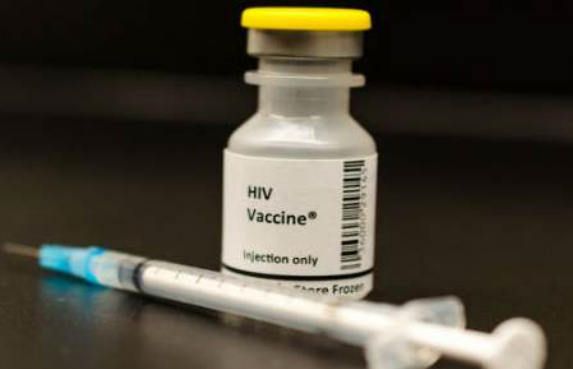
HIV prevention is just about to get easier. From next month, select Kenyans in about 10 counties will only need one injection to protect themselves from HIV for six months.
The government has now identified the target counties and a strict criteria of who qualifies for the drug. It blocks HIV even in condomless sex, but does not prevent other sexually transmitted infections such as herpes, syphilis and gonorrhoea.
The drug, long-acting HIV prevention injection known as Lenacapavir or LEN, will be offered first in 10 counties with the highest rates of new HIV infections.
Only about 33,000 people will receive it at the start, says the National Aids and STIs Control Programme (Nascop). This is the Ministry of Health’s programme charged with the roll out.
Dr Jonah Onentiah, who leads HIV prevention at the Nascop, says they have planned carefully because the first supply is small.
“We will receive limited doses, so we set criteria and decided to prioritise 10 counties with the highest burden of HIV. We have prepared training materials for the rollout, and we have identified health workers who will train others. By the second week of January, we will have finished training these workers,” he told the Star.
“We will also monitor any adverse effects following the administration of Lenacapavir. We have trained health workers on how to report on the same.”
Facilities that will offer the drug have also been identified.
Dr Onentiah said the drug is not in Kenya but is expected at the end of this month.
He said, “In total, we will receive 33,000 doses to start, then 51,000 to continue clients, and a further 5,000 from the US government.”
Because of this, not everyone who wants Lenacapavir will get it immediately.
If you are wondering whether you qualify, the answer depends on risk.
Dr Onentiah explains that priority groups were chosen carefully. Inside these groups will be another onerous task to choose who will be saved.
“We will prioritise adolescents and young people, mothers who are pregnant, and key populations,” he explained.
Key population includes sex workers, men who have sex with men, couples in discordant relationships, and adolescents and young women in counties with high new infections.
“We will create an advocacy mechanism. We will ensure the right information goes to the counties so people know where to access it. It is one of the tools to prevent HIV. It is not the only one,” he said.
The rollout will start at the end of January or February.
The drug will be free in public hospitals for all eligible people, Onentiah said.
However, it will cost the government Sh6,000 per person for one year. This is a discounted cost because in the US, one year costs $28,000 (Sh3.6 million) for one person.
The priority 10 counties are Nairobi, Kajiado, Kisumu, Homa Bay, Migori, Siaya, Mombasa, Busia, Machakos and Kisii.
The list is based on the rate of new infections from data collected by the National Syndemic Diseases Control Council (NSDCC).
Lenacapavir was approved for use by the World Health Organization (WHO) in July last year. It protects users for six months by blocking HIV from multiplying and establishing an infection in the body.
“While an HIV vaccine remains elusive, Lenacapavir is the next best thing: a long-acting antiretroviral shown in trials to prevent almost all HIV infections among those at risk," WHO director general Tedros Ghebreyesus said.
“With just two doses per year, LEN is a transformative step forward in protecting people at risk of HIV.”
The drug made by US drugmaker Gilead Sciences, is the second long-acting option for HIV prevention. It showed an efficacy of 99 per cent in preventing HIV during clinical trials. An alternative drug, cabotegravir, is injected every two months and is made by ViiV Healthcare, GSK’s HIV company.
At least 1.4 million Kenyans are living with HIV and 20,000 are added to that number every year, according to NSDCC.
The National Empowerment Network of People Living with HIV in Kenya (Nephak), is one of the groups Nascop consulted to develop the Lenacapavir implementation plan.
Nephak CEO Nelson Otuoma welcomes the drug, but warns against over-promising.
“Lenacapavir is good because it adds to the options of HIV prevention. People who have problems with the oral pills can take it.”
But he stresses that access is still limited and there’s a strict criteria on who is eligible.
Before receiving the injection, you must take three tests to confirm you are HIV-negative. You must be at significant risk of HIV infection (for instance, engaging in sex work). You must also weigh 35 kilogrammes and above.
You start by taking two oral tablets on day one and two. This is followed by a tablet on day eight. Then, on day 15, you will receive an injection to last six months.
You should be routinely tested for HIV each time you receive an injection or when your healthcare provider tells you. If you think that you were exposed to HIV, you need to tell the healthcare provider, who may do more tests to be sure you are still HIV negative.
Health workers will also monitor side effects, though these are expected to be mild.
Otuoma also noted some challenges. He said the list of 10 counties may be narrow because key populations are everywhere.
“We developed an implementation plan for 10 high-burden counties with new infections. Initially, we were to prioritise mother-to-child prevention for women in discordant relationships, and adolescents and young people, especially girls, but these people are everywhere, not just in the 10 counties,” he said.
“The drugs come from Gilead with Global Fund money, but there is also US money, and Pepfar does not want to hear about gay people.”
The Bar Hostess Empowerment and Support Programme, which supports women working in bars and sex workers, also welcomed the drug.
Executive director Peninah Mwangi said a daily PrEP pill adherence was a struggle.
“And also stigma was a lot even if you’re not HIV positive still people think you’re taking ARVs. People get tired of getting pill daily for prevention,” he said.
She says women would miss doses. Some would stop altogether. Not because they did not care about their health. But because the cost of being seen was too high.
Lenacapavir removes that burden.
“We are happy they are zeroing in on the most at-risk people such as young girls, sex workers, and others. For the product to be cost-effective, they should target the most at-risk groups to give the best results,” she said.
BESP has also been chosen as a rollout site for the drug at its clinic on Jogoo Road, Nairobi.
“We were part of the groups that contributed to the policy on the rollout of Lenacapavir, where we gave the community voice. We have also trained 40 peer educators who will be part of the February rollout.”
For Silvia Okoth, advocacy manager at BESP, the injection feels personal.
“We have been involved in all studies on PrEP in Kenya, and people have been complaining of pill burden over the years. Challenge for long has been adherence because of daily pill. So LEN is a dream come true.”
She says sex workers have waited for an option that fits their lives.
“Sex workers are excited cannot wait for it. As long as you’re a female sex worker it means you’re at risk and you need to be on PrEP.”
BESP works with nearly 60,000 female sex workers nationally. About 12,000 are linked to the Jogoo Road clinic alone.
For them, LEN is not convenience. It is survival.