President William Ruto has responded to Kiharu MP Ndindi Nyoro’s criticism of the planned partial divestiture of the government’s stake in Safaricom, saying the process follows standard market valuation and public asset sale procedures.
Ruto said the government is set to raise about Sh350 billion from the initial public offering of the Kenya Pipeline Company (KPC) and the divestiture of part of its shareholding in Safaricom, insisting the funds will be used to unlock trillions of shillings for national development.
President Ruto said the planned transactions will generate approximately Sh110 billion from Safaricom and about Sh240 billion from the Kenya Pipeline IPO, resources he said will be leveraged to mobilise between Sh3.5 trillion and Sh4 trillion to finance infrastructure, energy and social projects across the country.
“With Sh350 billion, we are going to leverage and raise between Sh3.5 trillion and Sh4 trillion to be able to run all our projects,” the President said, adding that the strategy will reduce reliance on debt while deepening Kenya’s capital markets.
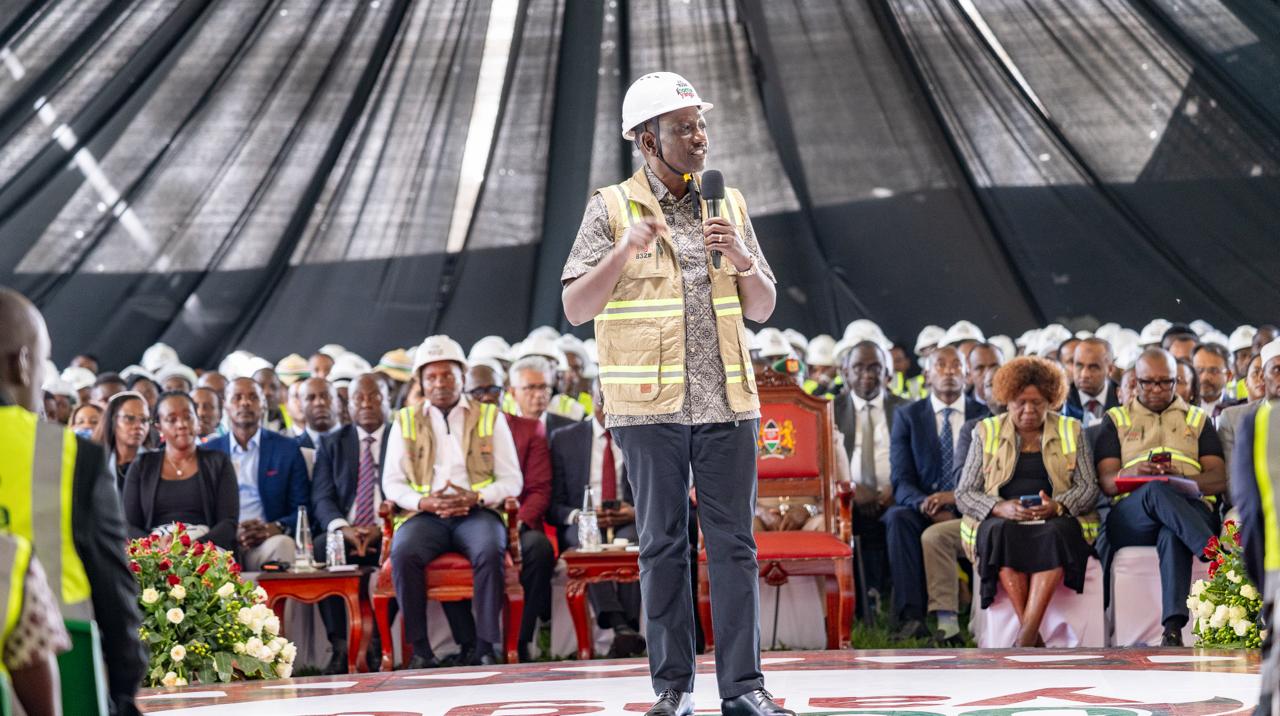
Speaking on Friday at State House during the launch of the Affordable Housing Programme internship initiative, Ruto strongly defended the government’s decision to list shares of strategic state assets on the Nairobi Securities Exchange (NSE), dismissing critics as political actors bent on misleading the public.
He said the IPOs are also intended to democratise ownership of national assets by allowing ordinary Kenyans to participate.
"I want to ask every Kenyan, with only Sh9 you can buy 100 shares of Kenya Pipeline, and you can continue to buy more and more,” he said.
“Let us all own a piece of the good that we have built together.”
The Head of State said some opponents contradicted themselves by initially supporting the reforms, only to later question their implementation.
According to Ruto, claims that the share pricing process lacks transparency are politically motivated and ignore how public markets operate.
“You will hear some people saying, ‘Why are you doing this? This is wrong,’ yet they are the same people who agreed with us that we should do it,” he said.
“They now ask, ‘Who negotiated? Where is the committee that negotiated the price?’ Really?”
Ruto stressed that valuation in an IPO is determined by market forces under strict regulatory oversight, not by secretive negotiations.
"Any publicly listed company has a tested, proven and transparent valuation process. It is done by the capital markets; it is done at the exchange, not in boardrooms or by committees,” he said.
He maintained that the government has nothing to hide and urged critics to engage constructively rather than sow doubt.
"Those giving us lectures about what we are doing with the IPO of Kenya Pipeline or Safaricom should spare us their political conmanship and intellectual deceit,” Ruto said.
“We don’t need it. We want to move this country forward.”
However, the proposals have continued to attract debate within political circles.
Kiharu MP Ndindi Nyoro has urged Parliament not to adopt the government’s proposed process, arguing that the valuation of Safaricom shares is too low.
Nyoro has claimed that each of the six billion Safaricom shares being transferred to Vodafone should retail at about Sh45 per share, instead of the proposed Sh34, warning that undervaluation could disadvantage the public.