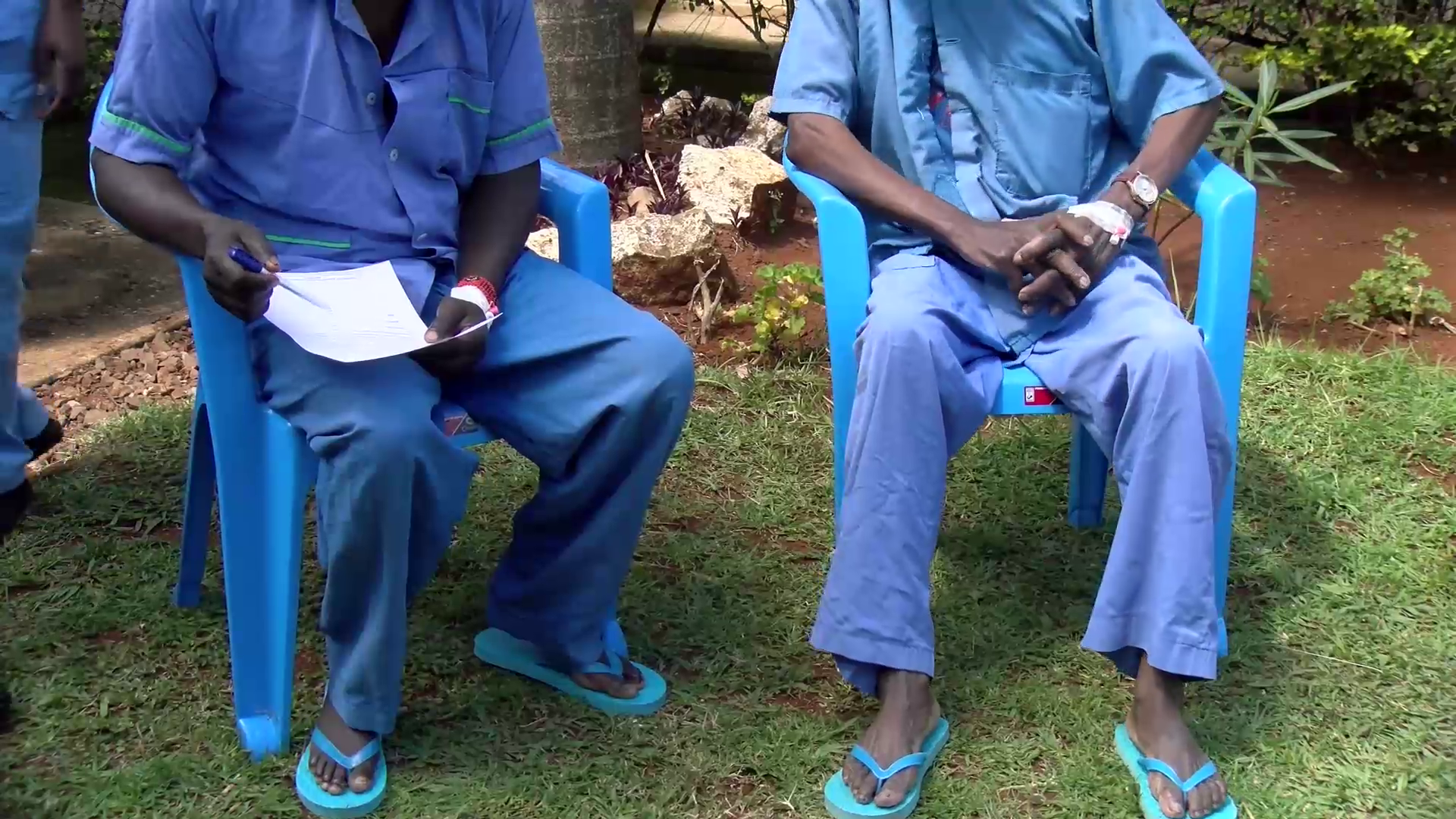
 Patients undergoing treatment for prostate conditions at Kiria-ini mission hospital in Mathioya, Murang'a/ ALICE WAITHERA
Three years ago, 78-year-old Kamau (not his real name) from Mathioya in Murang’a county began to notice subtle but troubling changes in his health.
What started as difficulty in passing urine soon escalated into frequent, urgent trips to the toilet, often yielding only small amounts of urine.
The condition gradually worsened, making it hard for him to leave home and eventually causing persistent lower abdominal pain.
“That’s when I decided to go for a check-up. Doctors discovered that I had prostate cancer, which sent me into shock,” Kamau recalled.
As he struggled to come to terms with the diagnosis, Kamau confided in a friend who revealed he had undergone treatment for the same condition. The conversation proved to be a turning point.
“Talking to my friend gave me hope and my fears diminished,” Kamau said. He is currently undergoing treatment, and his symptoms have been largely suppressed.
Kamau’s story reflects a broader challenge facing men across Kenya, where prostate cancer remains one of the most common cancers among males.
According to the Ministry of Health and the Kenya National Cancer Registry, prostate cancer is among the leading causes of cancer-related deaths in men, largely due to late diagnosis.
Health experts say stigma, limited awareness, and fear of medical procedures often prevent men from seeking early screening and treatment.
In the same area of Mathioya, 40-year-old Karanja (also not his real name), a boda boda rider, had a very different experience.
In October last year, he noticed a swelling on one of his testes but felt no pain. He dismissed it, expecting it to go away on its own.
Two months later, the swelling had worsened, prompting him to seek medical attention.
“I was told I had contracted the disease and needed to undergo an operation. If I don’t, the swelling will continue and make it hard to carry out my daily activities,” he said.
Unlike Kamau, Karanja did not experience difficulty urinating or pain, and his sex life remained unchanged. He believes such a lack of symptoms can easily mislead men into delaying hospital visits.
“I’m now waiting for surgery, and I can’t wait for it to be over so I can go back to my life,” he said.
Both men are currently receiving care at Kiria-ini Mission Hospital, where they are using their experiences to urge others to seek medical attention whenever they notice unusual changes in their bodies.
“Men should stop feeling ashamed when conditions affect their private parts,” Kamau said. “We need to speak out and support each other instead of suffering in silence.”
Their call has been supported by medical professionals, who say early detection is key to successful treatment and survival.
Doctor Kelvin Luttah, a medic at Kiria-ini Mission Hospital, said urological conditions, including prostate enlargement, prostate cancer, and other urinary tract disorders, are highly prevalent among men aged over 40 years.
“Many men shy away from seeking treatment because of stigma and fear. Unfortunately, this leads to late diagnosis, when the disease is already advanced and more difficult to manage,” Luttah explained.
To address this gap, the hospital has organised a specialised medical camp for urological conditions scheduled for January 24 in Kiria-ini town.
The camp will offer screening, diagnosis, and treatment for a wide range of urinary and reproductive health issues.
Luttah said the initiative aims to improve awareness and encourage both men and women to take their urological health seriously.
“Early signs of prostate problems include frequent urination, a strong urge to urinate, difficulty starting or stopping the flow of urine, and the feeling that the bladder is not completely empty,” he said.
If left untreated, prostate conditions can lead to serious complications, including kidney damage. In advanced stages, prostate cancer can spread to other parts of the body, causing back pain, headaches, and even breathing difficulties, signs that the disease has metastasised.
The doctor noted that the camp will also cater to women experiencing urinary incontinence, bloody urine, or pain during urination, as well as children with congenital conditions such as undescended testes or abnormal positioning of the urethra.
“At the medical camp, we will have specialists who can diagnose these conditions and provide the right treatment or referrals where necessary,” Luttah said, underscoring the need to have such outreach programs in rural areas, where access to specialised healthcare services is often limited and awareness levels remain low.
Murang’a county, like many other regions of the country, has seen an increase in non-communicable diseases, including cancer, underscoring the need for preventive healthcare and routine medical check-ups.
For Kamau and Karanja, the message is simple: listen to your body and seek help early.
“If I had gone to the hospital sooner, I would have avoided a lot of fear and pain,” Kamau said. “Men need to know that getting checked can save their lives.”
As Kiria-ini Mission Hospital prepares to host the urological medical camp, health workers hope the stories of survivors and patients will encourage more residents to step forward, break the silence, and prioritise their health.