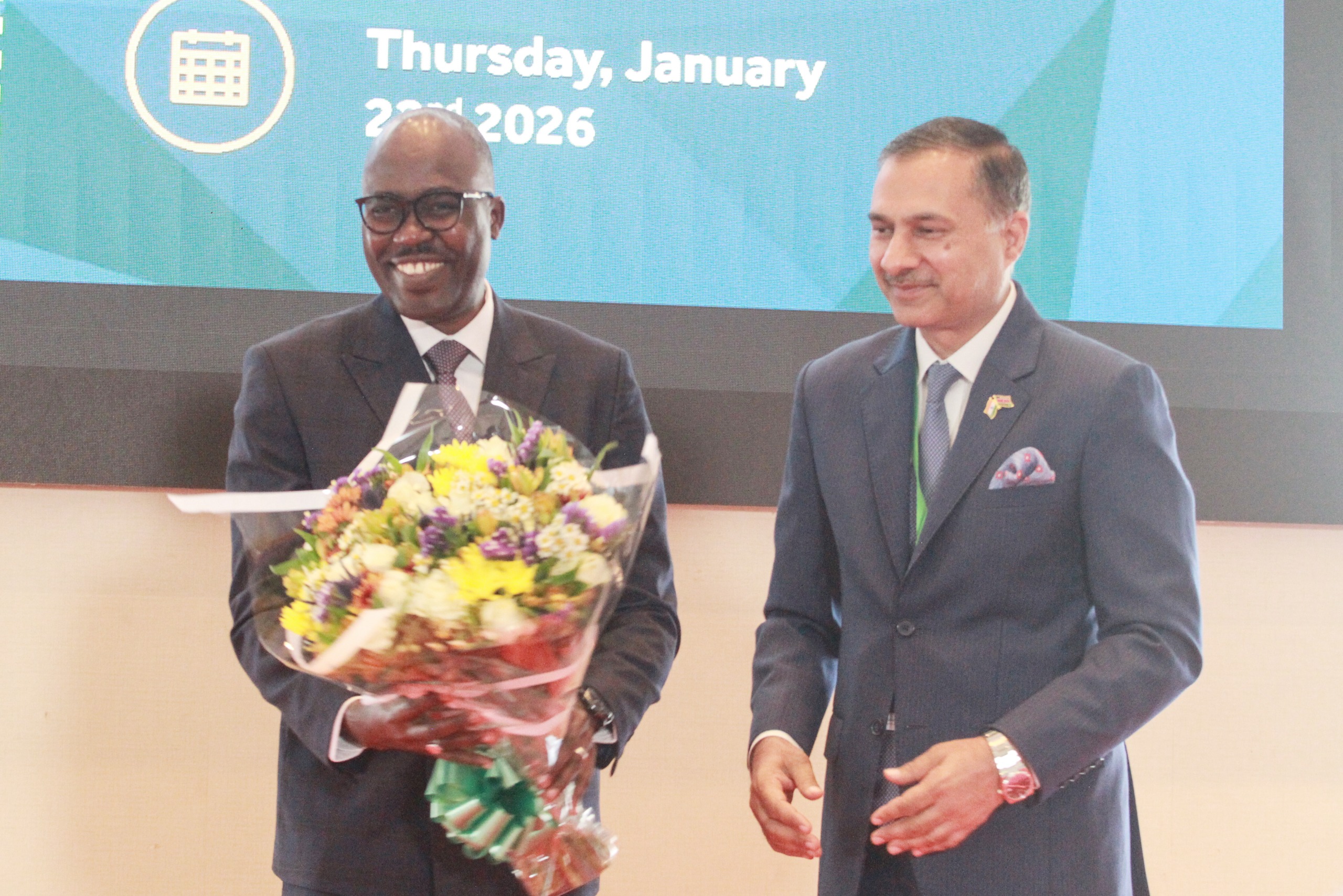
The government has repatriated 28 Kenyans from Russia since December last year, as concerns grow over citizens falling victim to human trafficking networks and irregular recruitment into foreign conflicts, Foreign Affairs Principal Secretary Korir Sing’oei has said.
Sing’oei said the returnees were among Kenyans who had been irregularly recruited to serve within the context of the ongoing Russia-Ukraine war, despite Kenya’s firm position that no citizen should take part in the conflict.
“A number of Kenyans have unfortunately fallen victim to unscrupulous groups, cartels and agents,” Sing’oei said, noting that cases range from trafficking in far-flung destinations in the Far East, including Cambodia and Myanmar, to irregular military recruitment linked to the European conflict.
On the Russia-Ukraine war, Sing’oei reiterated that Kenya considers the conflict a global security threat with direct economic consequences for the country, including disruptions to access to essential commodities.
“Kenya’s policy position is clear: this is a war that must end, and it is not the policy of the Kenyan government that any Kenyan should be a participant in it,” he said.
He stressed that the government is not aiding any recruitment efforts on behalf of any party to the conflict. However, some Kenyans who found themselves on the battlefield later reached out to Kenya’s diplomatic missions for help.
“A number of them have come to our missions and reached out to our mission in Moscow. I can confirm that 28 of them have been repatriated since December, and this was facilitated by our mission in Moscow,” Sing’oei said.
He added that the fate of some Kenyans remains unclear, as they have lost contact with their families, raising fears that some may have died.
However, he said the government lacks precise data because the recruitment was irregular and Kenya was not involved at the point of enlistment.
“Unfortunately, we do not have the infrastructure to determine those numbers, because in the first instance, we were not involved when they were recruited,” he said.

Diplomatically, Sing’oei said Kenya is pursuing two key tracks.
The government, he said, is negotiating for the release of Kenyans who were captured by Ukrainian authorities and are currently being held as prisoners of war while at the same time engaging the Russian Federation mission in Nairobi to prevent further irregular recruitment.
According to Sing’oei, Russian officials have assured Kenya that their government does not support such recruitment practices.
However, he noted a legal grey area.
“Under Russian law, it is not illegal for a non-Russian to serve in their army if they do so voluntarily. The critical question we are trying to assess is the extent to which these Kenyans were recruited voluntarily,” he said.
Beyond Europe, Sing’oei said trafficking cases in the Far East remain a major concern, particularly involving vulnerable Kenyans lured abroad with promises of employment as teachers, tech workers or domestic staff.
“Many of these individuals are baited with legitimate-sounding job offers, only to find themselves in distress once they arrive,” he said.
He confirmed that a number of Kenyans who had been held hostage in Myanmar have already been repatriated, with ongoing efforts to secure the return of others still stranded in the region.
Kenya’s mission in Bangkok, Thailand, he said, is actively handling these cases and coordinating with host governments to establish frameworks for repatriation.
To strengthen Kenya’s diplomatic and consular presence in the region, Sing’oei revealed that Cabinet approved the establishment of a new Kenyan mission in Vietnam towards the end of last year.
“That mission will serve as an additional institutional mechanism to support Kenyans in distress, while also expanding opportunities for bilateral relations,” he said.
On Cambodia, where several Kenyans are believed to be trapped after being trafficked, Sing’oei expressed cautious optimism.
“It is my view that, depending on the cooperation of all actors within government, and most fundamentally the government of Cambodia, we should be able to get them home within the shortest time possible,” he said.
He acknowledged that the government does not have accurate numbers of affected Kenyans due to the covert nature of the recruitment networks. In many cases, those recruited are misled about the nature of their work.
“They are not informed that they will be serving in the military. They are told they will be working in industrial complexes or export zones, only to discover upon arrival that they have been recruited to serve as military functionaries,” Sing’oei said.
The Foreign Affairs ministry, he added, is intensifying public awareness campaigns to warn Kenyans against dubious overseas job offers, while working with foreign governments to dismantle trafficking networks and protect citizens abroad.