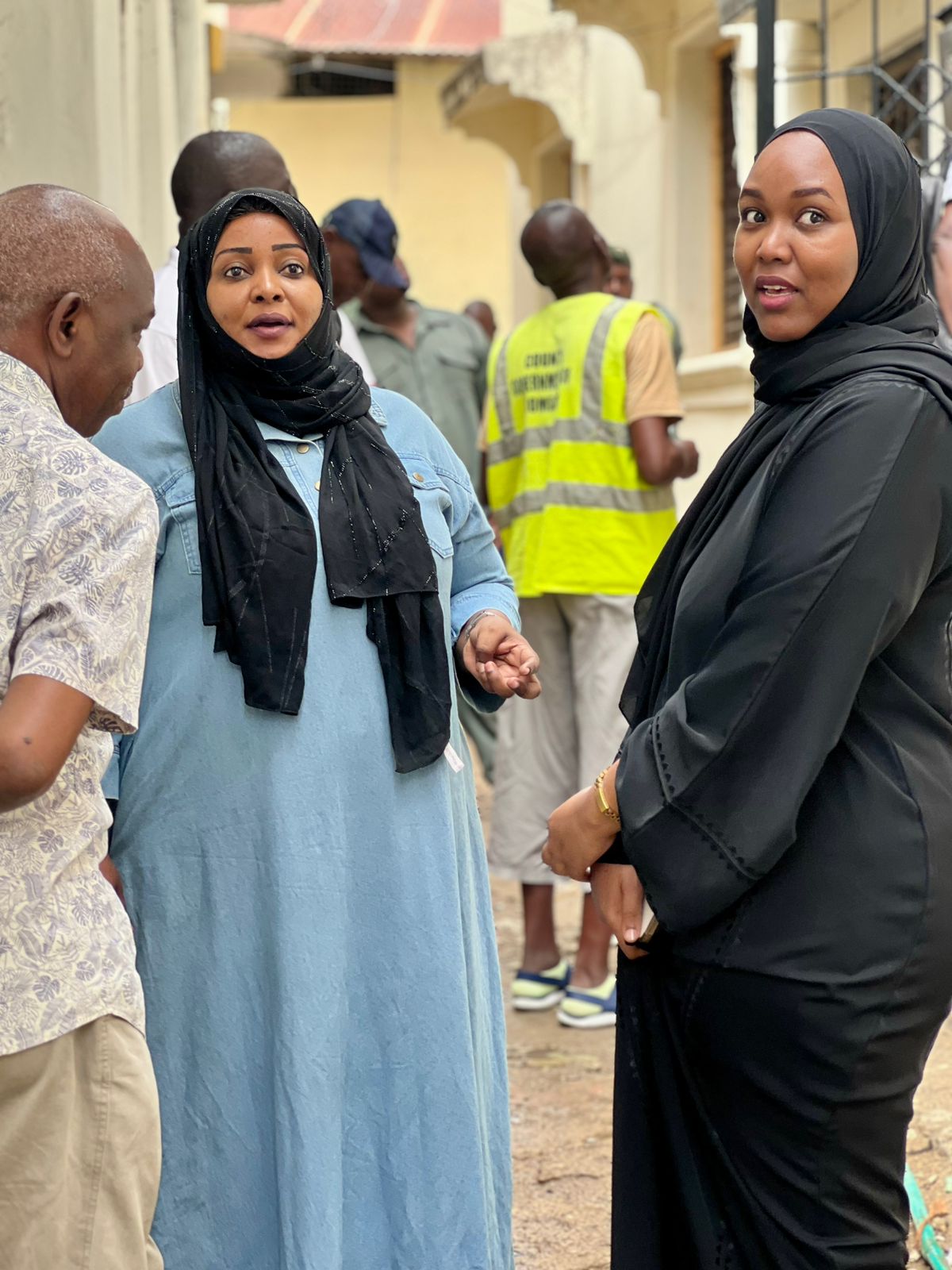
 Water chief officer Albert Keno, executive Kibibi
Abdalla and Mowasco acting manager Habuba Ali in Old Town on Monday /BRIAN
OTIENO
Water chief officer Albert Keno, executive Kibibi
Abdalla and Mowasco acting manager Habuba Ali in Old Town on Monday /BRIAN
OTIENOFor months, Mombasa residents have endured erratic water supply, causing significant distress.
Old Town residents even protested two weeks ago, accusing the county of doing little to assist them.
However, an intelligence-led operation conducted on Monday, particularly in Old Town, uncovered more than a thousand illegal connections across the county.
These illegal connections deny residents clean drinking water and deprive the Mombasa Water and Sanitation Company (Mowasco) of the revenue essential for service delivery.
The crackdown also revealed massive illegal sewer connections, which place immense strain on the infrastructure.
Mombasa county environment and water executive Kibibi Abdalla said these illegalities in Old Town are causing both revenue and health problems.
By Wednesday, Old Town residents reported increased water supply after the county removed most unauthorised connections, leaving only genuine clients on the line.
Coach Twalib Ali, a resident of Kuze in Old Town, noted on Wednesday that they had suffered for years from little or no water.
This was primarily due to the high number of illegal connections in the area.
“We used to rely on borehole water. It is like using sea water for cooking,” Ali said.
Sheikh Hamid Kibulanga observed that residents are partly to blame for blocked sewers, noting that diapers and other solid waste are often found in the sewer lines.
“That is why our toilets fill up faster than normal. It is not that they are full; it is because of the blockages we cause by disposing of items that should not be there,” he said.
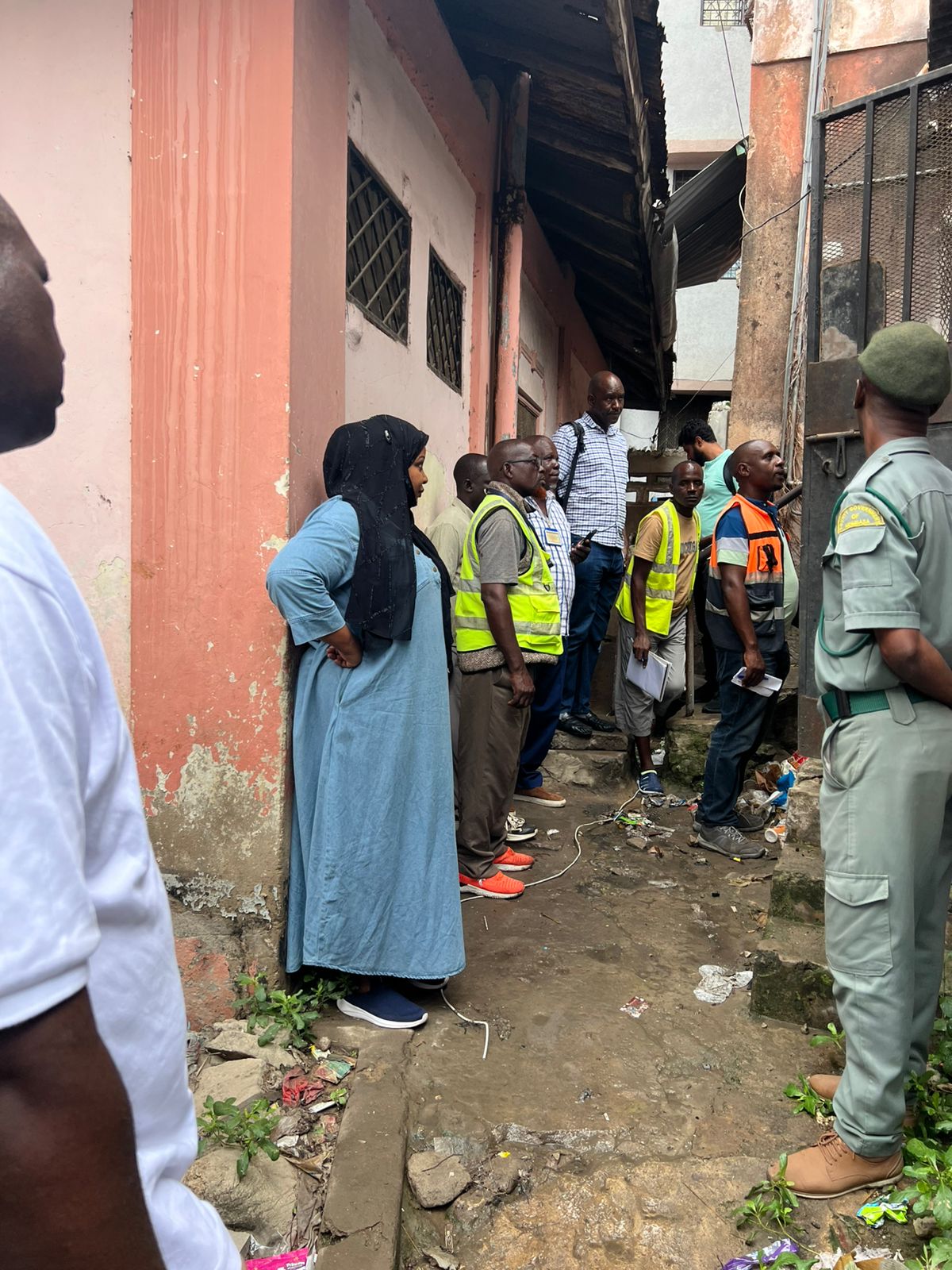 Mombasa County Environment and water executive
Kibibi Abdalla (L) leads operation on illegal water and sewer connections on
Monday /BRIAN OTIENO
Mombasa County Environment and water executive
Kibibi Abdalla (L) leads operation on illegal water and sewer connections on
Monday /BRIAN OTIENOKibulanga said since the county's operation, there has been an overwhelming supply of water.
“We have never received this amount of water before. The taps are flowing freely. It is pleasing,” he said.
Water and sanitation chief officer Albert Keno said illegal connectors often interfere with pipes, leading to sewage blockages.
“We regularly send teams to unblock the sewers, but they become blocked again shortly after because people dispose of inappropriate items in them,” he said.
Abdalla noted that the county is often blamed for water issues when the fault sometimes lies with the residents.
“These illegal connectors endanger public health. When pipes are connected to sewer and water lines without proper procedures, the system is overwhelmed, resulting in sewage overflows,” she said.
Mowasco acting managing director Habiba Ali said the crackdown will be an ongoing exercise, noting that widespread illegalities cause significant backflow within Old Town and other areas.
Keno emphasised the need for civic education on waste disposal.
Resident Khadija Kamari recalled that in the past, used diapers and sanitary pads were bagged before being placed in bins.
“Today, some girls dispose of these items in toilets, which is wrong. We must educate them on proper disposal,” Kamari said.
Abdalla confirmed that those found with illegal sewer connections have been arrested, with some already charged in court.
On Monday alone, seven individuals were apprehended. She reiterated that the operation is ongoing, adding, “We will no longer accept blame directed at our governor when the problem lies with residents.”
She further explained that Mombasa’s sewer system is about 100 years old, constructed in the 1930s for a population of barely 30,000.
With the population now exceeding 1.9 million, the system is under extreme pressure. Consequently, the county has signed a deal with Jospong, an investor from Ghana, to revamp the network and construct treatment plants.
“The governor has stated that enforcement alone is insufficient. He emphasises that Mombasa requires heavy, long-term investment to modernise and expand its sewer system to meet current and future demand,” Abdalla said.
“For this reason, the county government pursued a public-private partnership to leverage private sector capital and expertise for sustainable sanitation solutions.”
Governor Abdulswamad Nassir added that a clean, functional city is a shared responsibility, calling on residents and businesses to partner with the county to build a modern Mombasa.