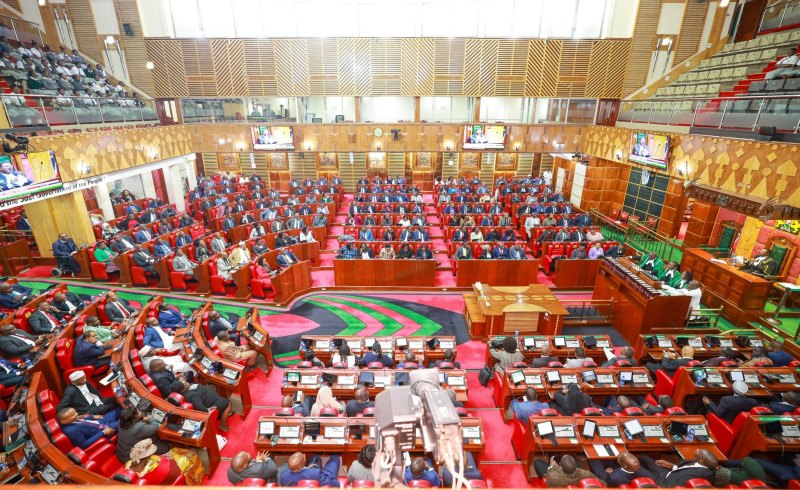
 Mombasa Governor Abdulswamad Nassir/HANDOUT
Governors have raised fresh concerns over challenges hampering the delivery of quality healthcare services, pinpointing what they see as key issues in the implementation of the Social Health Authority.
Through the Council of Governors, the county bosses say systemic flaws within the SHA are undermining seamless service provision across counties.
The concerns came more than a year after the new health financing programme was rolled out.
Led by CoG Health Committee chairperson Abdulswamad Nassir (Mombasa), the governors cited delayed and unpaid claims as a major concern.
They warned the situation is straining already overstretched public health facilities.
The health facilities are also grappling with high claim rejection rates, a lack of remittance advice and persistent system discrepancies, the governors noted.
They also pointed to challenges related to maternity identification numbers, which have complicated reimbursement for maternal health services.
The CoG has now called for structured and sustained engagement between the Social Health Authority and county governments to address the emerging concerns and stabilise the system.
Sources at the council said the county bosses will discuss the issues at their full meeting scheduled for this month before they are escalated to the National and County Governments Coordinating Summit, chaired by the President.
“These challenges are impeding the effective delivery of health services at the county level and must be urgently addressed to safeguard access to care for Kenyans,” Nassir said.
The concerns came against the backdrop of recent reports by Auditor General Nancy Gathungu on the operations of county hospitals.
Gathungu revealed delays in reimbursement to most county health facilities under the SHA framework.
The reports indicate prolonged payment delays have disrupted operations, with some facilities struggling to procure essential medicines and pay suppliers.
SHA was rolled out in October 2024 to replace the defunct National Health Insurance Fund (NHIF), to improve efficiency, expand coverage and seal loopholes that had plagued the previous scheme.
However, since its launch, counties, public and private health facilities, and patients have consistently raised red flags over its implementation.
“As part of ongoing efforts to streamline the health sector, the Council of Governors convened a consultative meeting to address emerging issues in the implementation of SHA across counties,” the council said in a statement.
Late last year, the National Assembly’s Health Committee also flagged serious weaknesses in the rollout of the programme. In a report tabled in Parliament, the committee identified at least 19 challenges that have delayed effective implementation.
The committee, chaired by Seme MP James Nyikal, cited delayed and withheld payments, arbitrary rejection of claims, ICT system failures, tariff misalignments and a limited benefits package, among the key obstacles.
Other issues highlighted included delayed reimbursements to facilities, erroneous payments, governance gaps, difficulties in identifying indigent persons and delays in establishing a fully functional claims management office.
According to the report, reimbursements to health facilities under SHA have been inconsistent, with some months recording no disbursements at all.
At the same time, a substantial backlog of arrears inherited from the defunct NHIF remains unresolved, even as approved SHA claims continue to accumulate.
The committee further faulted SHA for a lack of transparency in its payment processes, noting that reimbursements are often made as lump sums without clear breakdowns by fund type, making it difficult for facilities to reconcile accounts.
Lawmakers also raised concerns over the high rate of claim rejections, including cases where facilities had submitted complete and accurate documentation, a situation they warned was eroding confidence in the new scheme.
INSTANT ANALYSIS
The MPs also flagged erroneous SHA payments that have strained health facilities financially. For example, the Nyeri County Referral Hospital reportedly lost more than Sh16 million to a neighbouring private hospital due to payment processing errors, with recovery efforts proving unsuccessful. The committee further noted governance and coordination gaps among key regulatory agencies, including Kenya Medical Practitioners and Dentists Council (KMPDC), SHA, the Digital Health Authority and county governments.