Greenland, the world’s largest island, has in recent months found itself at the centre of intense international attention, as global powers openly jostle for influence over the vast Arctic territory.
Long viewed as remote and sparsely populated, Greenland is now being recast as a strategic prize—militarily, economically and politically—at a time of heightened global competition and climate change.
Largely, US President Donald Trump, who has declared that he wants the “complete and total purchase” of the Danish territory, has propelled this renewed focus.
He has argued that the island is essential for both American and global security.
The White House has gone further, suggesting that Greenland could even be taken militarily if necessary, remarks that have sparked sharp reactions across Europe and beyond.
At the heart of the interest is security and defence. Greenland occupies a uniquely strategic position between the United States and Canada to the west, Russia to the east, and Europe to the south.
Sitting astride key North Atlantic and Arctic routes, the island is ideally placed for monitoring air, sea and underwater activity.
Military analysts note that Greenland offers an unparalleled vantage point for tracking suspicious movements over water by vessels or beneath the surface by spy submarines.
The U.S already maintains a military presence at the Pituffik Space Base (formerly Thule Air Base), a critical element of its missile warning and space surveillance systems.
As tensions with Russia intensify and NATO reassesses its Arctic posture, Greenland’s strategic value has risen sharply.
Trump has repeatedly argued that Denmark has failed to adequately address security threats in the region.
On Monday, Trump claimed Nato had been “telling Denmark, for 20 years, that ‘you have to get the Russian threat away from Greenland.’ Unfortunately, Denmark has been unable to do anything about it. Now it is time, and it will be done!”
Beyond security, Greenland’s massive economic potential has become a key driver of global interest.
Although about 80 per cent of the island is covered by ice, climate change is rapidly transforming the Arctic.
Melting sea ice is opening up new and potentially lucrative maritime trade routes that could significantly shorten shipping distances between Asia, Europe and North America.
Control or influence over these emerging routes is increasingly seen as a strategic advantage that global powers want to dominate.
Greenland is also rich in natural resources, particularly rare earth minerals, which are critical for modern technologies such as electric vehicles, wind turbines, smartphones and advanced military equipment.
As countries seek to reduce dependence on China for rare earth supplies, Greenland’s untapped mineral wealth has become especially attractive.
Mining, oil and gas exploration, and fisheries are all seen as potential pillars of future economic growth, even as environmental concerns remain high.
A third factor fuelling interest is the question of territorial expansion and geopolitical alignment.
Politically, Greenland is European, as it is an autonomous territory within the Kingdom of Denmark. Geographically, however, it is part of North America.
This unusual status has long intrigued strategists, and Trump has openly linked Greenland to his vision of making the United States “greater” in terms of size and global reach.
Trump has insisted that Greenland is critical for US security and has previously said Washington would get the territory “the easy way” or “the hard way.”
He has not ruled out the use of force, remarks that have drawn widespread criticism from European leaders and raised alarm about respect for sovereignty and international law.
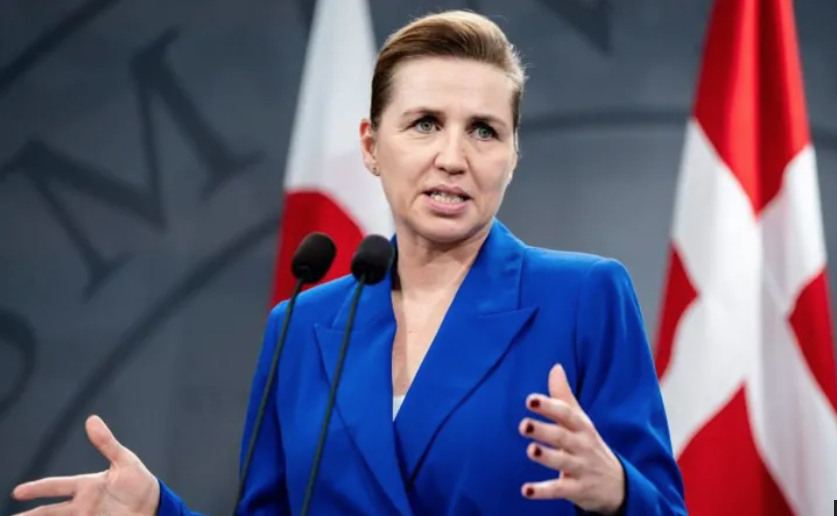
Denmark’s Prime Minister Mette Frederiksen has responded firmly, rejecting what she described as economic and political pressure.
“Europe won’t be blackmailed” by Donald Trump’s tariff threats over Greenland, she said, after the US president warned of trade penalties against countries opposing his proposed takeover of the autonomous Danish territory.
Trump has said he will impose a new 10 per cent levy on goods from eight allied nations if they resist his plans.
The new tariffs—taxes on imports—would target Denmark, Finland, France, Germany, the Netherlands, Norway, Sweden and the United Kingdom.
He said an initial 10 per cent tariff would come into force on February 1 “on any and all goods” sent to the US, but could rise to 25 per cent in June.
Frederiksen and other European leaders issued a joint statement on Sunday warning that the tariffs risked “undermining transatlantic relations and risk a dangerous downward spiral.”
In a Facebook post, the Danish leader reiterated her position, writing: “We want to cooperate and we are not the ones seeking conflict. And I am happy for the consistent messages from the rest of the continent: Europe will not be blackmailed.”
“It is all the more important that we stand firm on the fundamental values that created the European community,” she added.
UK Prime Minister Keir Starmer also weighed in on Monday after Trump said he would impose tariffs on the UK and other countries that oppose his plan to buy Greenland, underscoring the growing diplomatic fallout from the dispute.
Understanding why Greenland has become such a focal point also requires an appreciation of its unique profile.
Greenland is located between the Arctic and Atlantic oceans and is known for its vast ice-covered landscape and sparse population.
Despite its immense size—approximately 2.16 million square kilometres, larger than Mexico and Saudi Arabia combined—it is home to just about 56,000 people, most of whom live along the ice-free coastal areas.
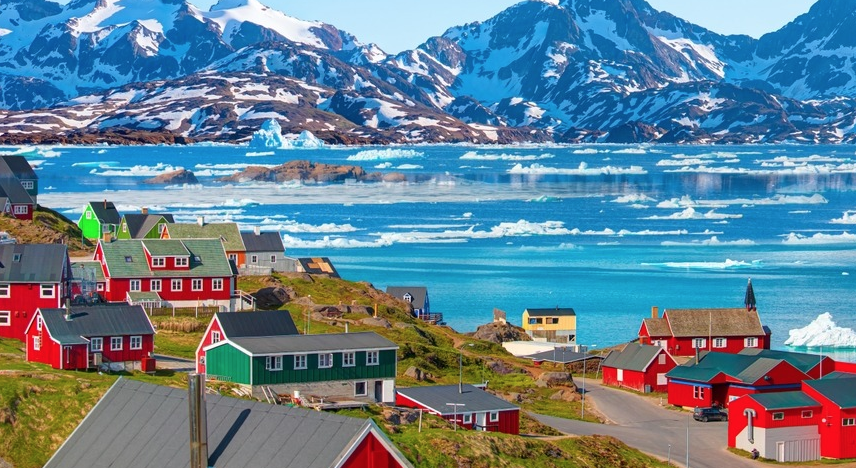
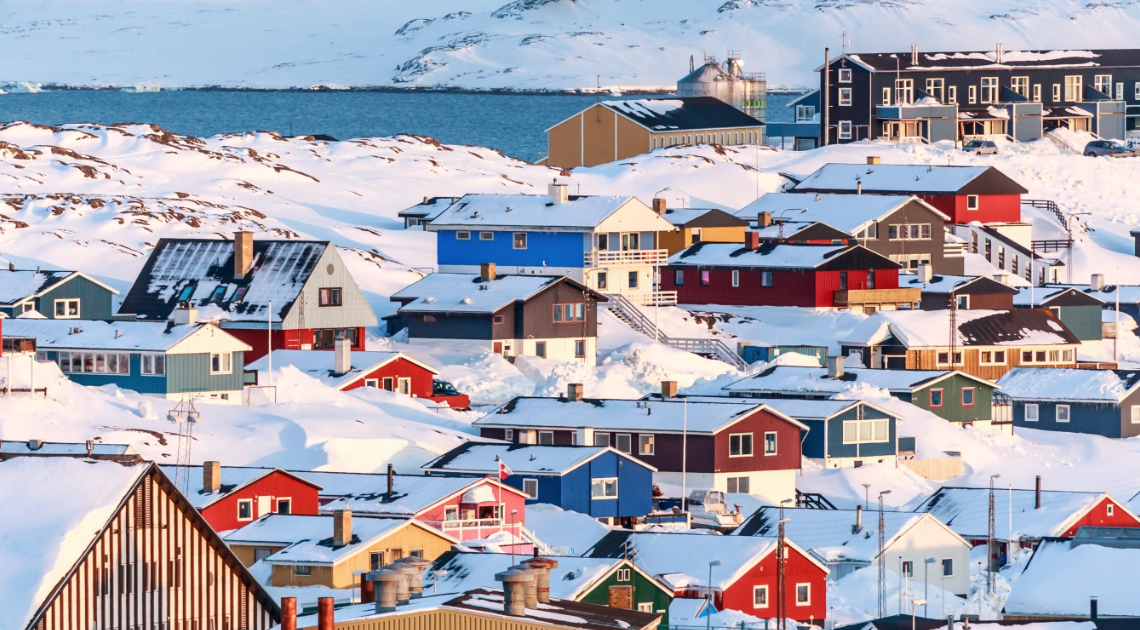
The capital, Nuuk, on the southwest coast, serves as Greenland’s political, economic and cultural centre.
It hosts government institutions, the main port and key educational facilities, including the University of Greenland, making it central to administration and daily life despite its small size.
Greenland’s governance structure further complicates the geopolitical picture.
While it is not an independent state, it enjoys extensive self-rule under the Self-Government Act of 2009.
The island has its own elected parliament, the Inatsisartut, and its own government, the Naalakkersuisut, which control most domestic affairs, including natural resources—one of the key reasons Greenlanders are cautious about external interest.
Denmark, however, retains responsibility for foreign policy, defence and monetary matters, and provides an annual subsidy that underpins Greenland’s economy.