Governors who routinely skip or postpone appearances before Senate watchdog committees will now face tougher conditions, including fines and possible arrest warrants.
The move is aimed at reining in rogue governors who, the lawmakers say, are abusing audit processes to evade accountability for public resources.
Under the new rules, governors will be allowed only one postponement of their appearance before Senate committees.
Even so, the request must be made at least seven days before the scheduled date.
Any subsequent request will be rejected, while last-minute pleas will no longer be entertained.
County chiefs who fail to appear without justifiable reasons risk being formally summoned, fined Sh500,000, or, in extreme cases, facing warrants of arrest issued through the Inspector-General of Police to compel attendance.
“The committee will accept only one request for postponement, which it shall deem justifiable, and any subsequent request shall not be granted,” reads a public notice issued by Senate Clerk Jeremiah Nyegenye on Thursday.
The notice further states that any rescheduling request must be submitted in writing to the clerk’s office and copied to the relevant committee not later than seven days before the appearance date.
Requests made outside this timeline “shall not be considered”.
The tough stance comes as the Senate County Public Accounts Committee (CPAC) prepares to begin hearings on audit reports by Auditor-General Nancy Gathungu covering county governments and assemblies for the financial year ended June 30, 2025.
The committee, chaired by Homa Bay Senator Moses Kajwang’, will also review statements of the receiver of revenue and reports on the County Revenue Fund for all 47 county executives.
The sittings are scheduled to run from January 26 to March 16 following a court directive requiring the Senate to conclude consideration of the reports by March 31.
In a further warning to counties, CPAC said it will not accept management responses submitted outside prescribed timelines or presented for the first time on the day of appearance.
“All county entities are required, at least seven days before the scheduled date of appearance, to have submitted written responses, including supporting documentation, to the specific issues raised in the reports to the office of the Auditor-General and the office of the Senate and copied to the committee,” the notice states.
“The committee will not accept management responses submitted to the Auditor-General and the committee for the first time on the day of appearance,” it adds.
The stricter rules follow a landmark High Court ruling in October 2024 by Justice Jairus Ngaah, which barred Parliament and county assemblies from considering audit reports more than three months after they are tabled.
Since that ruling, relations between senators and governors have been strained, with Senate watchdog committees accusing governors of deliberately dodging summons and exploiting the court order to evade accountability.
Some governors have cited prior engagements or clashing schedules on the very days they are expected to appear before committees.
At one point, the standoff threatened to paralyse Senate oversight work, with senators warning that delayed appearances could render audit scrutiny unconstitutional due to the strict timelines imposed by the court.
Senator Kajwang’ has dismissed claims that Senate oversight amounts to a political witch-hunt, insisting that the committees are merely executing their constitutional mandate.
“This is not a vendetta. It is a constitutional requirement to oversee public resources that have been assigned to county governments,” he said, noting that similar challenges are being witnessed across several counties.
“We need to strengthen the consequences for contempt of Parliament without subjecting every decision to endless judicial review,” Kajwang’ added.
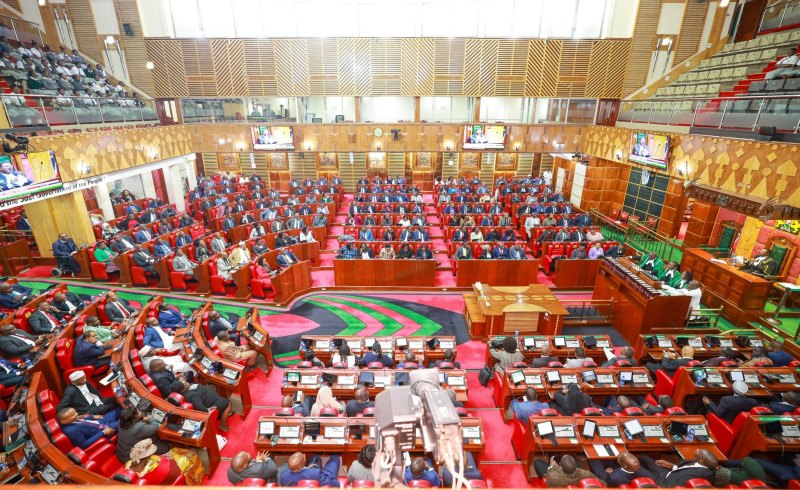
The Senate’s powers to compel attendance are anchored in Article 125 of the Constitution, which grants Parliament and its committees the authority to summon any person to give evidence or provide information.
These powers are reinforced under Section 18(1) of the Parliamentary Powers and Privileges Act, which accords Parliament and its committees the same powers as the High Court. Subsection (3) allows Parliament to order the arrest of individuals who fail to honour summons.
Backing the hardline approach, Narok Senator Ledama Ole Kina urged the Senate to fully exercise its enforcement powers to protect devolution.
“The only way you can protect devolution is by making sure that you call these people to account,” he said, calling for the use of enforcement mechanisms available to Parliament.
With audit hearings set to resume later this month, the Senate hopes the new rules will curb delays and restore discipline in county accountability processes.