A High Court judge has criticised practices in some Kenyan communities that continue to treat women as subordinate to men, particularly in matters of property ownership and decision-making.
Justice Reuben Nyakundi noted that despite the progressive provisions of the 2010 Constitution, many women still face discrimination under customary law.
“Some communities continue to view adult women in the same way as minors, limiting their independence in decision-making,” Justice Nyakundi said.
He observed that, under traditional African customary law, women were often excluded from inheriting or owning property, as it was assumed they would be cared for within their birth family or marital home.
The Eldoret-based judge explained that historically, men acquired, possessed, and controlled family assets, with property typically passing through the male lineage.
According to Justice Nyakundi, this practice often leaves daughters, widows, and other female family members without inheritance rights, which he said conflicts with the Constitution’s guarantees of equality and human dignity under Articles 27 and 28.
“Precluding women from inheriting estates—whether daughters, widows, or spouses—appears inconsistent with constitutional principles,” he said.
Justice Nyakundi emphasised the fundamental importance of property, noting that land ownership provides the basis for shelter, food, economic activities, and social and political participation, as recognised under Article 26 of the Constitution.
The judge made these remarks in a succession case involving the estate of the late Andrea Chebos Maiyo (Succession Cause No. 281 of 2006), in which one of the widows sought a review of a previous ruling confirming letters of administration.
He observed that patriarchal assumptions about male guardianship of family property persist, even under the constitutional framework.
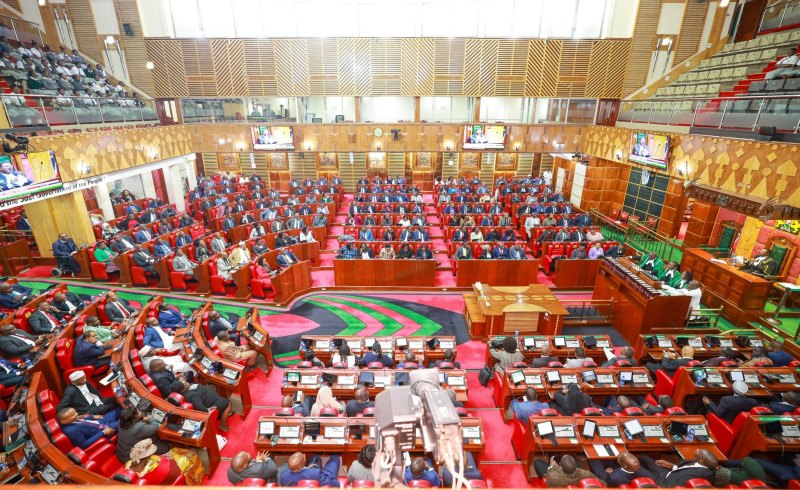
In his ruling dated January 15, 2026, Justice Nyakundi called on Parliament to review the Law of Succession Act and consider enacting legislation to harmonise customary law with constitutional values.
“If some citizens feel the Law of Succession does not reflect their expectations, it may be time for Parliament to consider codifying customary practices in a manner consistent with the Constitution, particularly Article 10 and the Bill of Rights,” he said.
The judge also noted that probate disputes are sometimes used to prevent rightful heirs from accessing property, allowing others to benefit from assets they did not acquire.
He described such disputes as a “legal battleground” where some heirs attempt to profit from the work or investments of the deceased.
Justice Nyakundi stressed the need for Parliament to reassess the Law of Succession Act, enacted in 1981, to ensure it aligns with constitutional values and effectively delivers justice to Kenyan families.
“This review should be informed by feedback from the judiciary, which handles succession disputes daily, to ensure the law protects legitimate heirs and prevents prolonged litigation,” he said.