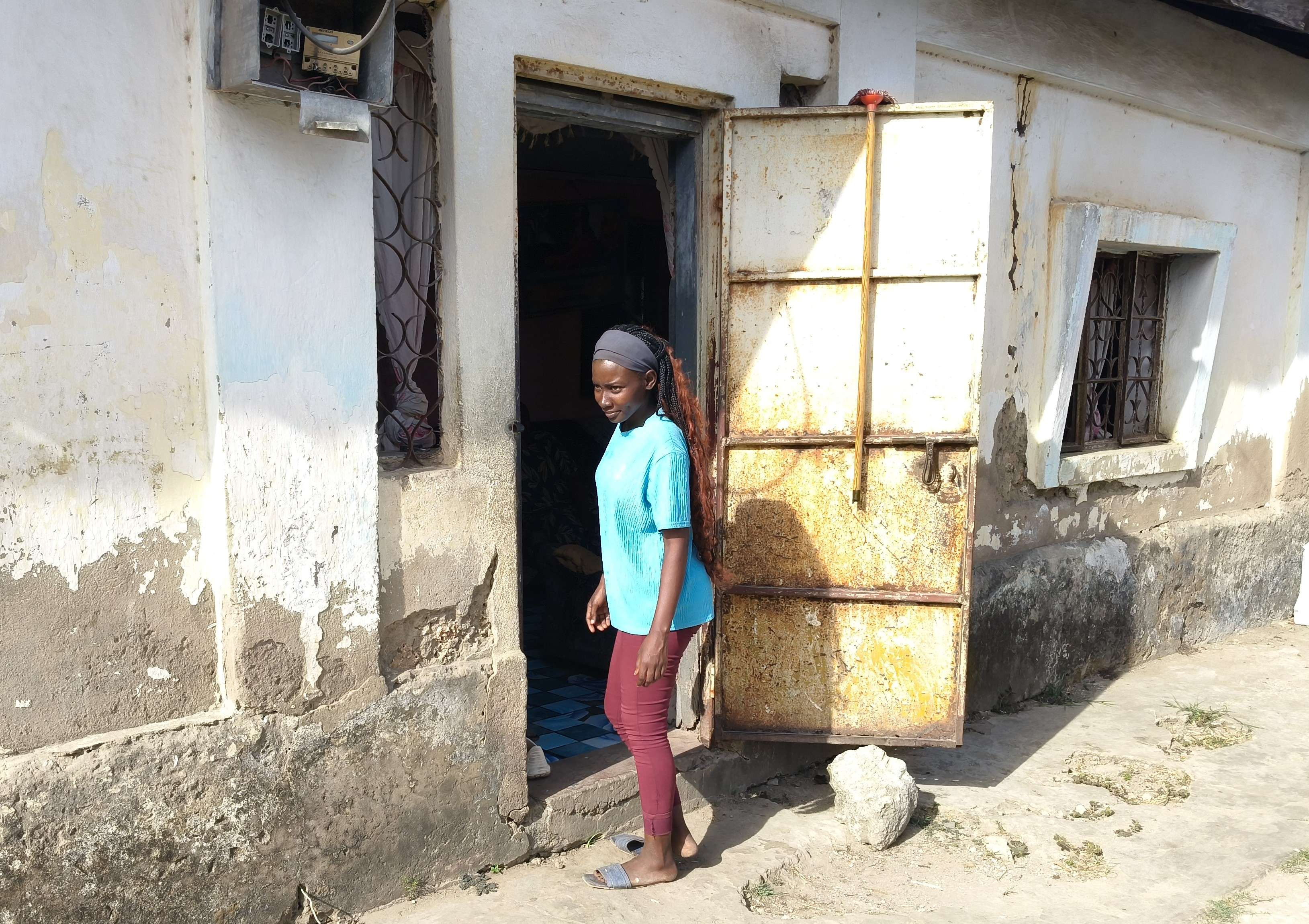
Flora Wakesho at their Frere Town home on Tuesday / BRIAN OTIENO
When Flora Wakesho first told her mother she wanted to become a mortician, her words were met with disbelief.
“I almost fainted,” recalls her mother, Philomena Marura.
“I thought it was a joke.”
But Wakesho’s resolve was unwavering. Even as a child, she insisted on pursuing what many consider an “unnatural” career.
“In Standard 1, when everyone shared their dream jobs—doctors, engineers, pilots—I said mortician. There was silence, then laughter. I told them all these people would die someday, and I would be their boss,” she chuckled during a recent conversation at her home in Frere Town.
Initially, it was a playful declaration. Yet over time, Wakesho saw the practical side: traditional careers are crowded, opportunities scarce, and death—a certainty—creates a unique need she could fulfil.
“I realised that someone has to care for bodies after death. Someone has to do the job,” she said.
Her fascination gradually turned into determination. As she grew, Wakesho confronted her fear of dead bodies.
“I started attending funerals. I forced myself to view bodies, no matter how unsettling. Now, I can even spend a night in the same room with a body,” she said, smiling. The work, she insists, is honourable, essential and deeply human.
Wakesho has faced skepticism from friends and strangers alike. Many react with disbelief, assuming she must be eccentric or worse. Yet she remains steadfast.
“I know people might reject me or distance themselves, but I will not do that to them. Morticians are human, not ghosts,” she said.
Her dream, however, now faces a formidable obstacle: college fees.
Wakesho excelled in her KCSE exam at Frere Town Secondary School in 2025 and aspires to study mortuary science at the Kenya Medical Training College. But her mother, a single parent, struggles financially. Marura lost her accounting job during the Covid-19 pandemic, leaving the family barely able to cover basic needs.
“When Wakesho first told me, I couldn’t sleep. I had nightmares about dead people and even dreamt I was dead, attended by my own daughter,” Marura confessed.
She admits she tried to dissuade her, confronting her with questions and even threats.
“I worried—would people accept her? Would she have a normal life? Could she handle the psychological strain?”
Despite initial fears, Marura now supports her daughter fully but remains anxious about finances.
“I want her to succeed, but I barely have enough to feed us. College fees are a constant worry,” she said.
“I hope someone can help her chase her dream.”
Wakesho, meanwhile, is undeterred by societal expectations or her mother’s initial hesitation. She views the mortician’s role as vital, dignified and indispensable.
“Death is inevitable. Everyone has to go through it. If no one cares for the deceased, what happens to them?” she asked.
Her story is also part of a broader shift in Kenya, where women are increasingly entering the traditionally male-dominated field of mortuary science.
Prominent female morticians like Mary Nzilani, Ann Mwangangi and Filinda Kamau are redefining the profession, providing dignity to the deceased while challenging societal stereotypes. Wakesho sees herself as part of this new wave.
For Wakesho, the challenges—fear, social stigma, and financial constraints—are outweighed by her passion and conviction.
“I chose this path because it is unique, necessary and meaningful. I want to prove that women can excel in every career, even those society deems unusual,” she said.
At her Frere Town home, the young woman’s quiet confidence shines through. She has turned childhood curiosity into ambition, skepticism into motivation and fear into resilience. With support, she hopes to begin a journey that will not only fulfil her personal dream but also serve the community by honouring lives even after death.
As her mother appeals to well-wishers for assistance, Wakesho's determination remains unshaken.
“I will pursue this dream with dignity and respect, for myself and for those who will eventually trust me with their final farewell,” she said.
In a society often uncomfortable with death, Wakesho is challenging perceptions, breaking taboos, and carving a path that few dare to tread.