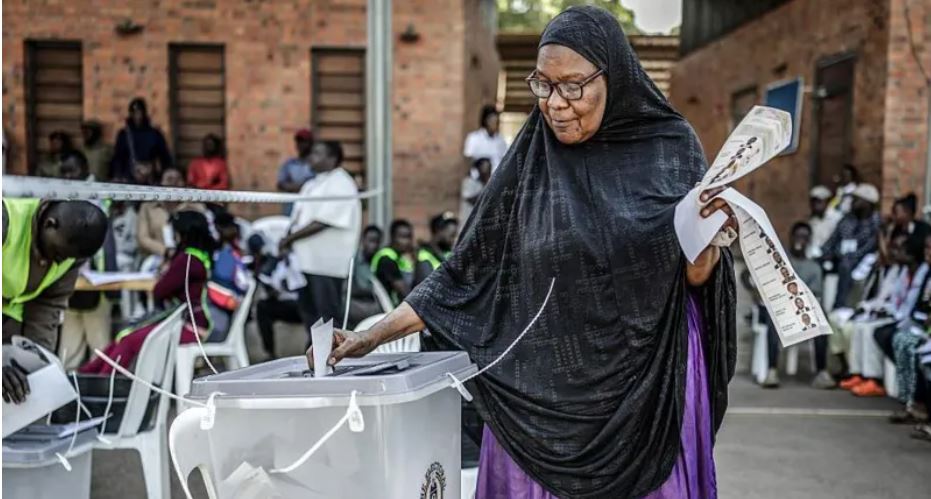
Vote counting has commenced at various polling stations across Kampala and other parts of the country following the conclusion of voting.
Electoral officials are tallying ballots to determine the results, with updates expected to be released progressively as counting continues.
Authorities have urged the public to remain patient and allow the process to proceed transparently and without interference.
President Yoweri Museveni, 81, in office since 1986, is aiming for a seventh successive election with his main challenger being pop-star-turned-politician Bobi Wine, 43.
According to BBC, if everything goes as per the plan, the outcome of the presidential vote should be known by 16:00 local time (13:00 GMT) on Saturday, 17 January.
The BBC said it is because the law requires the Electoral Commission to declare the presidential result within 48 hours from the end of voting.
The Uganda elections consist of 21.6 million registered voters with eight presidential candidates, 353 constituency MPs to be elected and 146 women representatives, one per local district to be elected. Museveni and Bobi Wine are the two front-runners among the all-male list of eight hopefuls.
This is the second time they are facing off at the ballot box, with the president winning the 2021 poll, marred by allegations of rigging and a crackdown on the opposition, with 58 per cent of the vote compared to Bobi Wine's 35 per cent.
The Uganda polls began early morning, where the BBC observed growing frustration among voters queuing at some polling stations in the capital, Kampala, where voting had yet to start.
The delays were blamed on failures of biometric identification kits, which some been linked to the network outage, as well as a lack of equipment in some places.
The electoral agency apologised for the "technical glitches", assuring that officials were working toresolve them.
Speaking to journalists on Thursday, as published by the BBC, electoral chief Simon Byabakama ordered the use of the national voters' register where biometric machines failed to function.
"It is the primary duty of the Electoral Commission to ensure that no citizen is disenfranchised due to machine failure," Byabakama said.
Internet access had been suspended ahead of voting day, with Uganda's Communications Commission saying a blackout was necessary to prevent misinformation, fraud and the incitement of violence - a move condemned by the UN human rights office as "deeply worrying".
On Tuesday, the Uganda Communication Commission ordered a ' temporary' shutdown of internet until further notice.
The shutdown orders came 48 hours before the Uganda General Elections set for Thursday, January 15, 2026.
“The suspension is effective 13th January 2026, at 1800hrs and will remain in force until a restoration notice is issued by UCC. During this period, all non-essential public internet traffic must be blocked,” stated UCC Executive Director Thembo Nyombi.
The shutdown is expected to affect mobile and fixed-line services, as well as major social media and digital communication platforms.
Rights groups have condemned the measure, warning that blackouts during elections impede transparency, restrict freedom of expression, and limit independent verification of events on the ground.
The Kenya Human Rights Commission (KHRC) expressed concern over the UCC’s decision, noting that it comes amid reports of intimidation, arrests, and the suspension of permits for five non-governmental organisations.