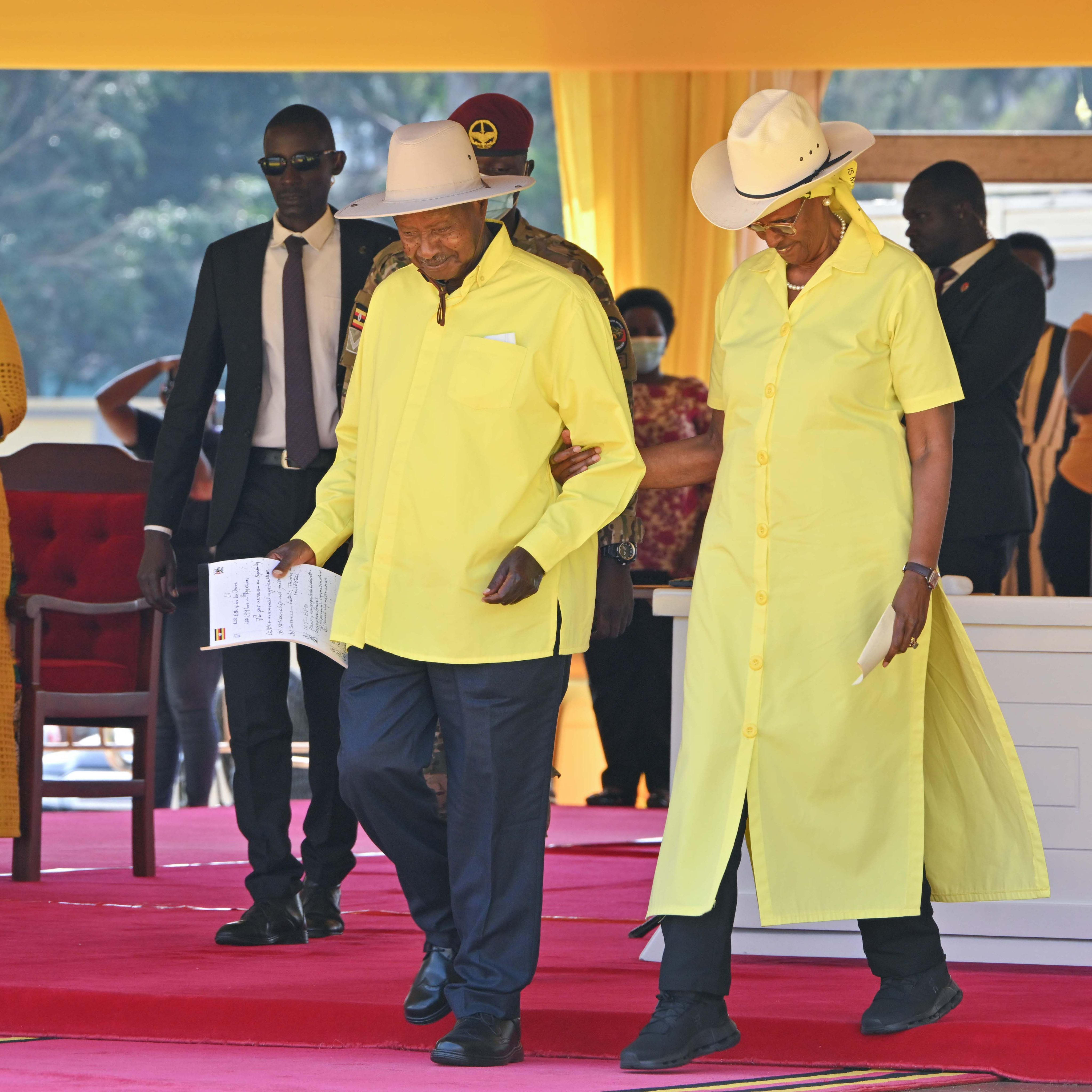
 Uganda President Yoweri Museveni and his wife, Janet, at rally in Kololo
Ugandans will today cast their ballots in an election widely expected to hand President Yoweri Museveni a seventh term in office.
A win for Museveni, 81, will extend his four-decade grip on power and enter a consequential term, having signalled it will be his last election. This has triggered succession politics within the ruling National Resistance Movement and the country.
Voting will commence amid a heavily militarised political environment, widespread repression of the opposition and mounting international concern over the credibility of the electoral process.
While eight candidates have expressed interest in the presidency, the only real threat to Museveni is opposition leader Robert Kyagulanyi, alias Bobi Wine, of the National Unity Platform.
The other candidates on the ballot are Frank Bulira, Robert Kasibante, Joseph Mabirizi, Nandala Mafabi, Mugisha Muntu and Mubarak Munyagwa.
However, with state institutions firmly under Museveni’s control, the NRM entrenched across rural Uganda and security apparatus deployed heavily against dissent, analysts say the odds remain heavily stacked in the incumbent’s favour.
The latest opinion poll by the Development Watch Centre, conducted between November 19 and December 16, placed Museveni well ahead of Bobi Wine.
According to the poll, Museveni commands 60.94 per cent support nationally, compared to Bobi Wine’s 35.26 per cent.
The poll, which interviewed 3,758 respondents in 42 districts spread across 12 of the country’s sub-regions, showed Museveni leading Bobi Wine in 11 of the 12 sub-regions sampled.
The pollster indicated Bobi Wine was only leading in the Kampala sub-region with 55.16 percent of respondents’ support against 42.26 percent for Museveni.
While the opposition disputes the credibility of polling in an atmosphere of fear, the figures broadly mirror historical voting patterns that have consistently favoured the President.
In the 2021 election, Museveni was declared the winner with 58.6 per cent of the vote against Bobi Wine’s 34.8 per cent, a result rejected by the opposition amid claims of rigging.
In 2016, Museveni secured 60.7 per cent against veteran opposition leader Kizza Besigye’s 35.6 per cent. Besigye remains among political leaders currently in jail.
Earlier contests, including those in 2011 and 2006, similarly delivered comfortable victories for the NRM.
Although the NRM has increasingly lost urban support, its popularity remains high in rural Uganda.
Its extensive grassroots networks, patronage systems and control over local administrative structures have ensured deep loyalty in the countryside.
Bobi Wine’s support base remains largely urban and youthful.
The former musician’s NUP has electrified younger voters in Kampala and other major towns, drawing fanatical support in the two presidential campaigns he has run for.
However, translating urban enthusiasm into a nationwide electoral breakthrough has proven elusive, especially in remote areas where access, organisation and messaging are constrained by state control and intimidation.
Many of his rallies have been violently disrupted by security agents, NUP candidates and activists have been arrested and his movement restrained.
A report by the UN Human Rights Office last week warned the elections would take place in an environment marked by “widespread repression and intimidation against the political opposition, human rights defenders, journalists and those with dissenting views”.
The report highlighted how authorities use a series of laws enacted or amended since 2021, entrenching repression and impunity—particularly against the opposition—and restricting the rights to freedom of expression, association and peaceful assembly.
On Tuesday, authorities announced a “temporary” internet shutdown a day before the election. A number of NGOs issued a joint statement condemning the move, among them Chapter Four-Uganda, African Centre for Media Excellence, Agora Centre for Research, National Coalition of Human Rights Defenders, Alliance for Finance Monitoring, Centre for Constitutional Governance, Human Rights Network for Journalists and Uganda National NGO Forum.
Others named in the statement are the Network of Public Interest Lawyers and the African Centre for Treatment and Rehabilitation of Torture Victims.
UN High Commissioner for Human Rights Volker Türk called on the Ugandan authorities to uphold the rights of all citizens to take part in the public affairs of their country.
Uganda’s highly securitised state remains central to Museveni’s grip on power. The President maintains tight control over the army, police and intelligence services, institutions he has repeatedly relied on to neutralise challengers.
During this campaign, security forces have been omnipresent, reinforcing perceptions that the election is less a contest than a managed process overseen by the state.
Another contentious factor is the Electoral Commission, which the opposition and civil society groups accuse of lacking independence.
On Tuesday, The Africans for Africa lobby group said in a press briefing in Nairobi that the Ugandan government had effectively transferred control of the electoral process from the electoral agency to the security forces, creating an avenue for rigging.
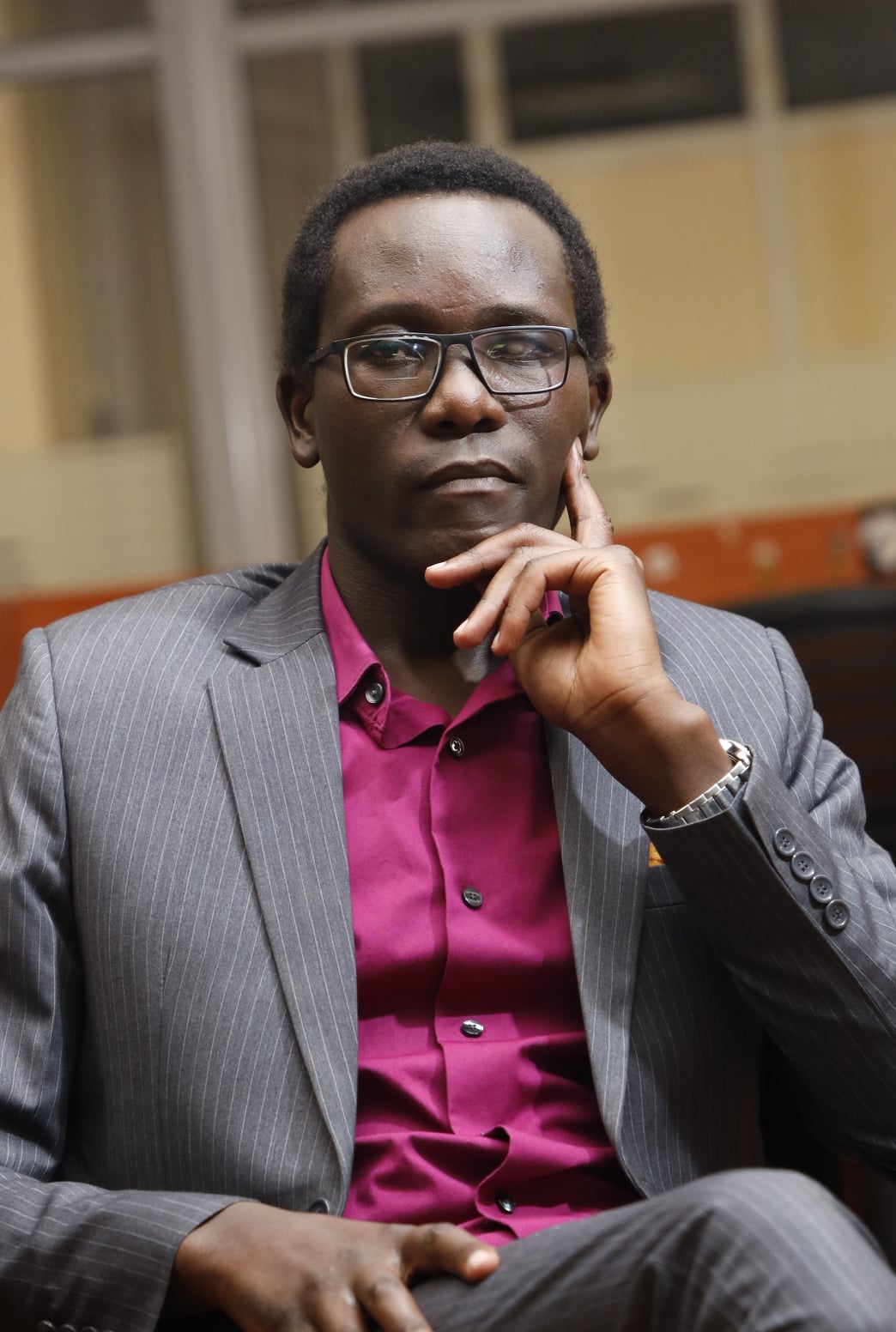
David Kaiza, a Ugandan writer and journalist, argues there is widespread rejection of the Museveni regime and claims the ruling party is paying people to attend rallies.
“On the other side, Bobi Wine is drawing crowds never seen before. I think what we are seeing here is a generational uprising and this has sent fears through the ruling party in ways we have not seen before,” Kaiza said.