Uganda’s election process came under sharp focus on Thursday after President Yoweri Museveni himself was affected by biometric verification failures that disrupted voting across the country.
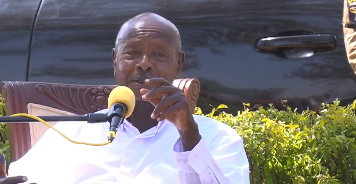
At his polling station, electronic voter identification machines failed to recognise Museveni’s fingerprints, briefly preventing him from casting his ballot and mirroring challenges reported by many voters nationwide.
“I put my right fingerprints on the machines, it didn’t work. The machine did not accept it. I put my left fingerprints, it did not accept it,” Museveni told journalists after the incident.
Election officials were forced to resort to facial recognition technology to verify the president’s identity, allowing him to vote.
“It could be they took them in a different angle. But my face was scanned and accepted by the machine,” he said.
The malfunction has amplified concerns over the reliability of Uganda’s biometric voting systems, which experienced widespread delays and technical glitches, prompting authorities in several polling stations to revert to manual voting.
Museveni said the failure of the system raised questions that would need to be investigated.
“So, I don’t know if this was an oversight or part of the manipulation. But we shall study all the other factors. We are following it. We will find out why,” he said.
The polls began early morning, where the BBC observed growing frustration among voters queuing at some polling stations in the capital, Kampala, where voting had yet to start.
The delays were blamed on failures of biometric identification kits, which some been linked to the network outage, as well as a lack of equipment in some places.
The electoral agency apologised for the "technical glitches", assuring that officials were working toresolve them.
Speaking to journalists on Thursday, as published by the BBC, electoral chief Simon Byabakama ordered the use of the national voters' register where biometric machines failed to function.
"It is the primary duty of the Electoral Commission to ensure that no citizen is disenfranchised due to machine failure," Byabakama said.
The problems, BBC reported, appear to be affecting areas that are seen as pro-government as well as areas that are seen as pro-opposition.
The country's law allows polling hours to be extended if challenges disrupt the voting process.
"Polling stations will remain open until all registered voters in the queue by 4 pm have cast their votes," Byabakama stated.
Internet access had been suspended ahead of voting day, with Uganda's Communications Commission saying a blackout was necessary to prevent misinformation, fraud and the incitement of violence - a move condemned by the UN human rights office as "deeply worrying".