
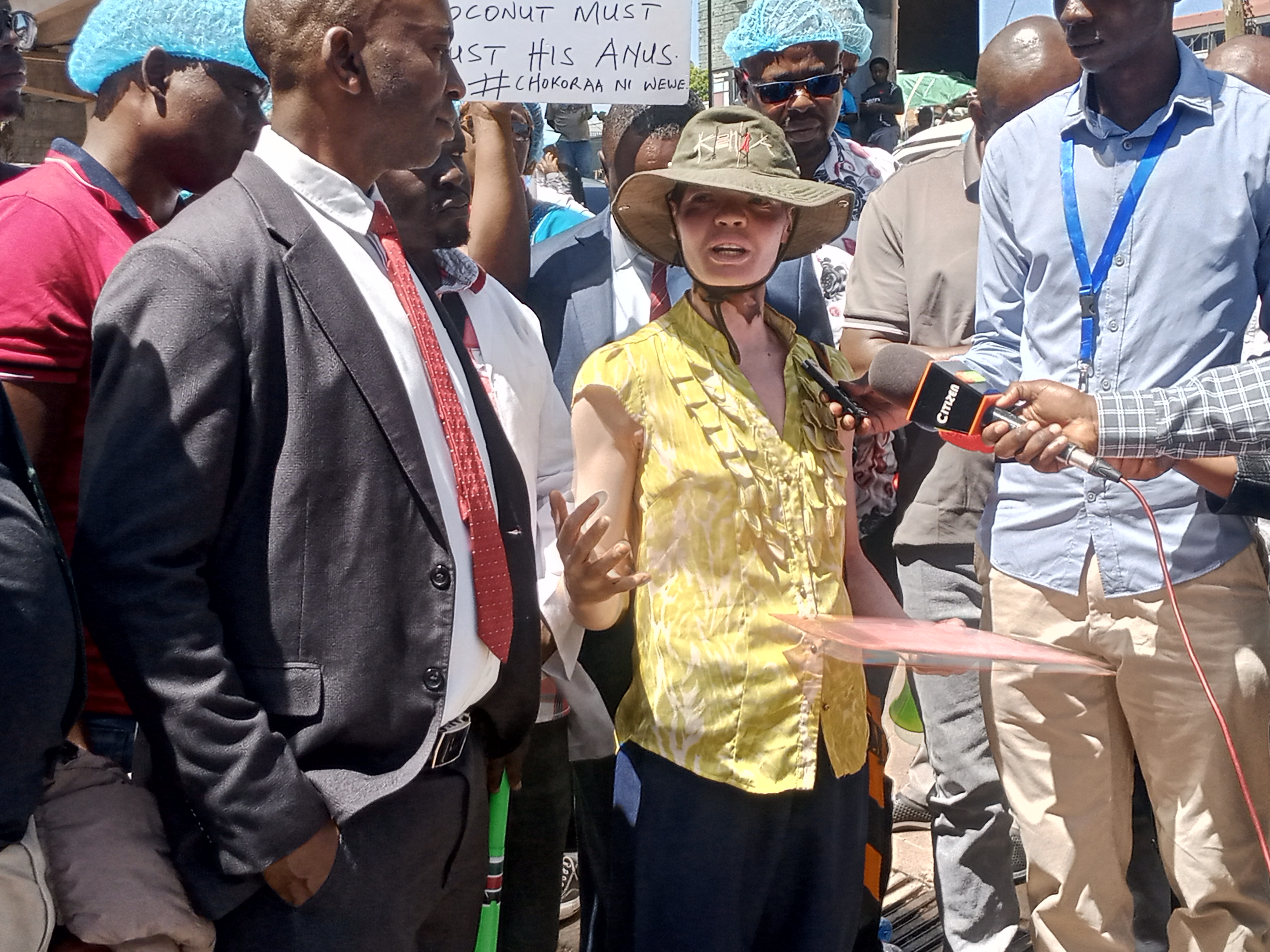
 In the middle: Leah Nanjala, one of the affected patients by the demonstrations.
The nationwide protests by clinical officers on Wednesday brought healthcare services in several public hospitals to a standstill, leaving patients stranded and untreated.
The clinicians have been on strike for over three weeks over several grievances, including a Collective Bargaining Agreement.
Among those affected was Leah Nanjala, whose search for medical care turned into a day-long ordeal that exposed the human cost of disruptions in the public health system.
Nanjala set out early in the morning, hoping to receive treatment at one of Nairobi’s main referral facilities, but found no clinicians on duty due to the ongoing demonstrations.
“I went to the hospital, but the security guards told me that there were no doctors. With no option for treatment, I was forced to go to the hospital’s chemist to buy body oil to relieve myself from the hot sun using all the money I had,” she said.
She also asked if she could purchase the medication she regularly uses.
However, she was turned away because she did not have a prescription letter from a doctor, something she could not obtain due to the absence of clinicians in public facilities.
She suffers from vitiligo, a condition she was diagnosed with in 2018.
Nanjala says that the illness made her lose her job at a five-star hotel in Nairobi, cutting her off from a stable source of income and pushing her into financial hardship.
“The illness got me fired on the claim that I was scaring away customers at the hotel,’’ she said.
Nanjala lives in Uthiru, a considerable distance from the hospital, and despite the scorching sun, which she should avoid due to her condition, she was forced to walk back home.
The exposure placed her at risk of further skin damage and pain, a reality she says has become a constant part of her life.
With no treatment, no medication, and no money for transport back home, she walked back frustrated.
Her journey became even more distressing as the sun intensified, worsening the discomfort caused by her skin condition.
Managing her condition is costly. She spends approximately Sh17,000 every month on medication and requires daily therapy for 20 sessions, expenses she struggles to meet without regular employment.
Missing even a single day of treatment can worsen her condition, making access to healthcare not just a necessity but a matter of dignity and survival.
Her experience highlights the ripple effects of healthcare worker protests on vulnerable patients who rely on public hospitals for essential services.
While clinical officers say their demonstrations are driven by unresolved grievances and delayed reforms, patients like Nanjala are caught in the middle, bearing the immediate consequences as demonstrations continue and negotiations remain uncertain.







