
Thousands of people are feared dead after a crackdown on anti-government protests in Iran, as Iranians describe terrible levels of death and destruction in their first calls to family abroad in days.
An Iranian security official tells news agency Reuters that the death toll could be around 2,000 people, including security personnel.
One protester, Erfan Soltani, will reportedly be "executed tomorrow", with a human rights group saying they "have never witnessed a case move so quickly".
Demonstrations have been ongoing for weeks - state media reports protests calmed last night, but the BBC has received footage from people who claim they continued in a number of different places.
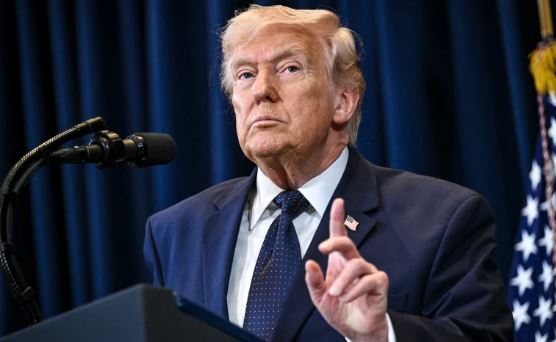
In response to the crackdown, US President Donald Trump says countries doing business with Iran will face a 25% tariff on trade with the US.
His national security team is expected to meet later to discuss intervention options - the US president has already been briefed on a range of military and covert tools his country could use, officials tell the BBC's US partner CBS.
While some people in Iran are now able to call people outside the country, an ongoing internet blackout is making it difficult to verify information from inside.
Verifying material from Iran has been increasingly difficult in recent days because the government has imposed a total internet blackout, restricting our ability to get a full picture of the scale of events.
The shutdown has hampered our ability to pinpoint exactly when a lot of protest footage was recorded, as Iranians cannot easily share video and images as events are developing on the ground or in their immediate aftermath.
This means video is often shared days after it was recorded when individuals managed to find other ways to connect to the internet.
This is not the first time the Iranian authorities have cut off the internet in the country.
Previous instances include the 2019 fuel price protests, the 2022 "Woman, Life, Freedom" protests - during which restrictions were applied intermittently - and the 12-day Iran-Israel conflict in June.
Alp Toker, Director at NetBlocks, tells the BBC that they have "racked successive blackouts over several years as Iran’s authorities fine-tuned their censorship mechanisms".
Toker says that "what once involved networks being taken down individually has now become an instant, centralised process. So the idea of an internet ‘kill switch’ is no longer figurative".
In those earlier cases, overall connectivity was reportedly higher, with some phone services and limited VPN access remaining available to segments of the population.
"By the time of the 2025 Israel-Iran war blackout and thereafter, shutdowns had become faster and more comprehensive, with even standard phone calls disabled. These kinds of outages are no longer exceptional events but part of how connectivity is routinely managed in Iran", Toker says.
In 2019 and June 2025, when connectivity dropped to approximately 4-5% and 3% respectively.
Unlike those periods, the present blackout has shown no significant fluctuations or temporary restorations of access.