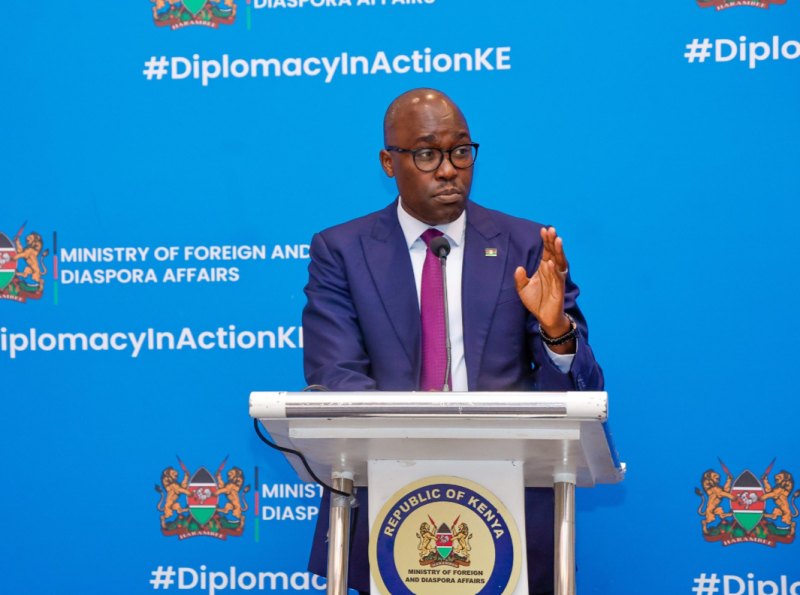
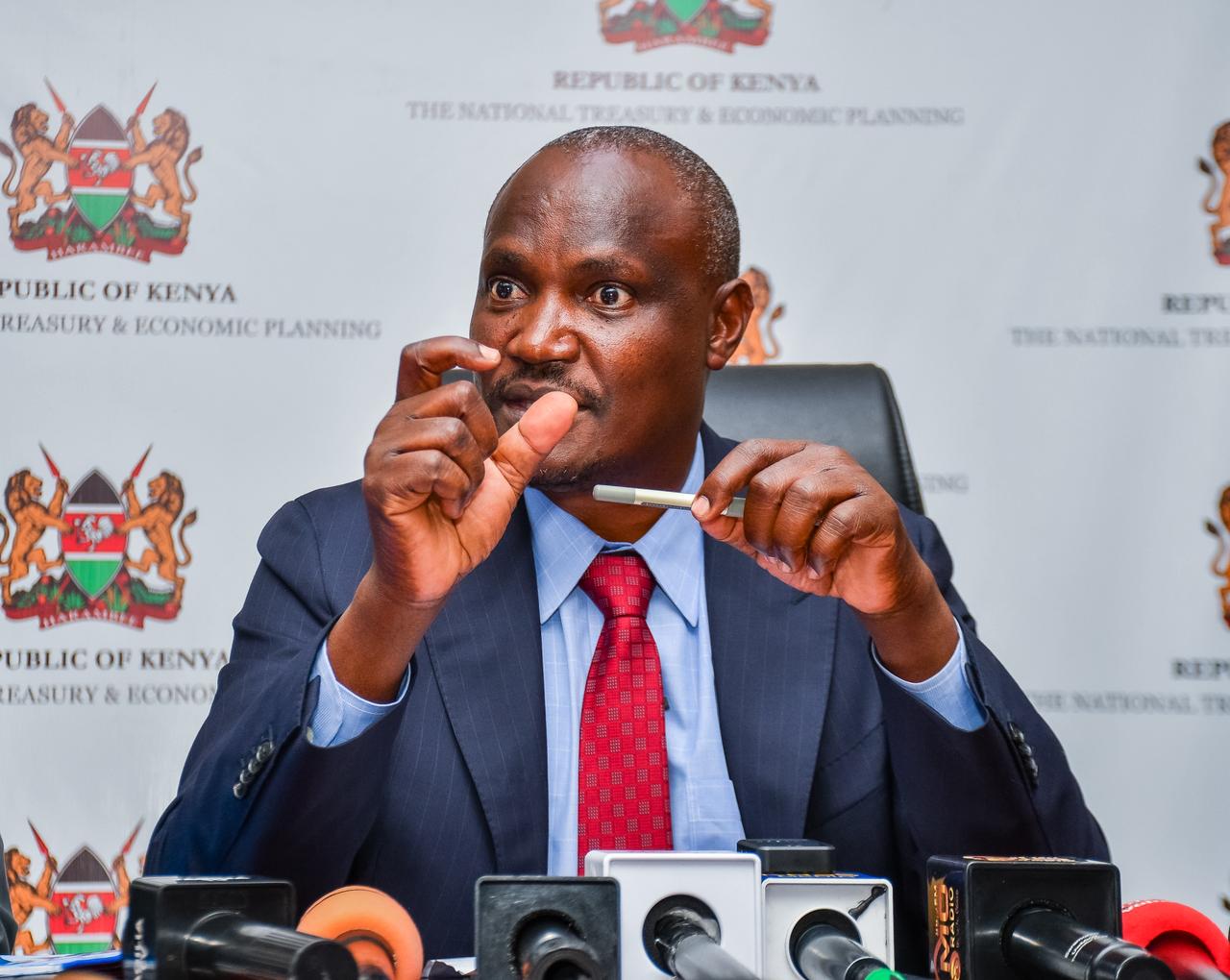
 National Treasury CS John Mbadi during a press briefing
Treasury Cabinet Secretary John Mbadi has defended the government’s decision to sell a stake in Safaricom to a strategic investor rather than directly to Kenyan retail investors, arguing that a public offer would have depressed the share price and denied the State value for money.
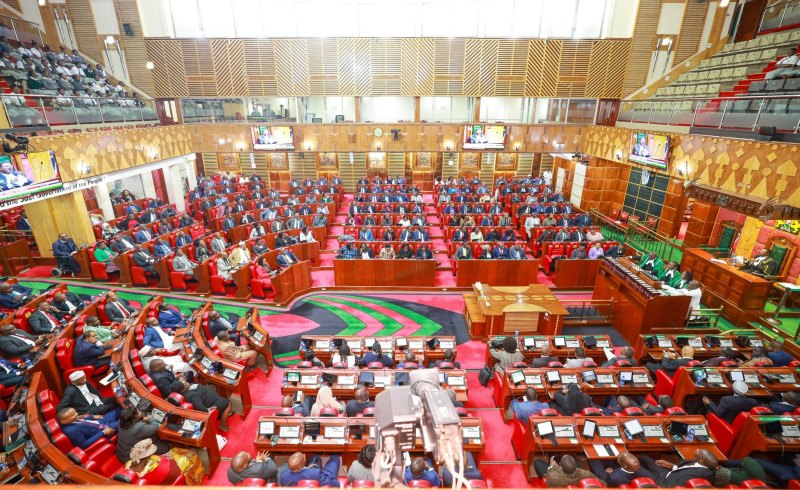
Appearing before the National Assembly’s Committee on Finance and National Planning in a joint sitting with the Select Committee on Public Debt and Privatisation, Mbadi said the transaction, expected to raise about $1.576 billion (Sh204.3 billion), was structured to maximise proceeds, protect market stability and attract foreign currency inflows.
“Selling Safaricom shares directly to Kenyans would not have given us value for money because we would have sold at a discount,” Mbadi told lawmakers.
The CS who was accompanied by the other key stakeholders in deal including Capital Markets Authority, explained that Safaricom is already a listed company with an active secondary market, where pricing is dictated by supply and demand.
“If we released additional shares into the market and asked Kenyans to bid, they would simply follow the prevailing market price. Once you increase supply, you distort the price and the law of supply and demand takes effect. That is Economics 101,” he said.
Mbadi added that a large retail offer would have required underwriting, which would raise transaction costs, and this would coincide with another major planned divestiture the Kenya Pipeline Company (KPC).
Mbadi argued that this risked saturating the market and weakening pricing for both assets.
He also said that selling primarily to local investors would have impacted the circulation and inflow of hard currency, one of the government’s key objectives amid persistent foreign exchange pressures.
The Treasury CS told the committees that the National Treasury engaged KCB Investment Bank as transaction adviser to conduct an independent valuation of Safaricom shares.
The legislators led by the Finance committee chair Kimani Kuria sought to know why Treasury went with a lower valuation despite other institutions such as Standard Bank issuing a valuation of up to Sh36 per share.
Mbadi pointed out that Treasury considered 12-month target prices published by major investment banks.
For instance, Barclays, in November 2025, set a target of Sh31, Investec Sh30, Absa Sh30.1, and NCBA and FIDA published similar estimates.
HSBC, in November 2024, projected a target of Sh28—an estimate Mbadi said proved “remarkably accurate,” as Safaricom shares were trading at about that level a year later.
Other analysts were more bullish, projecting Sh34 and Standard Investment Bank placing the target as high as Sh36. Mbadi told MPs that target prices are forward-looking projections and must be discounted to present value.
“If you discount a 12-month target price back to today, even a Sh36 projection comes down to about Sh32 per share,” he said, noting that such estimates guide negotiations but are not guaranteed outcomes.
“It should be understood that we are not selling an asset like land or machinery. We are divesting shares in a listed company, and some valuation methods simply do not apply in this context,” Mbadi said.
“This transaction delivers a clear premium to the market price, supports our foreign exchange position, and avoids destabilising the stock market,” he said, insisting that the sale met both fiscal and economic objectives.
The final negotiations with the strategic investor resulted in an agreed price of Sh34 per share, well above the six-month Volume-Weighted Average Price (VWAP) of Sh27.5 and the prevailing market price at the time.
Volume-Weighted Average Price is the average share price over a period of time, weighted by how many shares were traded at each price.
At the VWAP of Sh27.5 and more than 40 billion shares in issue, Safaricom’s market capitalisation stood at about Sh1.16 trillion, or roughly $8.98 billion.
The transaction is expected to raise Sh204.33 billion (about $1.58 billion), representing a premium of about 19 per cent over the listed share price, based on a market price of around Sh28.5.