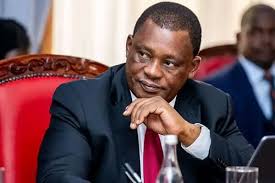
Democratic Party (DP) leader and former Attorney General Justin Muturi says that Rigathi Gachagua’s criticism of North Eastern leaders has awakened calls for accountability.
Muturi said elected leaders from the Northern counties are now under siege from their own voters to account for the resources received since the commencement of devolution.
He said Gachagua’s recent remarks on secondary school placement detonated a debate Kenya has long avoided with polite silence.
“What began as an uncomfortable observation about who gets into which schools has become a national reckoning about inequality, regional leadership, and the quiet architecture of privilege that devolution was supposed to dismantle,” the DP leader said.
In a statement issued on Monday, Muturi, who also served as Speaker of the National Assembly between 2013 and 2022, said the reaction from North Eastern Kenya has been especially telling.
“Far from rejecting his words, many residents have embraced them, turning their frustration not against Mount Kenya, but against their own leaders who have presided over abundance in Nairobi while villages back home remain trapped in scarcity.”
Gachagua’s intervention, according to the DP leader, forced the country to confront an inconvenient truth that regional inequality in education is no longer primarily about colonial neglect.
“It is increasingly about contemporary governance failure. North Eastern counties have received billions of shillings through devolution. Constituency Development Funds, county budgets, and national equalisation transfers have flowed with unprecedented volume,” Muturi said.
He added, “Yet the number of competitive public secondary schools in those regions remains painfully low. The result is that even talented students struggle to qualify for national placement because the local institutional ecosystem is weak.”
Muturi argued that what has changed is not just money; it is the politics of responsibility, and that devolution was designed to transfer not only resources, but also accountability.
“When leaders in Garissa, Mandera, Wajir, or any other county spend most of their political lives in Nairobi hotels, parliamentary corridors, and political salons, they abandon the very communities that elected them.”
“Schools are not built by speeches. Laboratories do not appear through press conferences. Teachers are not trained by social media posts. These things happen when leaders stay home long enough to make them happen,” he added.
The former AG said Gachagua may have lit the fuse, but the explosion belongs to the people and that North Eastern residents are no longer begging Nairobi for sympathy but are demanding answers from their own representatives
“While rural schools lack electricity, leaders drive convoys through the same dusty roads without ever asking why the schools are still dark. This is what political economists call elite insulation, the ability of those in power to escape the consequences of their own failure. When leaders do not use public schools, they feel no urgency to improve them.”
Muturi argued that education is not charity and that a Kenyan child in Wajir is not less deserving of a physics lab than a Kenyan child in Nyeri.
“Equality of citizenship demands equality of local effort as well as national support. Devolution was a covenant: the centre would send money, and the regions would build capacity. Too many leaders have honoured only the first half.”