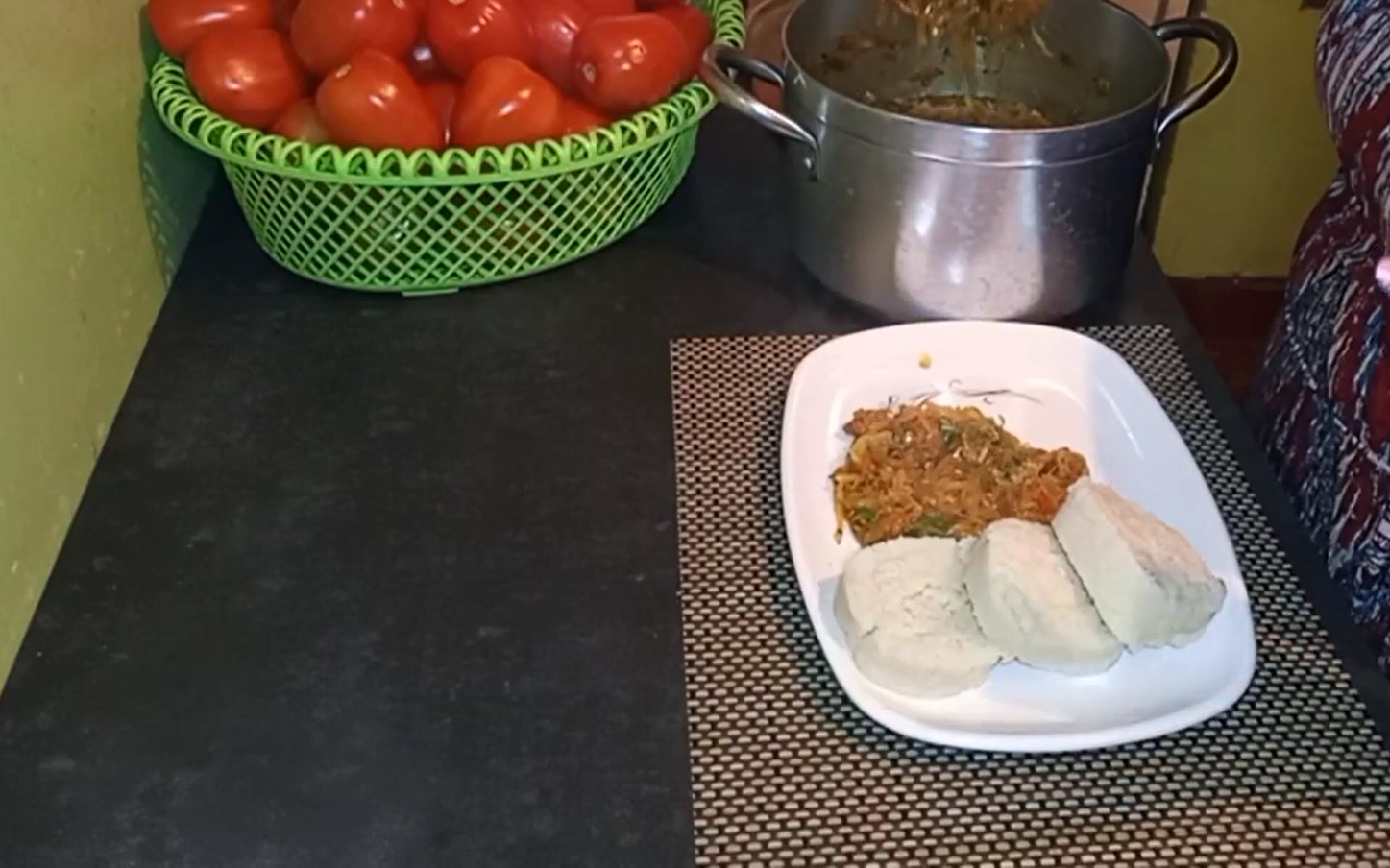
A plate of ugali and cabbage /SCREENSHOT
For many Kenyan households, January has traditionally been a month to stock up on vegetables—cabbages, sukuma wiki and other greens—either to save money after the festive season or to balance the meat-heavy meals of Christmas and New Year.
This year, however, what used to be affordable staples are slipping out of reach for families already struggling with school fees, rent and basic necessities.
Once considered everyday essentials, cabbages and sukuma wiki are now competing with meat in price.
Across Western Kenya, families who once bought a whole cabbage for Sh70 now struggle to get enough for Sh100—a sum they say belongs in the meat section of the market. In Nairobi, prices have risen by an average of Sh10, while traditional greens such as managu and terere now cost Sh250 to Sh300 in some estates.
Erratic weather, prolonged droughts and declining yields have pushed vegetable prices sharply upward. Traders say supply has shrunk, leaving even hotels struggling to keep up with demand.
“Before the drought, the supply was adequate, but now we are overpricing because there is less to sell,” said Victor Wafula, a cabbage trader.
The shortage has also changed how vegetables are sold. Across Nairobi, traders now measure chopped cabbage and sukuma wiki in small cups, with prices starting at Sh20. For those who want to chop their own, four leaves of sukuma wiki cost Sh10—a small portion for a family’s meal.
Official data confirms the trend. The Kenya National Bureau of Statistics reports that food inflation rose to 7.8 per cent year-on-year in December 2025, the largest contributor to overall inflation during the period.
Within this basket, traditionally affordable vegetables recorded some of the steepest price increases. Kale (sukuma wiki) jumped from Sh94.07 per kilogramme in November to Sh98.51 in December—a 4.7 per cent monthly increase and 23.4 per cent rise over the year.
Tomatoes and cabbages climbed even faster, fueled by reduced yields in key producing regions.
This is striking for a country that leads Africa in cabbage production. Kenya produces nearly 32 per cent of the continent’s cabbages, with output ranging between 860,000 and 1.4 million tonnes annually.
The Central highlands, particularly Nyandarua county, account for nearly 40 per cent of the harvest.
Yet, despite this abundance, Kenya exports almost none, while countries like Morocco—which produces less—ship 33,000 tonnes annually and earn $12 million (Sh1.54 billion) in revenue.
The crisis goes beyond cabbages. A new AGRA Food Security Monitor review shows that food insecurity is worsening across East Africa, with Kenya among countries seeing significant deterioration.
Nearly a quarter of the population—23.6 per cent—reports insufficient food consumption.
Consecutive poor rainfall seasons have disrupted both pastoral and marginal farming regions and the situation is expected to worsen through early 2026.
In pastoral counties like Turkana, Marsabit, Wajir, Mandera, Garissa and Tana River, crisis looms as livestock milk production and pasture availability decline. Marginal agricultural zones, already stressed, are expected to slip into crisis between February and May, as high food prices and poor harvests leave households with little choice.
For small-scale farmers like Agnes Nzisa in Kwa Vonza, Kitui county, the drought has been devastating.
“I used to harvest eight to 10 bags from my plot, but this season I barely got four. Now I have to buy maize from the market and the prices are high,” she says.
Her family has had to adjust meals, relying more on rice and sorghum when available.
“We are harvesting less but buying more,” she adds, painting a vivid picture of how climate shocks ripple through daily life.
What was once the backbone of affordable Kenyan meals—cabbages, kale, tomatoes—has become a symbol of hardship. Families are paying more, eating less and adapting their diets to survive, as the combination of drought, climate change and rising food prices reshapes what ends up on their plates.