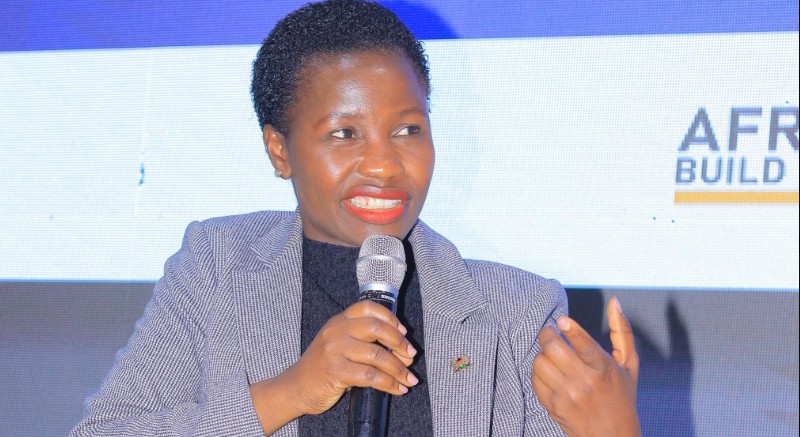
 Principal secretary, State Department for Micro, Small and Medium Enterprises (MSMEs) Development, Susan Mang’eni
The rollout, scheduled between January 8 and January 16, follows the completion of mandatory three-day business skills training by successful beneficiaries in Uasin Gishu, Elgeyo Marakwet, Nandi, Trans-Nzoia, Turkana, West Pokot and Nakuru.
Others are Narok, Bomet, Kericho, Baringo, Laikipia, Isiolo, Samburu, Nyeri, Murang’a, Kirinyaga, Nyandarua, Meru, Tharaka Nithi, Embu, Machakos, Kitui, Makueni, Nairobi, Kiambu, and Kajiado.
A statement, principal secretary, State Department for Micro, Small and Medium Enterprises (MSMEs) Development, Susan Mang’eni, revealed that the initiative, which is in its second phase, will be conducted through regional mentorship and disbursement events presided over by President William Ruto.
“Beyond financing, beneficiaries will undergo a two-month mentorship programme delivered by business development experts and local entrepreneurs to support guided entry into local business ecosystems and markets,’’ Mang’eni said.
“The mentorship component ensures that these grants are used effectively, with guidance from business development experts and local entrepreneurs.’’
She added that beneficiaries would also receive a second phase of business development support training in preparation for a subsequent tranche of funding.
In order to achieve the intended mission, beneficiaries are expected to utilise the business grants strictly in line with approved business plans developed during training, with continuous technical support provided.
Each beneficiary will receive Sh22,000 deposited into their Nyota Pochi la Biashara wallet, alongside Sh3,000 saved under the Haba na Haba account managed by the National Social Security Fund (NSSF).
The NYOTA project is a five-year initiative by the Government of Kenya, financed by the World Bank.
It forms a key pillar of the government’s youth economic empowerment agenda, aimed at promoting enterprise creation, job growth and sustainable livelihoods across the country.
Implemented by the State Department for Micro, Small and Medium Enterprises (MSMEs) Development, the project aims to empower more than 100,000 young people across all 1,450 wards nationwide, with a minimum of 70 beneficiaries per ward.
It seeks to unlock the potential of Kenya’s youth by addressing unemployment, expanding income-generating opportunities, and fostering a culture of savings and entrepreneurship.
The business support component has already been rolled out countrywide through classroom-based training.
The initiative targets youth aged 18–29 years, and up to 35 years for Persons with Disabilities, focusing on those with secondary-level education or below, who are underemployed or face systemic barriers to opportunity.
The second phase follows the first disbursement carried out in November 2025 in the Western Kenya cluster, where 12,155 beneficiaries in Kakamega, Vihiga, Busia and Bungoma counties received Sh25,000 each, amounting to Sh303.8 million in total funding.
The government has indicated that the third phase—covering 16 counties including Kilifi, Lamu, Tana River, Mombasa, Kwale, Taita Taveta, Kisumu, Siaya, Homa Bay, Migori, Nyamira, Kisii, Marsabit, Garissa, Mandera and Wajir—will be announced in due course.
Unveiled in August last year, the Sh5 billion project is expected to involve 90,000 youth who will be trained to gain job experience, 20,000 on recognition of prior learning, and another 600,000 who will be trained on Access to Government Procurement Opportunities (AGPO).
President William Ruto’s government has unveiled several other social and economic empowerment programmes aimed at addressing the high unemployment menace, with official data from the government putting the figure at 67 per cent amongst young people aged below 34 years.