The Food and Agriculture Organization has launched the International Year of the Woman Farmer 2026, a global initiative aimed at fast-tracking gender equality and women’s empowerment in agrifood systems.
According to a statement published on the FAO website, the UN-designated year will highlight women’s essential roles in agriculture while pushing for global action to address the structural barriers they continue to face.
Designated by the UN General Assembly in 2024, the international year aims to spotlight the realities faced by women farmers and drive policy reforms and investment to advance gender equality, empower women and build more resilient agrifood systems.
It is envisioned as a worldwide campaign to recognise women’s crucial yet often overlooked contributions to global agrifood systems and to accelerate efforts to close persistent gender gaps.
FAO chief economist Máximo Torero warned that progress on women’s empowerment in agrifood systems has stalled over the past decade.
“The cost of inaction is enormous. We know from recent estimates that closing the gaps between men and women in agriculture could raise global GDP by one trillion dollars and reduce food insecurity for 45 million people,” Torero said.
He pointed out that the observance goes beyond celebration, calling for renewed policy attention to the multidimensional challenges faced by women farmers.
These include the need for legal reforms and policy and programmatic actions that ensure women have equal land rights and equal access to finance, technology, extension services, markets and decision-making processes.
Beth Bechdol, FAO deputy director general, stressed that the needs of women farmers must remain a priority beyond 2026.
“Throughout 2026, the International Year will move from today’s sharing of personal stories and discussions to practical work on national policies, community partnerships, research, investment and dialogue between farmers, cooperatives, governments, financial institutions, youth networks and universities. The goal is simple, turn commitment into practice and practice into measurable impact,” she said. FAO, together with the International Fund for Agricultural Development (IFAD) and the World Food Programme, will coordinate activities throughout 2026.
Bechdol noted that women make up a significant share of the world’s agricultural workforce and are indispensable across agrifood value chains, from production and processing to distribution and trade, while also playing a central role in household food security and nutrition.
She noted that in 2021, agrifood systems employed 40 per cent of working women globally, nearly equal to men.
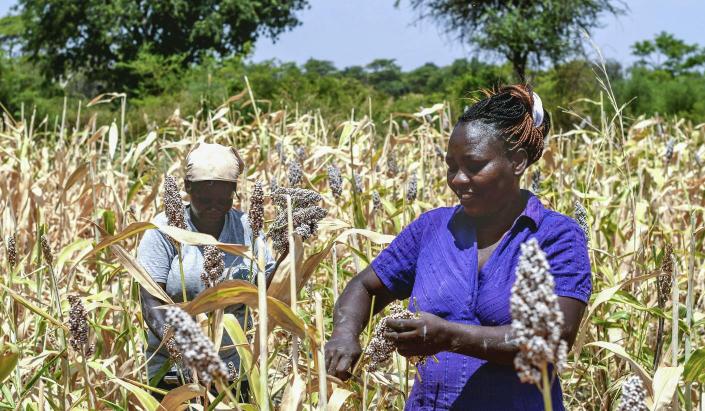
Daphine Muchai, the executive director of the Women Farmers Association of Kenya (WoFaK) noted the need to address issues that impede women farmers from undertaking both profitable and sustainable agricultural enterprises with a view to improve their livelihoods.
WoFaK is the national umbrella organisation of women farmers in Kenya that provides members with a platform to articulate issues affecting them in agriculture. Muchai noted that agriculture is largely undertaken by women, particularly the production segment of the value chain.
“We seek to empower the women farmers to sustainably increase food and nutrition security and incomes through our three pillars of capacity building, mentorship and wealth creation. Our mission is to help rural women farmers make informed food and production decisions, both at the farm and within their groups," she said.
"Rural women work tirelessly but still struggle to progress, hence the need to connect them to relevant partners and stakeholders who can help them strengthen and grow their ventures,” Muchai noted. A recent FAO report titled ‘The status of women in agrifood systems and the unjust climate’ indicated the scale of gender inequality and the disproportionate climate risks faced by women.
The report pointed out the structural barriers that limit women’s productivity, income, access to resources and resilience, noting that women farmers typically work on smaller plots of land than men. “Even when they manage farms of the same size, the gender gap in land productivity is 24 per cent.Each day of extreme high temperatures reduces the total value of crops produced by women farmers by three percent relative to men,” the report found.
It further showed that women engaged in wage employment in agrifood systems earn 78 cents for every dollar earned by men, while the unpaid care work performed by women and girls contributes at least $10.8 trillion to the global economy annually.
The report also indicated that reducing gender disparities in employment, education and income could eliminate 52 per cent of the food insecurity gap, which remains consistently higher among women. In addition, empowering rural women through targeted development interventions could raise incomes for 58 million more people and strengthen resilience for 235 million.