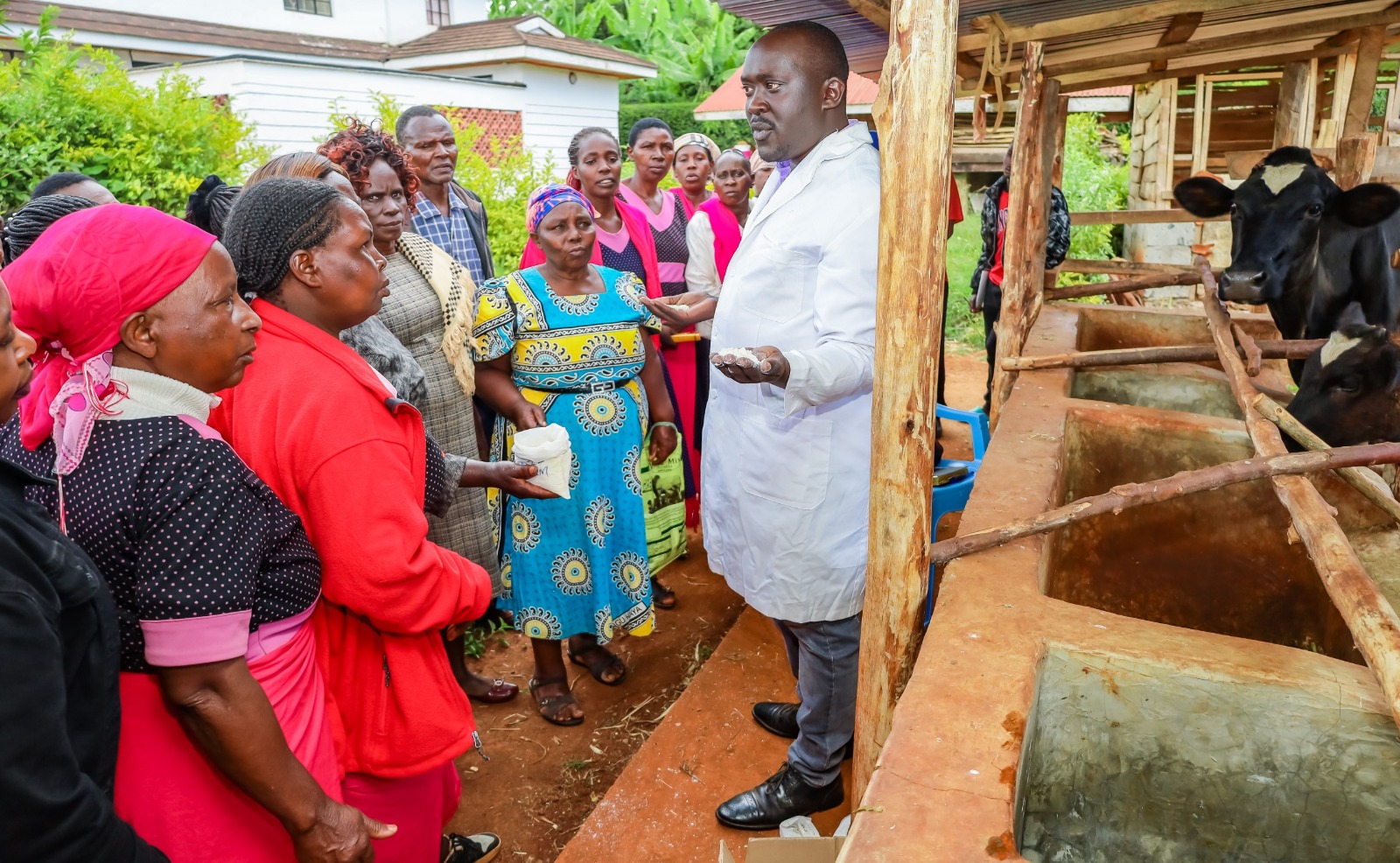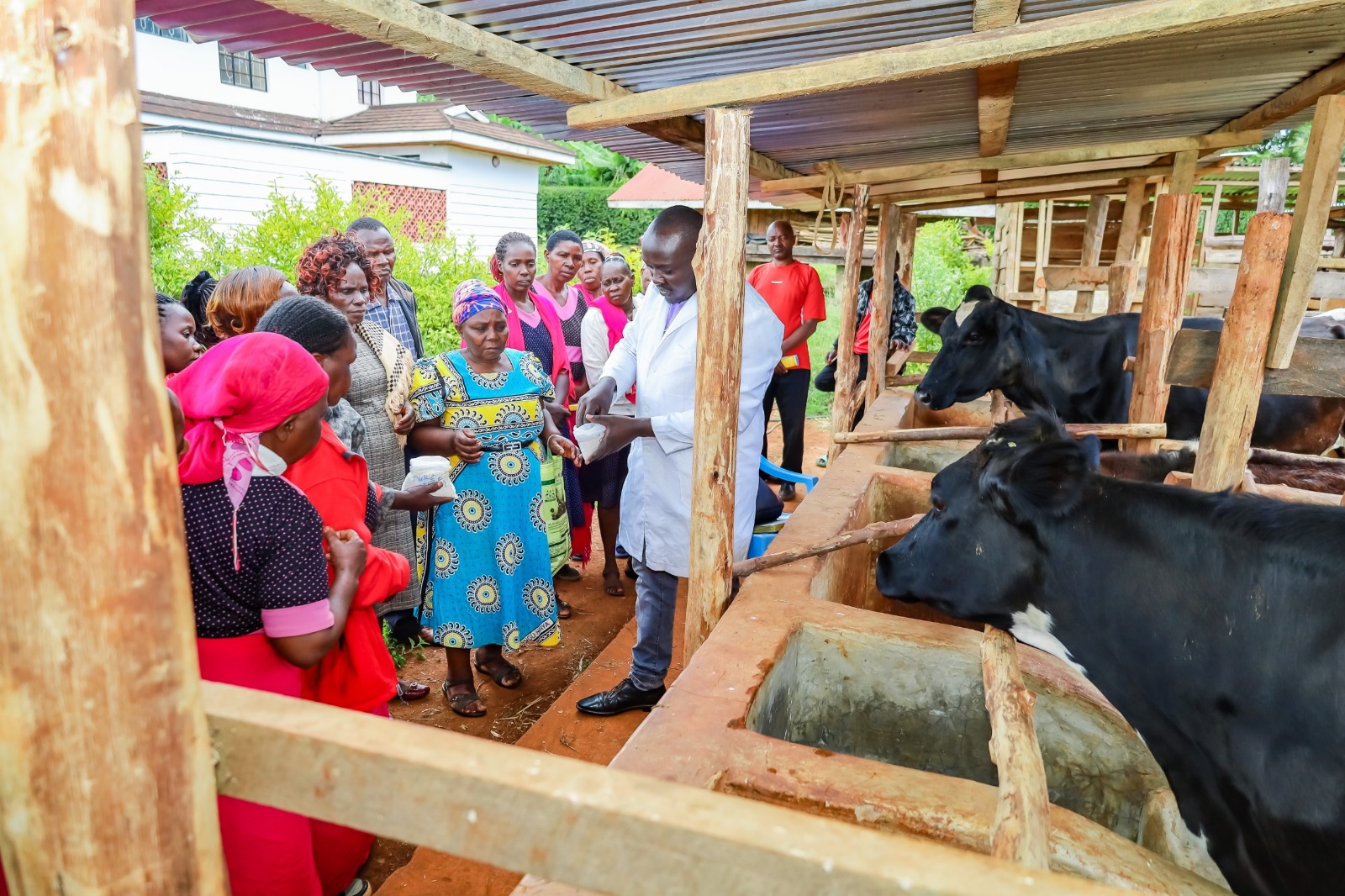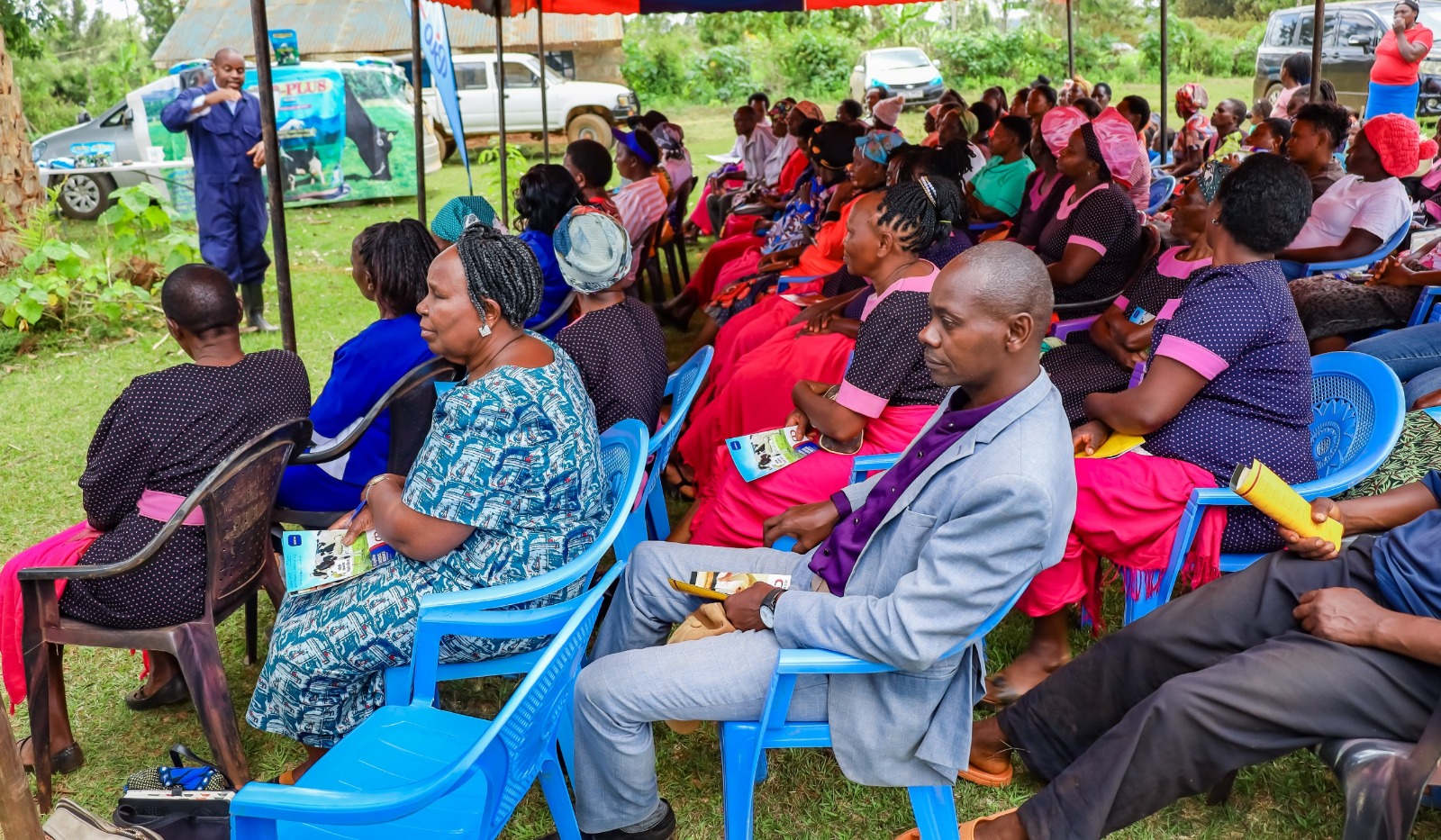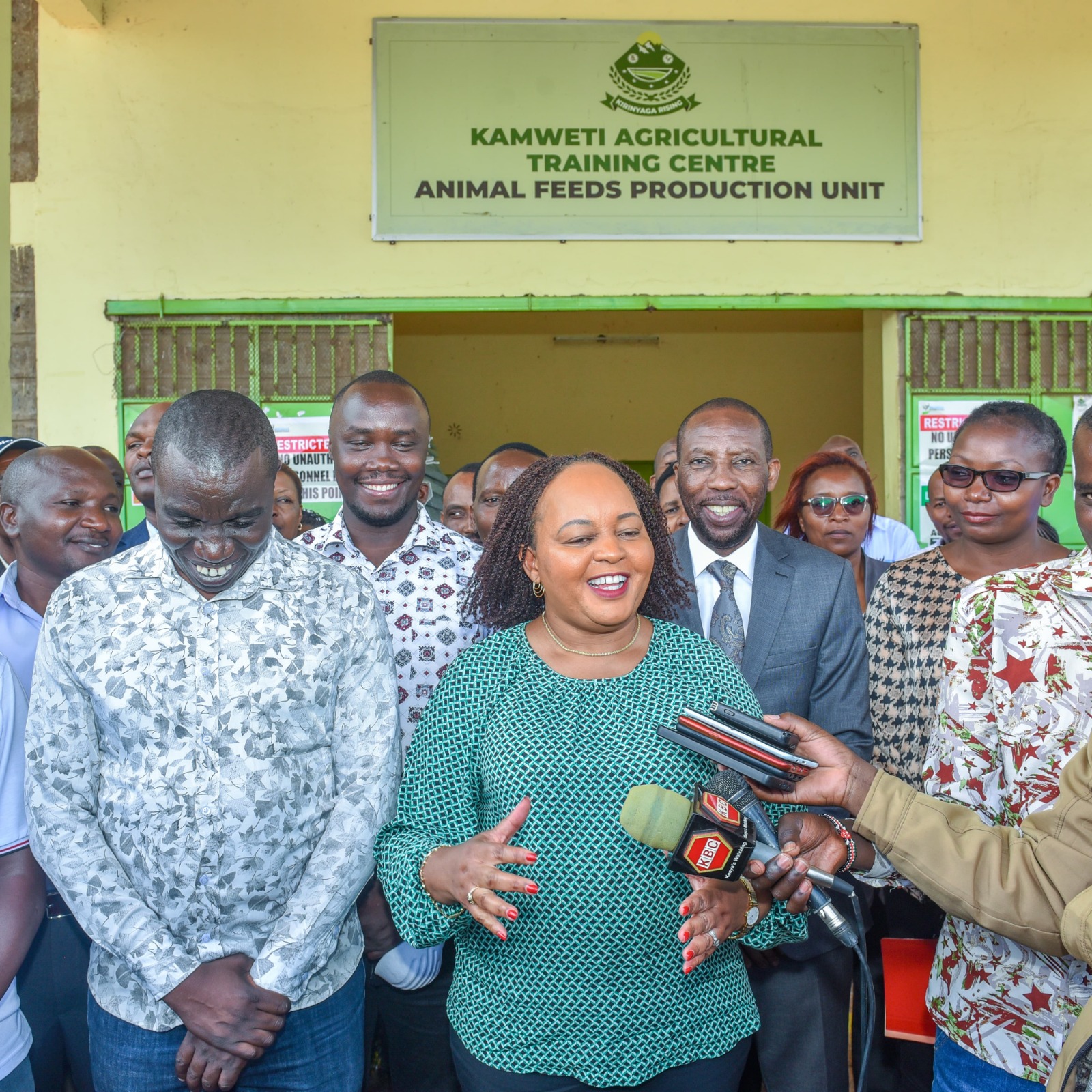
Kirinyaga Governor Ann Waiguru at Kamweti Agricultural Training Centre/ HANDOUT
The County Government of Kirinyaga has intensified farmer trainings and extension services as part of a broader strategy to transform smallholder farming into a profitable and sustainable enterprise.
Through county-organised training programmes, farmers across the county are being equipped with practical skills in animal breeding, nutrition, risk management, and market access.
The initiatives are already delivering results, enabling farmers to increase production, reduce losses, and earn more from their agricultural activities.
The County Government has partnered with Biosciences Kenya and CIC Insurance to roll out farmer trainings across various wards.
Governor Anne Waiguru said the steady gains being recorded across Kirinyaga’s agricultural sector are the result of deliberate county investments in capacity building and extension services.
She noted that agriculture remains the backbone of the county’s economy, with dairy farming playing a central role.
“Dairy farming is a major contributor to our economy, and we have deliberately supported farmers through improved cattle breeds using artificial insemination, better animal feed production, disease control, and strong extension services,” Waiguru said.
The governor added that the county has also invested in strengthening dairy institutions to ensure sustainability and better returns for farmers.
She said capacity-building initiatives have been rolled out for the county’s four dairy cooperatives to improve governance, efficiency, and market access.
As a result of these targeted interventions, Waiguru said farmers are recording higher productivity and improved incomes.
“Milk production has increased from an average of 2.5 liters per cow to 7 liters per cow per day, translating to an annual production of 86 million liters valued at Ksh.3.1 billion,” she said.
One of the recent training sessions for livestock farmers was held in Mbiri town, Njukiini Ward.
Speaking during the meeting, Biosciences Kenya representative Joel Muchia said the trainings were addressing long-standing challenges that have limited dairy farmers’ output.
“Farmers are willing to produce more milk, but when it comes to feeding and genetics, many are not able,” Muchia said.
He explained that the sessions focused on quality mineral supplements, proper feeding regimes, improved breeds, and adequate water, which he described as essential for increased milk production.
Muchia said partnering with the County Government had ensured that farmers receive practical and income-focused knowledge.
“We feel privileged to be here to train farmers so they can produce more milk and have more money in their pockets,” he said.
In addition to production-focused skills, farmers are also being trained on agricultural insurance.
The sessions aim to help farmers understand how insurance can cushion their enterprises against losses caused by disease outbreaks, climate shocks, and other unforeseen risks.
At the grassroots, farmers say the county’s consistent extension services are making a real difference.
Stephen Macharia, a dairy farmer from Muriganio Self Help Group in Njukiini Ward, said county-supported trainings had strengthened the group’s production systems and long-term planning.
“Our group has benefited from silage-making support, improved fodder storage, and technical guidance, enabling members to maintain feed quality throughout the year,” Macharia said.
He added that through county coordination, the group was among 230 farmer groups selected to receive milk coolers, a move that has improved milk handling and reduced post-harvest losses.
Another farmer, Mwaniki Mbugua, said decentralised trainings had ensured knowledge reached even village-level farmers.
He noted that under Governor Waiguru’s leadership, extension services had been brought closer to farmers, enabling them to farm more efficiently and increase their earnings.
“We have reliable officers, and the training helps us improve farming and put money in our pockets,” Mbugua said.
The impact is also being felt beyond dairy farming. Joyce Wanjiku Mwangi, a poultry farmer from Njukiini Ward, said the trainings had empowered small-scale farmers who are often overlooked.
She said farmers were trained on insurance through CIC Insurance, helping them manage losses and safeguard their investments.
Wanjiku said that through the Wezesha programme, farmers received poultry stock, leading to increased egg production and improved household incomes.
“We have learnt a lot, and these programmes have helped us earn and grow. Through NAVCDP, we have accessed affordable credit through a SACCO, enabling us to reinvest and make money,” she said.
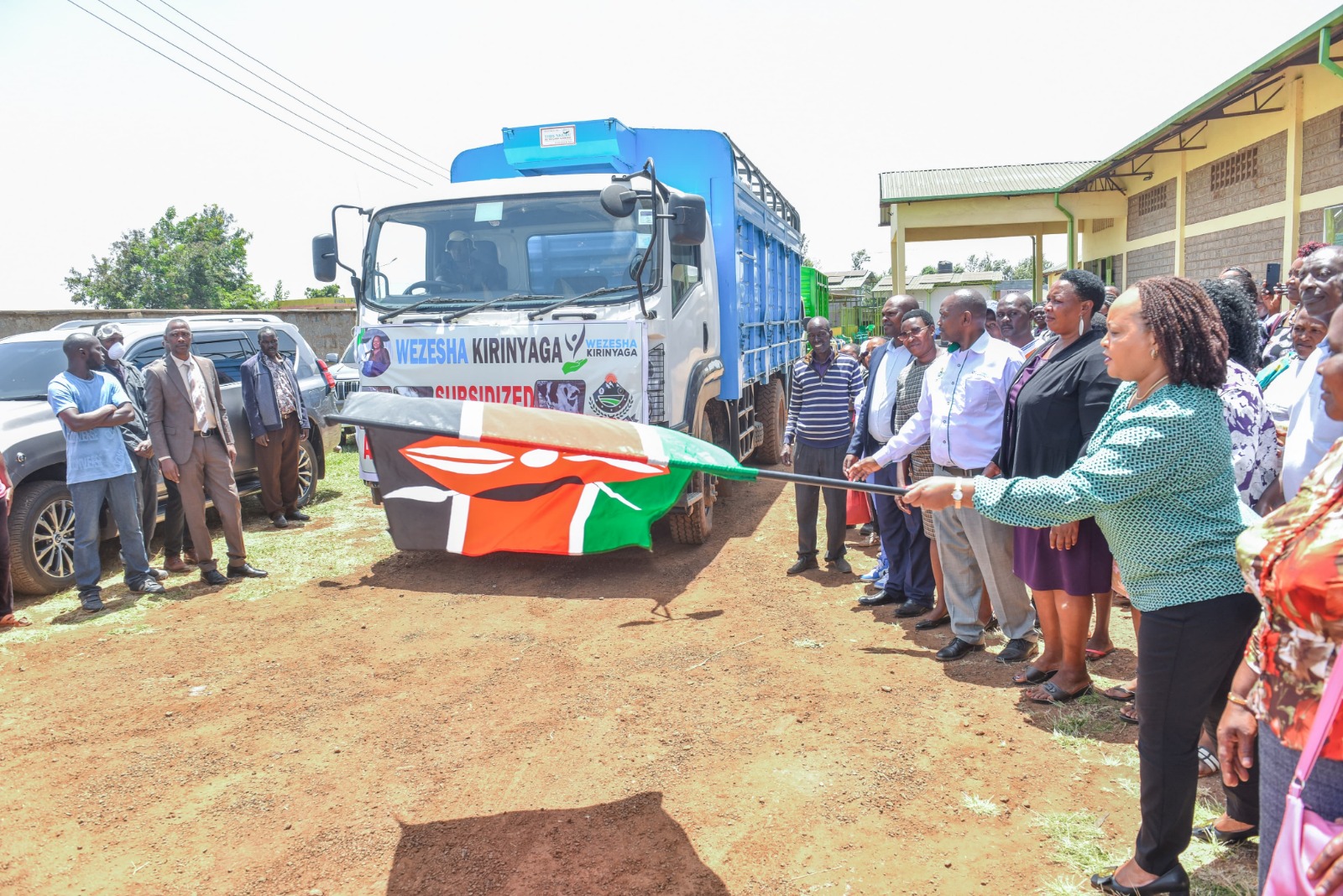
Kirinyaga Governor Ann Waiguru/ HANDOUT