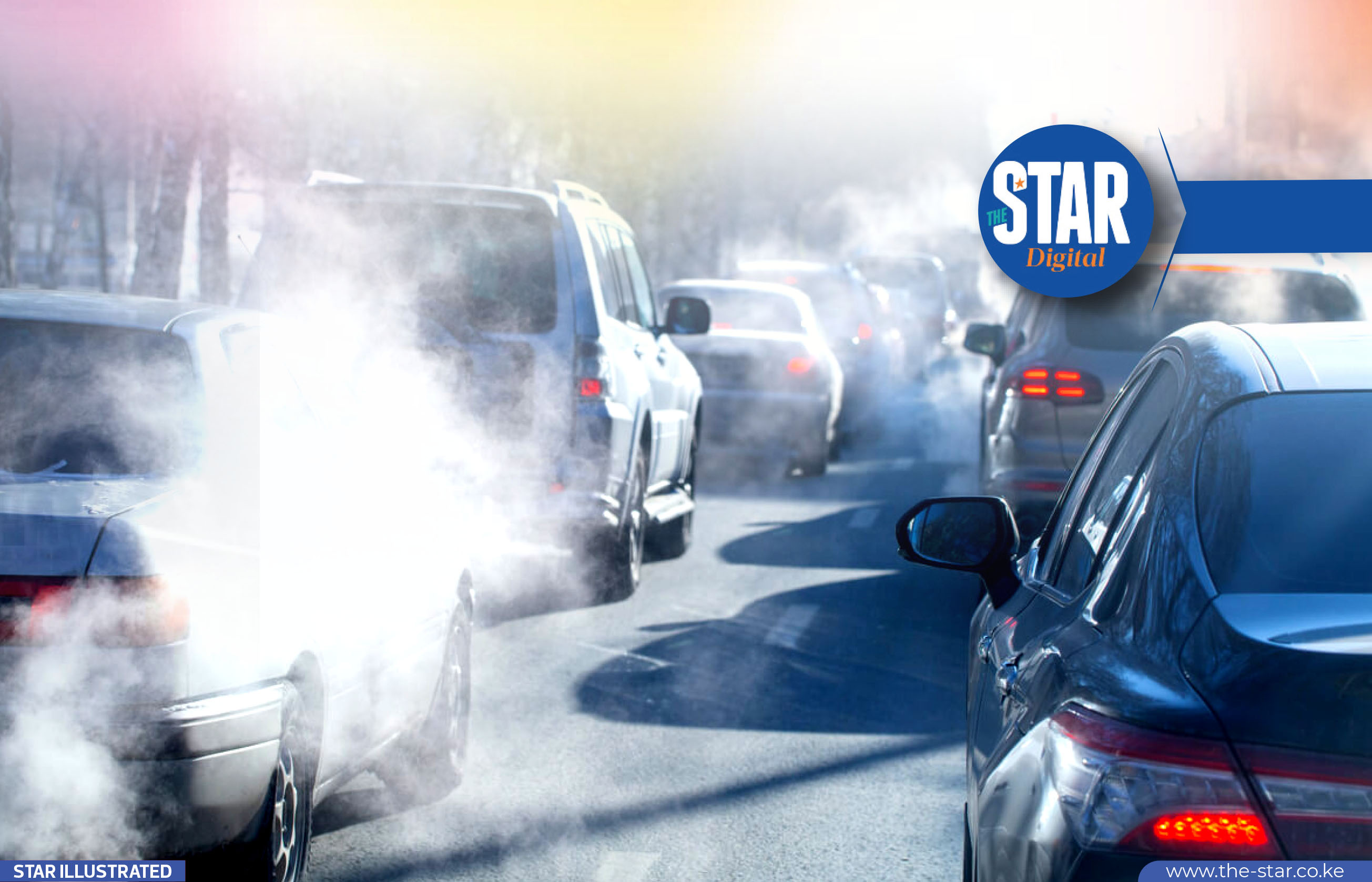
Air pollution is often discussed in scientific terms and statistics, but at its core, it is a deeply human problem that affects how we live, breathe, and stay healthy every day.
From the smoke rising from traffic-clogged roads to the haze hanging over industrial areas and open dumpsites, polluted air is an invisible companion for millions of people, especially in rapidly growing towns and cities.
Every breath we take carries tiny particles and gases that can harm the lungs, heart, and brain.
Children walking to school, street vendors working long hours outdoors, expectant mothers, and the elderly are among those most exposed.
Over time, constant exposure to polluted air contributes to asthma, heart disease, stroke, and other serious illnesses, often without immediate warning signs.
In many communities, air pollution is not a distant environmental issue but a daily reality linked to traffic congestion, burning of waste, use of charcoal and firewood, and emissions from factories.
The impacts are often felt most by low-income households living near busy roads or industrial zones, with limited access to healthcare.
In Kenya, the transport sector is the leading contributor to air pollution in Nairobi, accounting for 45 per cent of the city’s emissions.
Salaleh Okoth, head of air quality at the National Environment Management Authority, said the poor air quality has deteriorated the lives of Nairobi residents. To curb rising pollution levels, Nairobi County has proposed strategies to address the problem.
More than 26,000 Kenyans die every year due to household air pollution, according to a policy presentation by the NIHR CLEAN-Air (Africa) Global Health Research Group.
These deaths are linked to the widespread use of polluting fuels such as charcoal, firewood, and crop waste for cooking. Globally, air pollution kills an estimated 3.2 million people annually, releasing around 20.7 million tons of CO₂ equivalent emissions each year.
What Air Pollution Entails
According to the United Nations Environment Programme (UNEP), air pollution comes in two main types: indoor and outdoor.
UNEP explains that indoor air pollution primarily results from burning wood, charcoal, animal dung, and other so-called “solid fuels,” which billions of people worldwide use for cooking. When these fuels are burned, they release microscopic dust, soot, and black carbon particles, collectively known as fine particulate matter.
Outdoor air pollution comes from a wide range of sources, including factories, motor vehicles, forest fires, and dust storms.
The most concerning pollutants, according to UNEP, are PM10 and its smaller cousin PM2.5. These fine particles often originate from the burning of fossil fuels.
Carbon monoxide, an odorless gas produced from burning wood, kerosene, and charcoal, is also a major concern. Other harmful pollutants include ground-level ozone—a key component of smog formed when sunlight reacts with certain gases—and nitrogen dioxide and sulfur dioxide, which are often produced by factories and vehicles burning fossil fuels.
The World Health Organization estimates that 99 percent of people worldwide breathe polluted air.
Air pollution is one of the world’s most serious but preventable public health threats, causing millions of premature deaths each year and worsening the climate crisis.
Fine particulate matter, especially PM10 and PM2.5, poses severe risks to human health. PM10 particles can penetrate deep into the lungs, causing inflammation and respiratory damage, while PM2.5 particles are small enough to enter the bloodstream, affecting vital organs throughout the body.
Exposure to these particles has been linked to pneumonia, heart disease, stroke, lung cancer, and stillbirths.
A 2021 study by the Health Effects Institute found that air pollution caused more than 8.1 million premature deaths globally, accounting for over one in eight deaths worldwide.
More than 700,000 of these deaths occurred among children under the age of five.
Beyond health, UNEP notes that air pollution is increasingly disrupting daily life and economic activity.
High pollution levels have forced the cancellation or relocation of major sporting events in countries including Canada and India, prompting organizations such as World Athletics to install air quality sensors to protect athletes.
Air pollution also contributes to climate change, as pollutants like methane and black carbon trap heat in the atmosphere and significantly drive global warming.
UNEP stresses that tackling air pollution is critical to achieving the Sustainable Development Goals, particularly those linked to health, poverty reduction, food security, and inequality.
The agency calls for stronger monitoring systems, tighter emission controls, public access to real-time air quality data, and international cooperation, noting that air pollution crosses national borders.
Each year on September 7, the world observes the International Day of Clean Air for blue skies, highlighting solutions to air pollution.
This year, the theme is Racing for Air, reflecting the urgent need to address what United Nations Secretary-General António Guterres has called a “global emergency.” The theme also acknowledges growing support for clean air among sports associations.
“Just like athletes, we all need clean air to move, perform, and thrive. Clean air supports healthy people, resilient communities, strong economies, and a healthier planet,” said Steven Stone, Deputy Director of the Industry and Economy Division of UNEP.