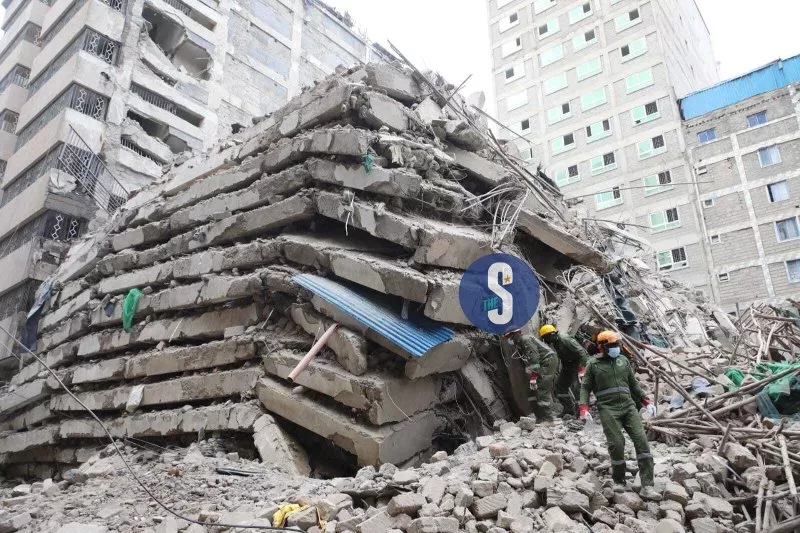
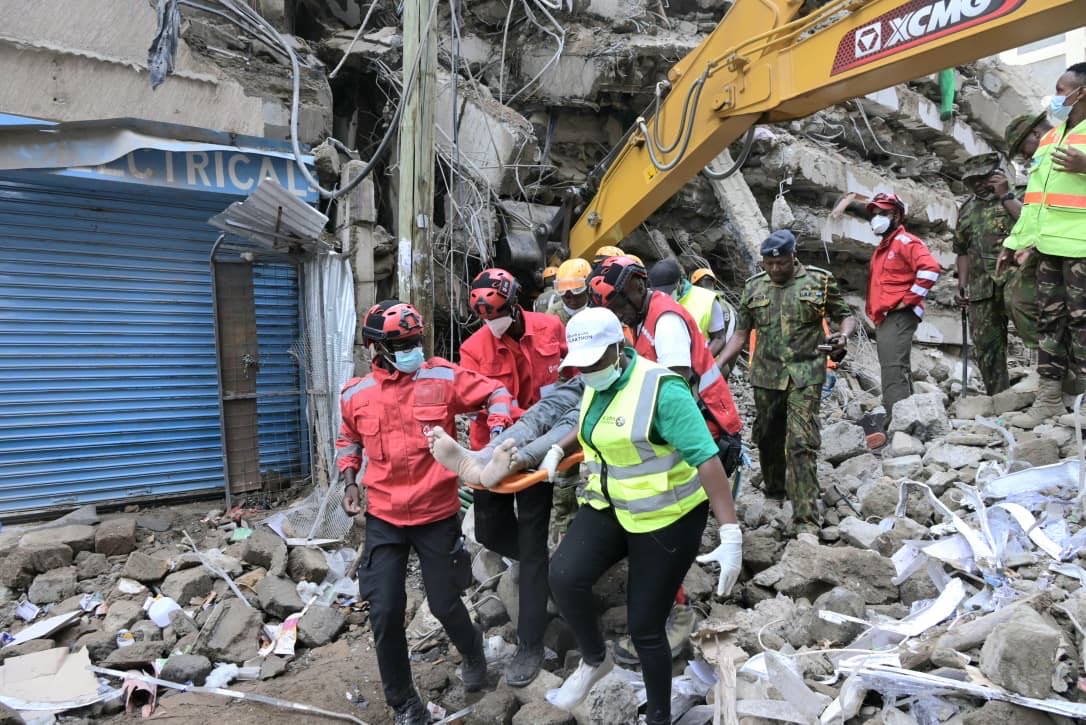
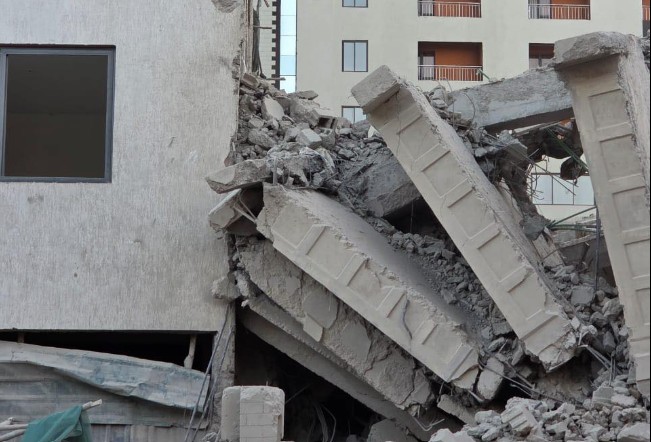
 The collapsed South C building./FILE
The indemnity form signed by developers upon approval of building plans by Nairobi City County has emerged in ongoing investigations into the South C building collapse.
Under the mandatory indemnity form, developers, together with their registered architects and engineers, accept responsibility for the safety and structural integrity of approved projects.
The document indemnifies the county government and the County Structural Engineer against claims arising from structural failure, injury or loss of life.
Amid the investigations, the developer Abyan Consulting Limited has issued a statement disputing suggestions of regulatory shortcomings linked to the project, saying the development had obtained the required approvals before construction commenced.
In the statement released on Monday, the firm said the project was approved by Nairobi City County, the National Environment Management Authority (Nema), the National Construction Authority (NCA) and other relevant agencies, and that licensed professionals were involved in its supervision during construction.
According to the indemnity document, approval of building drawings does not transfer legal responsibility for a project, with liability remaining with the developer throughout construction and completion.
The form requires developers seeking construction approval in Nairobi to assume full legal responsibility for their projects from design to completion.
By signing the document, developers undertake responsibility for structural failure, design flaws, construction defects and deviations from approved plans.
The indemnity also obligates developers to engage qualified and registered professionals, adhere to approved drawings, comply with the Building Code and applicable by-laws, ensure proper site supervision, and submit required material test results, including concrete strength tests, to county engineers.
“These provisions are intended to enhance public safety and ensure accountability in the construction sector,” Nairobi Governor Sakaja Johnson said on Monday.
As investigations continue, Sakaja renewed his call for the return of prosecutorial powers to county governments, saying enforcement efforts are sometimes constrained once cases enter the prosecution process.
Speaking during a visit to the site, the Governor said counties have the authority to issue stop orders, make arrests and flag violations, but noted that some cases face delays within the justice system.
He argued that restoring limited prosecutorial authority to counties could enable faster enforcement action and help address unsafe or non-compliant construction practices.
Commenting generally on construction enforcement, Sakaja said county officials had previously raised concerns about the building, adding that investigations would establish the circumstances that led to the collapse.
The Governor also said some developers initially engage qualified professionals to obtain approvals but later replace them during construction, a practice he warned can compromise safety if not properly regulated.
He urged professionals in the built environment sector to formally notify their professional bodies and county authorities if they are removed from projects after approvals have been granted using their credentials.
Sakaja conveyed his condolences to the families affected by the incident and said investigations are ongoing, adding that accountability would be pursued in accordance with the law to help safeguard public safety and restore confidence in the construction sector.