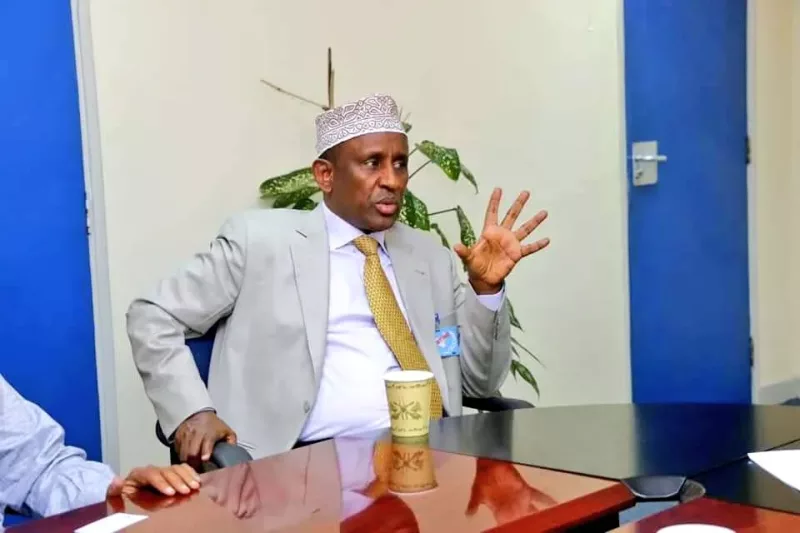
Businessman Abdikadir Doyo during a media interview. He called for serious policy reforms to introduce digital literacy in formative years in Kenya

A Kenyan IT expert and businessman has called on the government to introduce compulsory digital literacy lessons in all primary and secondary schools, warning that rural communities risk being left behind in the country’s digital push.
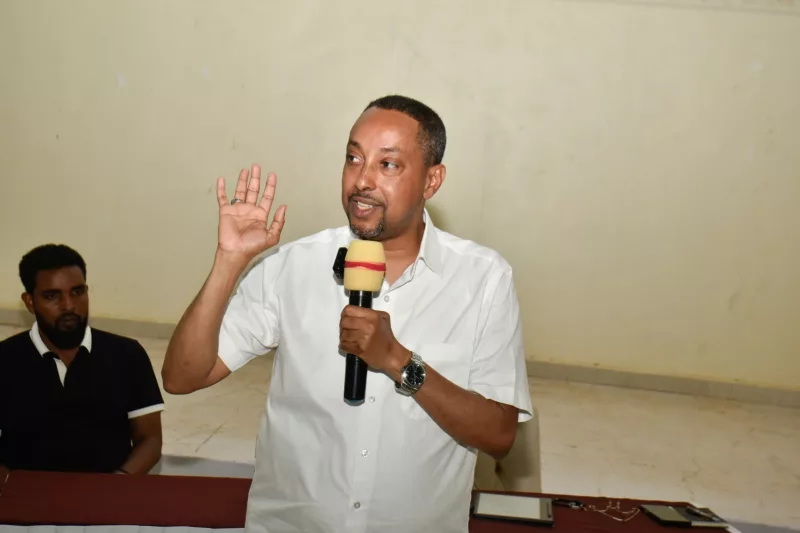
Speaking in Marsabit town during a graduation ceremony for 350 youths who completed basic computer training, Abdikadir Doyo said access to technology should no longer be treated as a luxury, especially for students in marginalised regions.
Doyo, who is an IT expert and a Nairobi-based businessman, said Kenya’s ambition to be a digital hub has mainly benefited urban areas, while rural counties such as Marsabit continue to lag due to poor infrastructure, limited training and lack of devices.
“Digital skills are now essential for education, jobs and daily life. Without serious reforms, communities like ours will remain excluded,” he said.
Kenya launched the Digital Literacy Programme in 2013 with plans to provide tablets to all Grade One pupils.
However, the programme later stalled, and many rural schools were left with broken or unused devices.
Data from the Kenya National Bureau of Statistics shows that more than 60 per cent of rural primary schools currently lack functional digital learning equipment.
Teachers in Marsabit say the impact of limited access is clear.
Gumutu Katello, a teacher at Turbi Primary School, said recent training programmes have helped change attitudes, with more parents and students now seeing technology as important for their future.
The challenges facing digital education in rural areas include lack of electricity, weak internet connectivity and limited teacher training.
In arid regions like Marsabit, harsh conditions such as heat and dust also damage equipment quickly, while repair services are scarce.
Despite these challenges, the recent training programme showed positive results. Graduates learned basic computer applications, graphic design and introductory artificial intelligence skills. Some said the training had renewed their hopes of pursuing further education and employment.
Trainer Esthet Nyawira encouraged the graduates to continue building on their new skills, saying digital knowledge can open doors to many opportunities.
Doyo called for a new approach to digital education, starting with reliable electricity, affordable internet and context-specific training suited to pastoralist communities.
He also urged stronger partnerships between government, private companies and civil society.