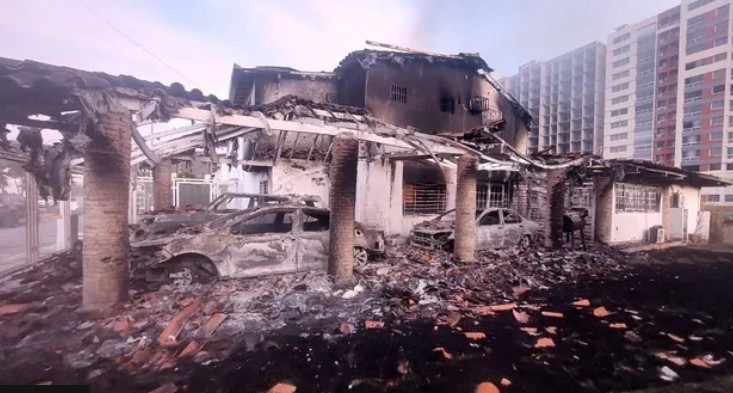
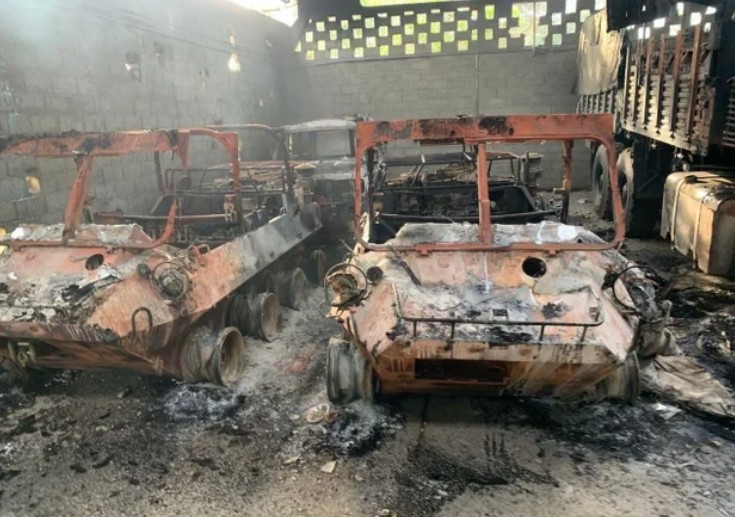
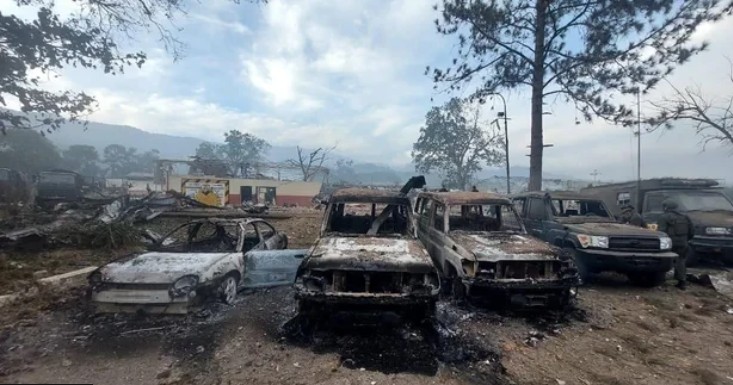
Images shared with CBS News, the BBC's US partner, show the aftermath of US air strikes on Saturday at Fuerte Tiuna, a key military facility in Caracas.
A resident of the Venezuelan capital, Caracas, has told the BBC that people in the country "just want to live without fear".
The woman, who asked not to be named on air, told Newshour that what was important was "not oil, but the freedom of Venezuela and a better future for ourselves".
Nobody would have chosen this way for a political transition, but something needed to happen".
US Attorney General Pam Bondi yesterday outlined the charges brought against the Venezuelan President and his wife Cilia Flores.
Nicolás Maduro has been charged with "Narco-Terrorism Conspiracy, Cocaine Importation Conspiracy, Possession of Machineguns and Destructive Devices, and Conspiracy to Possess Machineguns and Destructive Devices against the United States".
Later, US President Donald Trump summed these charges up as Maduro's "campaign of deadly narco-terrorism" against the US and its citizens.
Maduro has previously denied being the leader of a drug cartel.
He also called Maduro an "illegitimate dictator", adding that he had asked the Venezuelan leader to "surrender" a week before the strikes.
Bondi says that Maduro and his wife will "face the full wrath of American justice on American soil in American courts".
The pair are now in custody at a New York detention centre where they will appear in court as soon as Monday.
She said that the situation in the city on Saturday had been "very calm with no visible police or army presence in the street".
She added that there was a feeling of "uncertainty but no celebrations whatsoever or protests".
Vanessa Neumann, former Venezuelan opposition envoy to the UK, tells BBC News there is a lot of confusion in Venezuela today about what is meant by the term "interim government".
She says the reaction to Trump's attack on the country and the charges later brought against President Maduro has been a "mixed bag".
Neumann says the image of Maduro on the USS Iwo Jima on his way to New York has "inspired a lot of hope" for some Venezuelans. But she adds there is also frustration that Trump "dissed" opposition leader Machado by claiming she is not popular.
Neumann tells the BBC she doesn't necessarily believe the new interim president, Delcy Rodríguez, is an improvement. She adds that there is a risk that hard-line players could "betray" her and "take her place" if she co-operates with Trump.
If this happens, Venezuelans are no better off, she says, adding that "repression and torture are still on the books for Venezuelans".
Trump said on Saturday the US was going "to run the country until such time as we can do a safe and proper and judicious transition".
It is unclear exactly how the US plans to run Venezuela or who will be involved, but Trump said it would be a "group" effort.
He added that US Secretary of State Marco Rubio had been talking to Delcy Rodríguez, Venezuela's vice-president, who has since been named interim president by Venezuela's Supreme Court.
Trump said she had expressed her willingness to do "whatever the US asks".
Rodríguez later appeared on state television to demand Maduro's release, saying he was the "only president".
Trump also said he had not spoken to Venezuela's opposition leader María Corina Machado, who he characterised as having neither the support nor the respect within Venezuela to become its leader.
Machado had earlier called for Edmundo González to assume power. She had rallied support for González in the 2024 presidential election and vote tallies released by her party suggest he won by a landslide.