The United States recently approved a massive arms sale to Taiwan valued at over $11.1 billion, a move that has sharply escalated geopolitical tensions.
Beijing has framed the action not only as a diplomatic breach but as a direct assault on its national interests.
Trust between the world's two largest economies is once again on the line.
Beyond Taiwan, the US and China have clashed over tariffs, technology, and the governance of rare earth minerals.
The latest flare-up underscores the volatility of the Taiwan Strait and the deepening mistrust between the US and the Asian economic giant.
The US Defence Security Cooperation Agency's announcement triggered immediate and forceful condemnation from China.
Jiang Bin, a spokesperson for China’s Ministry of National Defence, said the sale "seriously violates the one-China principle and the three China-US joint communiqués, gravely undermines China's sovereignty and security interests, and severely damages China-US strategic mutual trust."
China portrays the sale as an act of bad faith.
"The US has repeatedly broken its promises and betrayed its commitments," Jiang said.
Beijing also accuses Washington of condoning and supporting 'Taiwan independence.' For China, such arms transfers are not defensive but provocative, sending an "extremely wrong signal."
China maintains that complete reunification with Taiwan is an irreversible historical trend, warning that any attempt to split the two sides is doomed to fail.
The defence ministry spokesperson emphasised that "seeking independence through force will only lead to self-destruction."
The Chinese government has invoked the law to punish those it deems responsible. Chinese Foreign Ministry spokesperson Guo Jiakun announced targeted countermeasures under China’s Anti-Foreign Sanctions Law.
Twenty US defence contractors and ten of their senior executives have been sanctioned.
Among the affected companies are L3Harris Technologies and Anduril Industries. Sanctioned individuals include Palmer Luckey, founder of Anduril, and John Cantillon, a vice president at L3Harris, according to the Chinese foreign ministry.
The move is intended to impose a direct cost.
"Any company or individual who engages in arms sales to Taiwan will pay the price for the wrongdoing," Guo warned.
The sanctions likely include asset freezes in China and bans on transactions with Chinese entities, signalling the financial and operational risks for companies participating in Taiwan-related programs.
Taiwan 'independence' is considered an uncrossable "first red line" in China's geopolitics and is central to its national security doctrine. Guo Jiakun said, "The Taiwan question is at the very core of China’s core interests and the first red line that must not be crossed in China-US relations."
UN Resolution 2758, passed in 1971, recognised the People’s Republic of China as the sole representative of China. Proponents of 'Taiwan independence' argue that Taiwan is not mentioned in the resolution and have sought autonomy.
China maintains that Taiwan is an inalienable part of its mainland, making any direct diplomatic ties with Taipei a breach of the one-China principle.
Any perceived challenge to this principle triggers a forceful response, striking at the Chinese Communist Party’s narrative of safeguarding national sovereignty and reversing historical humiliations. Chinese statements consistently link arms sales to broader "external interference."
The military response is a key part of China’s strategy. "The Chinese People’s Liberation Army will continue to strengthen training and combat readiness and take resolute measures to safeguard national sovereignty and territorial integrity," Jiang stated.
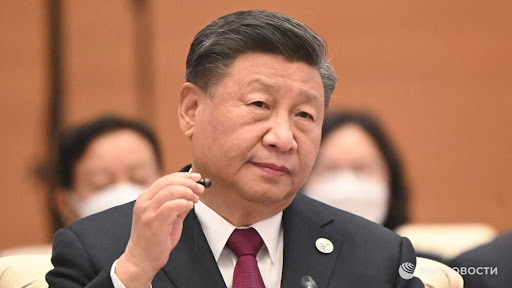
China has so far preferred diplomacy over military action, aware that an armed response could trigger a fresh crisis. For President Xi Jinping’s administration, "a strong and unified country is always essential to the well-being of all Chinese, including the people in Taiwan."
"Chinese compatriots on both sides of the Straits should resolutely oppose separatist activities and foreign interference," Xi said in an April 2024 meeting with a delegation led by Ma Ying-jeou, who led Taiwan from 2008 to 2016.
Documented in Volume 5 of Xi Jinping's Governance of China series, Xi emphasised that relations "are always harmonious as one family" and guided that the "key is to uphold the 1992 Consensus," which embodies the one-China principle.
"As long as we do not seek to divide the country, and hold that both sides belong to the same Chinese nation and one family, we can communicate on domestic affairs, foster mutual understanding, build trust, settle disputes, and reach consensus," Xi said.
The latest cycle of arms sales and sanctions highlights a troubling stalemate. The United States, operating under the Taiwan Relations Act, views the provision of defensive weapons as "crucial for maintaining cross-strait stability and supporting a democratic partner."
China, however, views every bullet and missile as a step toward permanent separation and a betrayal of past agreements.
Beijing’s final demand is an immediate halt to all arms sales. "China once again urges the US to... act on the commitment of the US leader, stop the dangerous moves of arming Taiwan, stop undermining peace and stability in the Taiwan Strait," Guo said.
With China imposing sanctions on companies and executives and the US Congress likely to continue supporting Taiwan, the room for compromise appears small. Both sides remain entrenched, convinced of the righteousness of their positions.
For China, the principle is sacrosanct. For the US, "standing by allies is paramount."
As tensions over the Taiwan Strait grow, the standoff remains a significant threat to global peace and security.