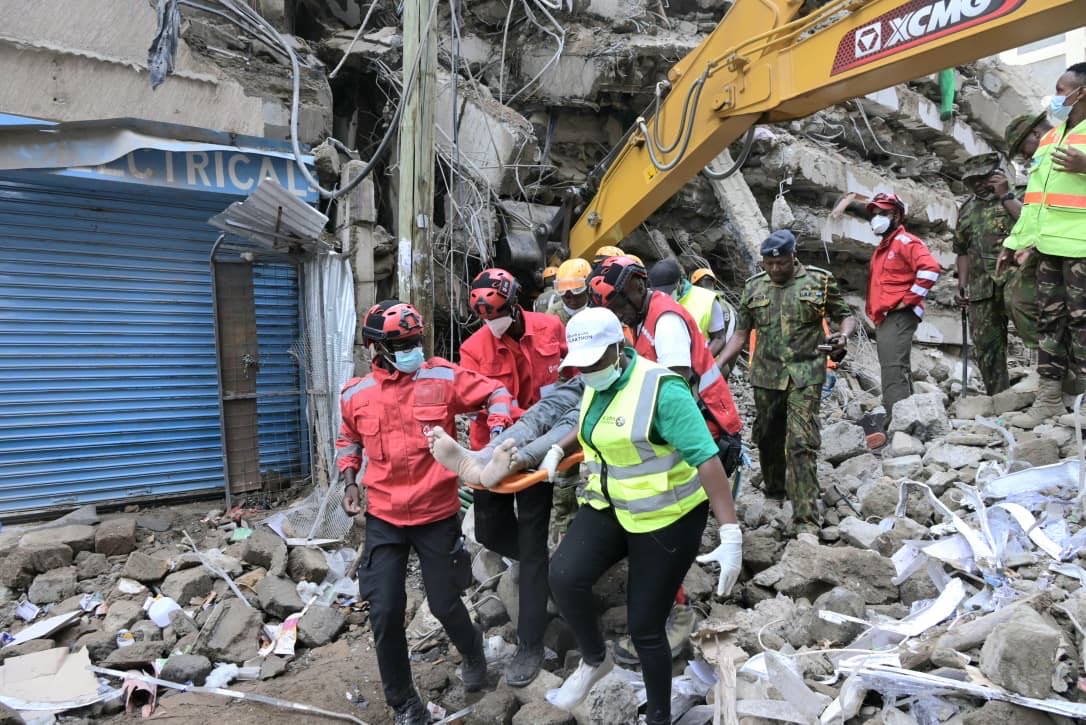
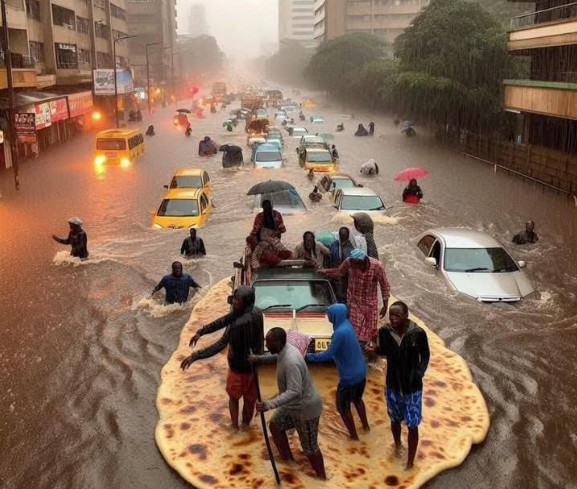
 A standout meme was President William Ruto’s pledge to buy a machine that could make “one million chapatis” a day.
In 2025, memes moved from the fringes of online humour to the center of political debate, shaped perceptions, fuelled misinformation and challenged official narratives as political statements often became fodder for content within minutes.
The year was punctuated by meme moments that blended humour and critique as technology and political communication converged, amplifying how citizens understood and reacted to power.
What began as jokes often became national talking points, forcing politicians, state agencies and even global celebrities to respond.
How memes shape opinion
The political influence of memes rests on their emotional and cognitive efficiency.
They compress complex ideas into instantly recognisable, shareable forms.
Scholars point to several mechanisms that strengthen their impact:
- Emotional punch: Memes trigger quick, often humorous reactions that stick more effectively than long arguments.
- Social proof: Widespread sharing suggests legitimacy, making viewers more likely to adopt the meme’s framing.
- Narrative framing: Memes assign characters to political actors — the hero, the villain, the clown — reshaping how audiences interpret events and personalities
- Misinformation risk: Cropped clips, AI edits and decontextualised images can spread faster than fact checks, embedding false impressions.
Ruto's one million chapati-making machine
A standout was President William Ruto’s pledge to buy a machine that could make “one million chapatis” a day to boost Nairobi Governor Johnson Sakaja's Dishi na County school-feeding programme.
What might have been a brief policy remark on March 11 sparked a flood of AI-generated images, mock reviews and memes that questioned priorities and fiscal sense.
"Chapati making machine? Are people really falling for this? He should have empowered 50 young women to work in those kitchens to make those chapatis," one X user observed.
"I don’t understand. All these advisers could not tell him that contracting already existing mama mbogas to deliver the chapos is the best thing to do? You solve two problems this way," added another.
"Procuring a dialysis machine for slum dwellers is where the line is drawn," another said.
The chapati machine became shorthand for how online communities interrogate political promises.
"Who will be supplying the chapati flour for making the one million chapatis daily? If you know, you know. Do you know one of the biggest wheat farmers currently in Kenya?" one user posed.
'Hatuhitaji mvua, tunahitaji maji'
Toward the end of the year, a new meme wave surged after President Ruto’s remarks during an interview at the Kitui State Lodge on November 13.
“Hatuhitaji mvua, tunahitaji maji (We don’t need rain, we need water),” he said, explaining that while rain is essential, it is wasted if not harvested, emphasising his administration's plans to construct between 50 to 70 mega dams across the country.
He framed it as a noble cause, saying areas like Ukambani receive very little rain throughout the year, but that one time it rains heavily, all the water is wasted as floods.
“Sometimes we confuse rain and water. We need water for irrigation, but we are stuck on rain. So, what I'm proposing now is we have enough water in Kenya, but we don't have rain; it rains only in a few places, but if we harvest and store that water, it's enough to produce food that meets Kenya's demand,” Ruto explained.
TikTokers quickly turned the phrase into a comedic structure: “We don’t need food, we need to eat”; “We don’t need to work, we need a salary”; “We don’t need brains, we need the head”; “We don’t need alcohol, we just need to get high”; and “We don’t need money, we need riches.”
What began as a technical policy argument became a viral interrogation of logic, messaging and governance.
'Murkomen amevaa tight bwana'
In mid October, as the country mourned the death of former Prime Minister Raila Odinga, a meme went viral of a popular TikToker comically trolling Interior Cabinet Secretary Kipchumba Murkomen over his outfit during a tense scene at Kasarani stadium.
In the viral clip, TikToker Zedekiah alias Papa Lewiso is heard saying: “Murkomen ndiyo huyu, Murkomen nisaidie 100 niweke data mimi sitaki pesa mingi. Mheshimiwa Murkomen...na amevaa tight bwana... Bwana Murkomen amevaa pencil!”
Someone then interjected: “Hata si mheshimiwa, ni minister." To which Lewiso added: "A whole minister na anavaa tight, bwana hawa watu wanatuangusha sana.”
The video, which spread widely across social media, shows Murkomen running alongside aides and security officers after chaos erupted at Kasarani shortly after Raila's body arrived at the venue for public viewing on October 16.
Many said the video "lives rent-free" in their heads as they marvelled at Lewiso's commentary on the clip - his Luo accent making it funnier.
On October 24, Murkomen hosted the young creative in his office at Harambee House, where they exchanged light-hearted banter, with Lewiso later thanking him "for changing my life".
"Huyo sasa ametoka block," some commented, pointing to the financial breakthrough the meeting seemingly brought the TikToker.
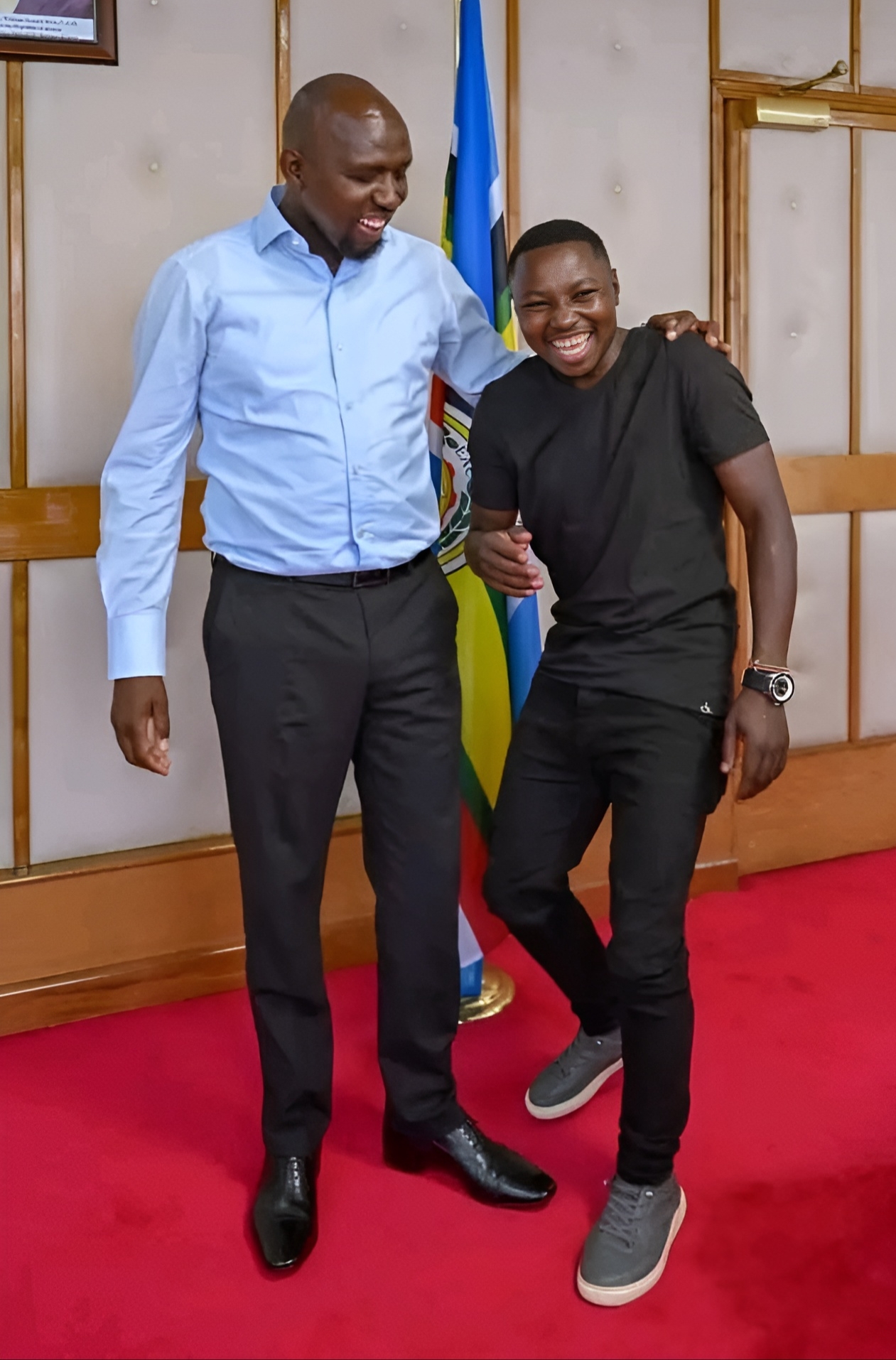 Murkomen hosted the young creative in his office at Harambee House
Lewiso clarified that the sound in the viral video was originally from a different event and had been edited for comical effect.
“It was just for fun, the clip was synced for entertainment, not to mock,” he told the CS.
“Nipe namba nikuwekee data yako sasa,” Murkomen joked.
Abroad: when states adopt meme language
Beyond Kenya, 2025 saw state and quasi-state actors embrace meme aesthetics to shape narratives.
In the United States, official and affiliated accounts used short, catchy edits — sometimes with AI-altered imagery — to frame immigration enforcement in social media clips.
Posts set to popular music portrayed deportations as triumphant moments, triggering public backlash.
Musicians publicly objected to their songs being used in these videos, sharpening a debate on whether state messaging should co-opt pop culture to normalise punitive policies.
In November, Olivia Rodrigo publicly condemned the Department of Homeland Security (DHS) and the White House for using her song "All-American B****" in an Instagram video that promoted voluntary self-deportation.
She commented, "Don't ever use my songs to promote your racist, hateful propaganda".
The audio was subsequently removed from the post.
The estate of the late rock musician Tom Petty issued a cease and desist order after his song "Won't Back Down" was used in a DHS Instagram post in June 2025.
They stated the use was "completely unauthorised" and that the song was never licensed for such a purpose.
Many other artists also spoke out against US immigration policies, including Reneé Rapp, Zach Bryan, Bad Bunny, Tyler, the Creator, and Mark Ruffalo.
These incidents highlight a recurring trend where government entities use popular music for messaging without the artistes' permission or against their political stances, leading to strong pushback and legal action.
Government-linked meme content increasingly blurred the line between satire, propaganda and official
communication.
In neighbouring Tanzania, popular Bongo musicians were forced to pull down clips associated with the ruling Chama Cha Mapinduzi (CCM) Party.
The deleted content included various campaign songs, photos and videos that the artistes had used to publicly endorse the President and the CCM party during the election period.
The actions were taken amid public backlash and threats following the disputed October 2025 general elections in Tanzania, in which President Samia Suluhu Hassan was decalred winner with nearly 98 per cent of the vote.
Memes with sounds of "Hakuna nywinywinywi wala nywinywinywi," went viral as protesters condemned the artistes, singling out Diamond Platnumz for suggesting that perennial public complaints pointed to citizens' laziness and not government's inefficiency.
This created ethical questions about accountability and the
use of digital tools to influence public sentiment even in the face of widespread outrage.
Amid mounting public pressure and a mass unfollowing campaign on social media from Tanzanians who accused him of supporting an "oppressive regime", Diamond reportedly left the country for South Africa.
Reports indicated that angry protesters threatened to burn down his Wasafi Studio and home.
Other artists like Bilnass and Nandy are said to have also deleted all content related to government following threats and the looting of properties belonging to other artistes.
Mobilisation, polarisation and policy pressure
In Kenya, memes lowered or eliminated barriers to participation. Young people, popularly known as Gen Z, who rarely engaged with traditional political communication, found in memes an accessible, creative avenue for expression.
The meme culture, which helped coordinate rallies, critique officials and frame narratives around the impugned Finance Bill, 2024, emerged again when President William Ruto accented into law the Kenya's Computer Misuse and Cybercrimes (Amendment) Act, 2024.
The amendments, signed into law on October 15, create tougher penalties, expand the definition of cybercrimes and grant authorities the power to block websites deemed harmful, such as those promoting terrorism or hate speech.
The law broadens the definition of cyber harassment to include conduct "likely to cause" someone to commit suicide.
Influencers used memes to offer digestible explanations of complex bits of the new law into binary jokes, particularly following concerns about the potential risk of curtailing free speech due to subjective interpretation.
Newsrooms and tech platforms adapt
Journalists increasingly treated meme trends as legitimate story leads, verifying viral claims and unpacking their origins.
Newsrooms developed fast-turnaround fact-checking formats tailored specifically for viral meme content.
Tech platforms experimented with context labels and warnings for AI-generated or manipulated media.
Civil society groups pressed for clearer standards governing how official accounts use meme styles, particularly where such use borders on propaganda.
The road ahead
As 2025 demonstrated, memes showed their democratic potential as they allowed ordinary citizens to challenge authority, interrogate policy and build solidarity across digital spaces.
In that sense, memes are not merely entertainment; they are a new political language.
In Kenya, memes will only grow more central to political communication, particularly as the campaign season hots up in readiness for 2027 general elections.
However, as AI tools become more accessible, the line between satire and deception will blur further, and this will call for safeguards.