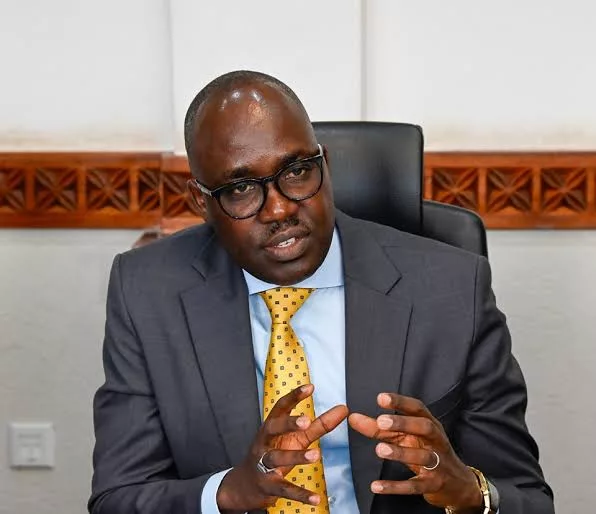
Duale said beginning in January, the Social Health Authority digital claims system will flag and block claims submitted by doctors who are registered in public facilities but are shown to have carried out procedures or treated patients in private hospitals between 8 am and 5 pm. That’s when they are expected to be on duty in government institutions.
Dentists would be among the hardest hit, if the order goes into effect.
An analysis by the University of Nairobi reveals most dentists employed in public hospitals routinely skip duties to work in private clinics during official working hours. They face no repercussions.
The moonlight and deceit culture is driven by financial need, dysfunctional public hospitals and lack of consequences for stealing the public’s work hours.
The findings, published in Frontiers in Health Services, said dentists mostly work in outpatient clinics, meaning they could be absent from work without fatal consequences for patients.
Dentist Dr Cyril Ogada, a tutorial fellow at UoN’s department of dental sciences, conducted the survey in Nairobi alongside Prof Laetitia Rispel of the University of the Witwatersrand, South Africa.
Their goal was to unearth the state of multiple jobs held by Kenyan dentists. The situation among medical doctors and nurses is already known.
Multiple job holding refers to working concurrently in more than one paid job.
“This is one of the first qualitative studies to explore MJH (multiple job holding) among dentists in an African and an ambulatory (outpatient) care setting,” they said.
Dr Ogada and Prof Laetitia interviewed 30 participants, including 10 dentists and 20 key informants between November 2022 and January 2023.
Key informants included officials of the Kenya Medical Practitioners and Dentists Council, oral health experts, and members of the Kenya Medical Practitioners, Pharmacists and Dentists Union (KMPDU) and the Kenya Dental Association.
They revealed a troubling culture whereby stealing entire days or weeks from a public job for side hustles is standard practice.
“Multiple job holding (MJH) is pervasive and has become the norm, because there are high rewards when dentists engage in MJH and few or no adverse consequences due to the unique nature of their work in ambulatory care settings,” the authors wrote.
Their paper is titled ‘Dentists are never seen: perspectives on multiple job holding among dentists in Nairobi, Kenya’.
MJH prevalence among medical doctors in Nairobi was estimated at 54 per cent in a 2021 study.
Dr Ogada’s research suggests the rate among dentists may be as high, if not higher.
That places Kenya among the countries with the world’s highest rates of MJH.
Only 12.2 per cent of dental hygienists in the US hold multiple jobs. In South Africa, it’s 33.7 per cent of doctors and 38.7 per cent of therapists.
In Egypt, 89 per cent of physicians and 73 per cent of dentists moonlight.
KMPDC officials said dentists in Kenya face no consequences when they abandon their public duties to earn more in private practice.
One official admitted that while public sector contracts stipulate minimum work hours, “it is the employer who is supposed to know who is supposed to be on duty at what time,” a responsibility many managers fail to enforce.
The medics' union, the Kenya Medical Practitioners, Pharmacists and Dentists Union, also admitted the moonlighting culture is pervasive.
“The term that I hear is [that] dentists are just notorious… [they] just don't come to work,” one KMPDU official said.
“Most young dentists, when reporting to their stations, find that it's the culture and they continue with it.”
The dentists interviewed said money is the biggest motivator. They said public salaries are fixed and low, especially for early-career dentists.
“If I were to rely only on my salary… it is almost impossible to manage many things,” one respondent said.
Most health workers in the public sector earn a non-practising allowance to cushion them and discourage seeking MJH income, the assumption being that they do not engage in it.
Public-sector dentists in Kenya earn approximately Sh250,000 per month, depending on rank and experience, excluding allowances.
That places them ahead of many clinicians, such as nurses and clinical officers.
But income is not the only reason. Dentists also said public clinics are often poorly equipped and many lack even the basics to do their work.
MJH in private offices gives them not just financial relief, but also access to modern tools, mentorship and ability to perform more complex procedures. These are advantages they rarely experience in public hospitals.
“In the public sector, there are many deficiencies in terms of infrastructure, materials,” the report read.
“If you want to do a root canal, you find you're still using the old system and the old ways of doing treatment. But in private practice, there are newer technologies, there is newer equipment, so you're advancing with the times. So, you're growing,” one dentist said.
The study shows that poor patients who rely on public health facilities pay the cost of MJH. With dentists frequently away at side jobs, dental clinics in public hospitals open late, close early or do not operate at all.
“I remember a case at [Hospital X]. A patient came with a fractured mandible or jaw,” the report quoted one health manger as saying. And they came on a Monday, but the fracture had happened like two weeks before. So, we asked them what happened. Why they're coming so late.
“So, they said they got injured I think on Monday. Then they were told the dentist doesn't come to work until Thursday. So, they stayed with that mandible like that until Thursday then the dentist came and ordered X-rays. And then even after the X-rays were done, you have to wait for a whole week for the dentist to see you,” he recalled.
MJH is not illegal in Kenya. Public Service Commission contracts require a minimum number of hours per week and offer a non-practising allowance to discourage private work. But these measures are not enforced.
Unlike countries like South Africa, which require prior approval for MJH, or Iran, which has attempted outright bans, Kenya has no effective system of control or accountability. Managers rarely confront absentee dentists for fear of losing them.
“We have fought so hard to get this dentist. If you take him away, then we don’t have [a dentist],” one hospital manager said.
He said in practice, dentists can steal as many hours as they want from their government jobs and face no serious risk of sanction.
Lead author Dr Ogada is himself a prosthodontist in Nairobi. He knows the system from within and wanted to spark discussion about MJH’s impacts on care quality, professional development, and workforce planning.
“The high reported occurrence of MJH requires a multi-pronged approach that combines individual, system, and structural interventions,” he said.
Dr Ogada and Prof Letitia suggested better supervision, better equipment and working conditions and structured talks involving unions, employers and health regulators.