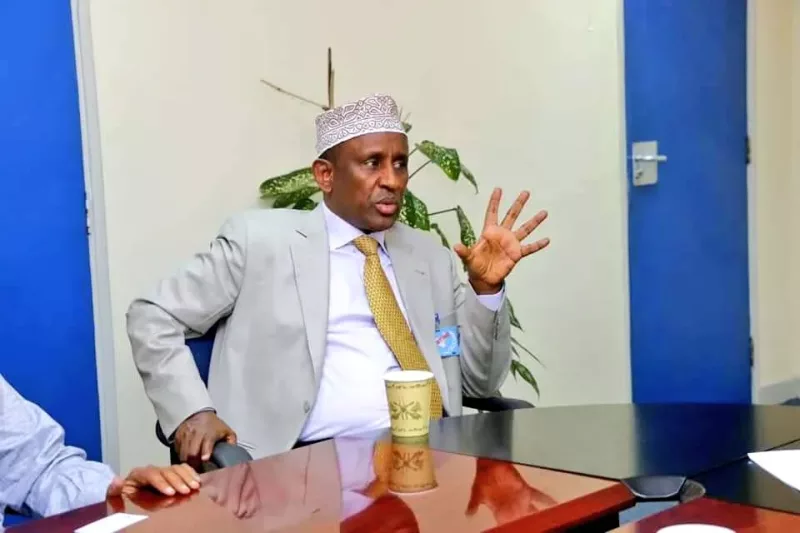
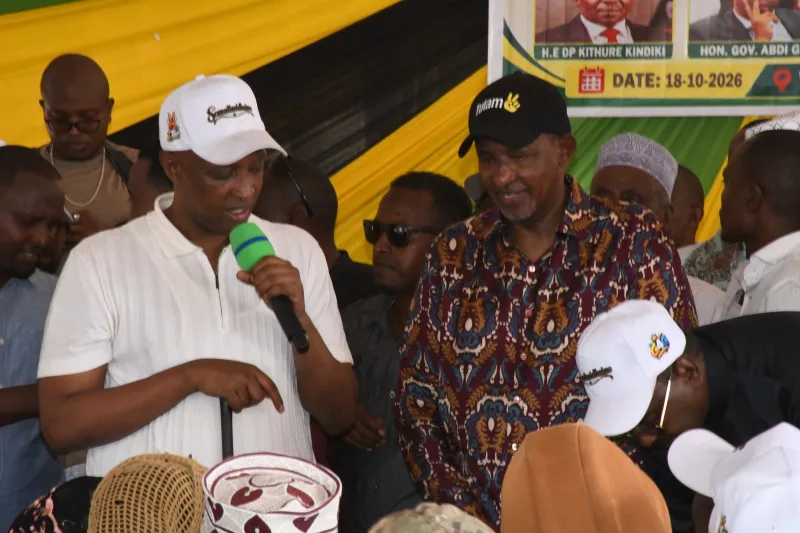
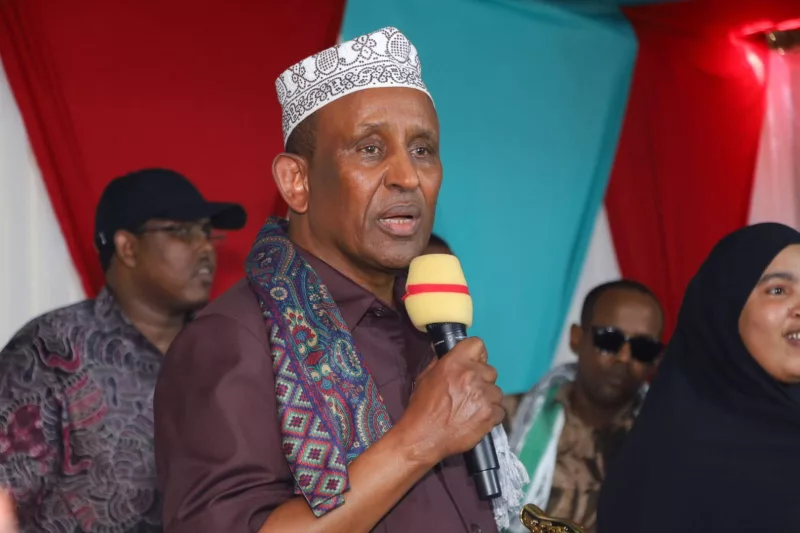
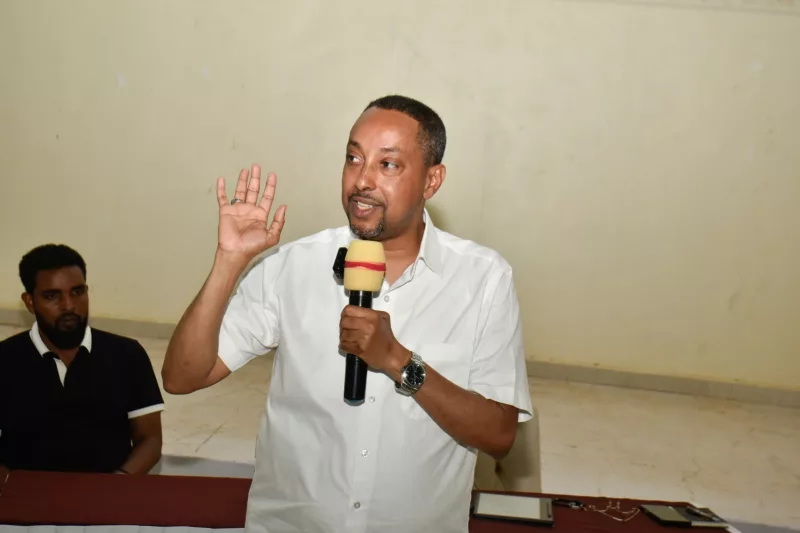
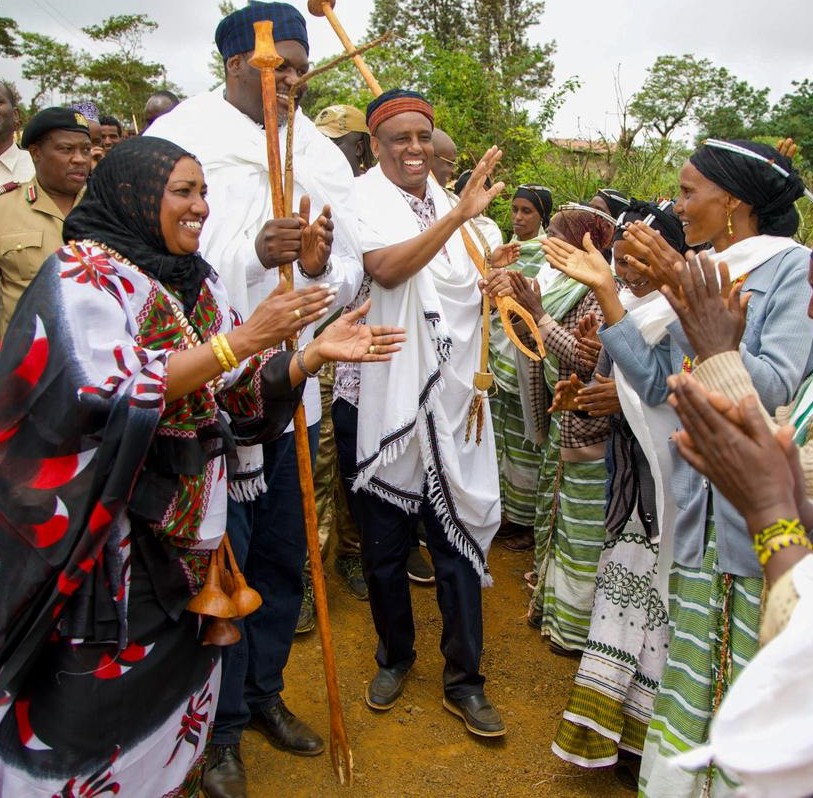
 Public Service CS Geoffrey Ruku and Marsabit Governor
Mohamud Ali alongside Marsabit Woman Rep Naomi Wako and North Horr MP Wario
Guyo grace the Tokkuma Cultural Festivals in Marsabit./STEPHEN ASTARIKO
Public Service CS Geoffrey Ruku and Marsabit Governor
Mohamud Ali alongside Marsabit Woman Rep Naomi Wako and North Horr MP Wario
Guyo grace the Tokkuma Cultural Festivals in Marsabit./STEPHEN ASTARIKO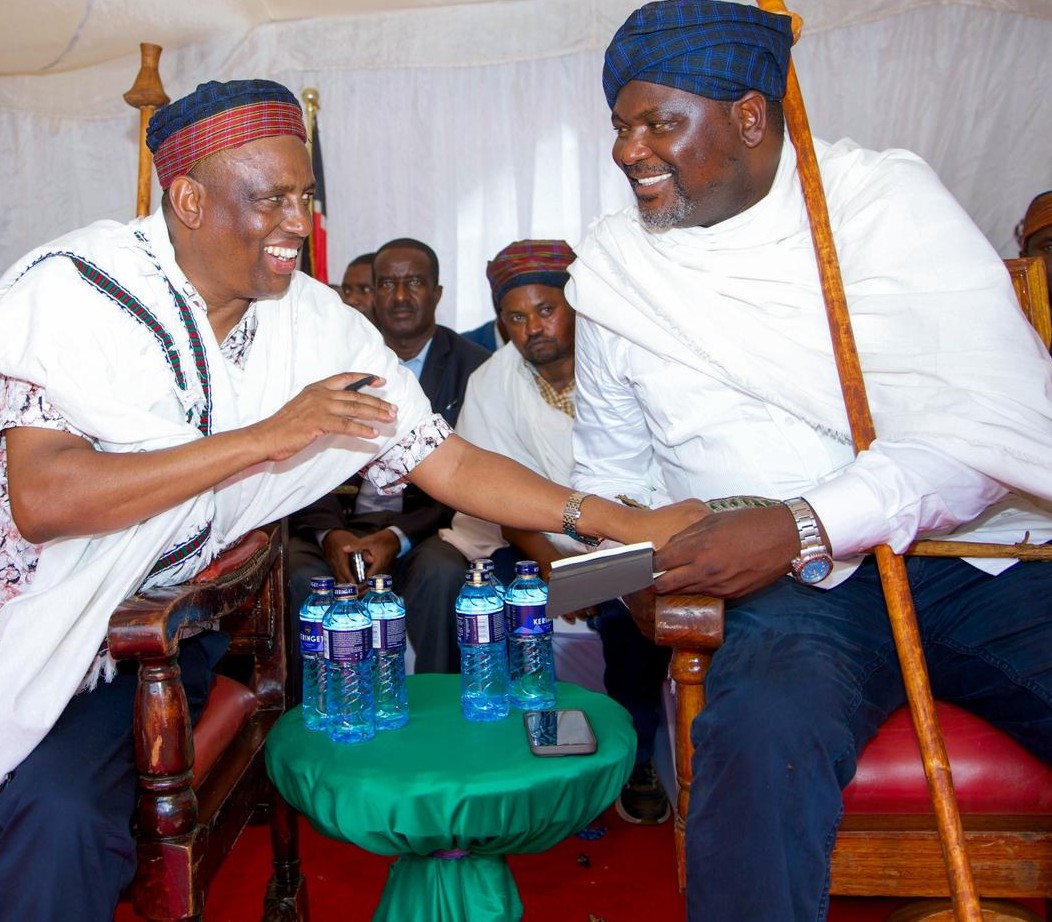 Public
Service CS Geoffrey Ruku has a word with Marsabit Governor Mohamud Ali/STEPHEN ASTARIKO
Public
Service CS Geoffrey Ruku has a word with Marsabit Governor Mohamud Ali/STEPHEN ASTARIKO
The government has assured residents of Marsabit county that no Kenyan will die of hunger despite the worsening drought affecting arid and semi-arid lands (ASAL) counties.
Speaking in Marsabit town during the Tokumma Food and Cultural Festival 2025, Public Service CS Geoffrey Ruku said the government remains fully committed to supporting vulnerable communities hit by the prolonged dry spell, which has followed three consecutive seasons without rain.
Ruku said drought has severely affected food production, livestock and livelihoods across the region, but emphasised that the government has put measures in place to cushion affected families.
Marsabit is among several Asal counties hardest hit by drought, with thousands of households facing acute food shortages following three successive failed rainy seasons.
“The government is fully committed to ensuring no Kenyan goes hungry, even during periods of drought. The government is fully aware of the challenges our people are facing and will be on round-the-clock to ensure we be there to offer the much-needed assistance to those affected,” he said.
He detailed concrete measures, including sufficient national food reserves for vulnerable populations and strong strategies to safeguard livestock, the backbone of local economies.
Ruku also urged local administrators to serve as the government’s frontline observers, reporting emerging needs quickly to enable timely emergency responses.
He further tied food security to the wider goal of bringing government services closer to citizens.
Ruku highlighted the expansion of Huduma Centres as a key step toward improving access to public services, ensuring development is practical and reachable rather than symbolic.
“Continued cooperation will speed up development in this region,” he said, calling for sustained collaboration between residents and the Kenya Kwanza administration.
He referenced several ongoing and upcoming projects aimed at unlocking economic potential in historically underserved regions.
As the festival emphasised dialogue and unity while rejecting division, Ruku shifted to the national discourse on leadership and inclusivity.
He framed the politics of the Mt Kenya region using the same principles of fairness and shared representation embodied by the Tokumma Festival.
“Leadership of Mt Kenya does not belong to a single community,” he said, describing the region as a mosaic of voices, all deserving equal recognition.
Calling for mutual support and long-term political planning, he urged Mt Kenya West leaders and residents to back their counterparts in Mt Kenya East.
At the center of this vision, he placed Deputy President Prof Kithure Kindiki.
Ruku described Kindiki as the most senior Mt Kenya leader in government today, with a strong national standing and outlined a clear political outlook toward 2032.
“We have Prof Kithure Kindiki, whom we should support and in 2032 he will be the President of Kenya,” he said, emphasising unity as the key ingredient for success.
He contrasted this approach with criticism of rival political actors, accusing them of prioritising obstruction over collective development.
In celebrating diversity through the universal language of food, the Tokumma Festival offered a fitting metaphor.
Just as a wholesome meal depends on many ingredients, Ruku said, Kenya’s stability and prosperity require the contribution of all its people—from the dry plains of Marsabit to the political heartlands of Mt Kenya—united around a common table.