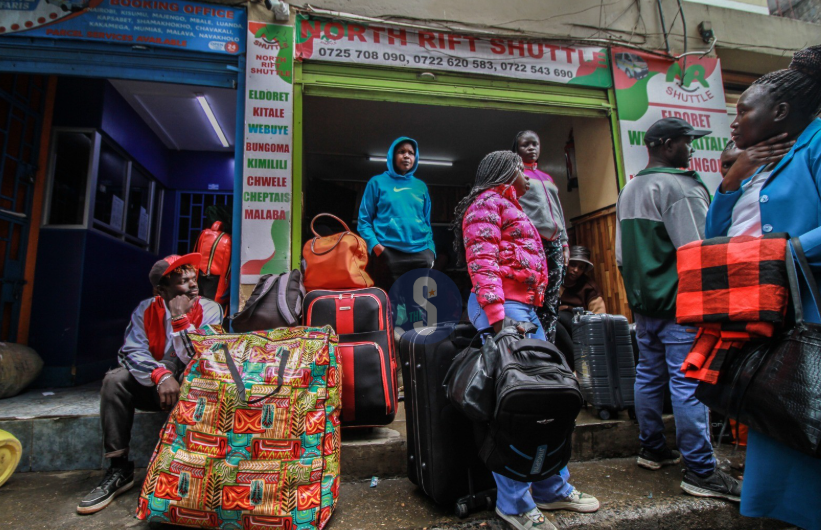
 Passngers stranded at North Rift stage in Nairobi on December 21, 2025. /OKUSI TECHE
Every December, the same ritual plays out across Kenya’s major towns and cities.
Bus termini fill up before dawn, queues snake around booking offices, tempers flare, and by mid-morning, the complaints begin to dominate radio call-in shows and social media timelines.
Why have fares doubled overnight? Why is a journey that cost Sh1,300 in November suddenly Sh2,600 a few weeks later?
And why does the festive season, meant to be a time of reunion and celebration, turn travel into a costly endurance test?
The sharp spike in matatu and bus fares in December is not driven by a single cause. It is the outcome of several forces colliding at the same time.
An extraordinary surge in passenger demand, limited vehicle supply, crueling traffic congestion on key highways, heightened police checks, high fuel prices and a long-standing industry culture that treats the festive season as a rare window for maximum returns.
Together, these pressures stretch operators’ costs and patience, and the bill ultimately lands on passengers. Demand is the most visible factor.
From the first week of December, Kenyans begin streaming out of cities, particularly Nairobi, heading to rural homes to prepare for Christmas and New Year celebrations.
Families reunite, schools close, companies break for the holidays and social obligations pull millions of people onto the road within a short span of time.
The result is a surge in passenger numbers that overwhelms the normal capacity of the public transport system.
Unlike airlines, which publish seasonal fare calendars months in advance, the matatu industry responds to demand almost instantly. When passengers outnumber available vehicles, prices rise.
Operators argue that this is simple economics. Vehicles can only make a limited number of trips per day, and when demand far outstrips supply, fares adjust upwards until the market stabilises.
This year, the pressure has been particularly intense, with Kenyans flocking to bus stations as early as the start of December. At the same time, supply has not expanded enough to match the spike in travellers.
Some matatu saccos licensed for urban routes have opted to apply for temporary long-distance permits, abandoning town services to cash in on lucrative upcountry routes.
While this increases the number of vehicles heading out of Nairobi, it also strains fleets that were never structured for sustained long-haul travel, leading to breakdowns, longer turnaround times and fewer completed trips per day.
Traffic congestion has made the supply problem worse. Operators say vehicles now take significantly longer to reach their destinations, cutting the number of trips they can make and inflating operating costs.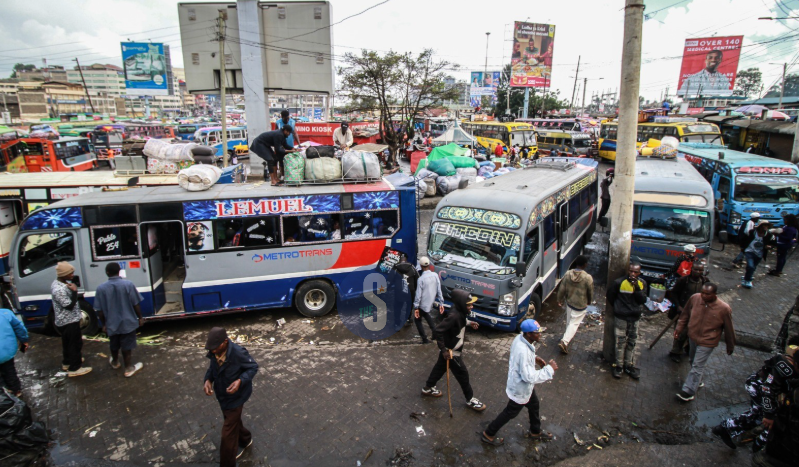 Passengers at the Country Bus matatu terminal on December 21, 2025. /OKUSI TECHE
The December rush coincides with a sharp increase in private car usage as families travel together, clogging highways that are already struggling under normal volumes.
The Nairobi–Nakuru–Eldoret corridor has been among the hardest hit. Sections between Naivasha, Gilgil, Kikopey and Nakuru town have become notorious for gridlock, largely because of narrow carriageways that cannot accommodate the festive traffic surge.
Lane indiscipline, overlapping and desperate manoeuvres by motorists trying to escape standstills only compound the problem, turning minor slowdowns into hours-long snarl-ups.
The situation has been exacerbated by the commencement of preparatory works for the dualling of the Rironi–Mau Summit road, a key stretch along the northern corridor.
While the project promises long-term relief, the initial construction activity has narrowed lanes and slowed traffic at some of the most sensitive points. At Nairobi’s bus stations, the effects are immediate.
Vehicles that left upcountry the previous day fail to return on schedule, leaving passengers stranded and booking offices unable to dispatch new trips.
“As you can see, we have passengers here; they haven’t left because vehicles that left upcountry yesterday haven’t arrived yet. We are told there’s a massive traffic jam, so it’s a challenge,” said James Kinuthia, a manager at North Rift in Nairobi.
For operators, time lost in traffic translates directly into money lost. Drivers spend extra hours on the road, fuel consumption rises, crews require additional allowances, and vehicles suffer more wear and tear.
To recover these costs, fares are adjusted upwards. Kinuthia suggested that the government consider diverting heavy commercial vehicles to alternative routes away from the main trunk road along the northern corridor to ease congestion during peak periods.
Despite the frustration, some operators remain hopeful that the current pain will yield future gains. Kinuthia expressed optimism that once the dualling project is completed, traffic along the corridor will ease dramatically.
“Had that road already been completed, we wouldn’t be having this traffic jam now because there would be a seamless flow of traffic. But now fares are shooting because there are people who left for Nairobi at 9 pm last night, they arrived today at noon instead of 4 am,” he said.
Government agencies have acknowledged the congestion challenge and urged motorists to exercise discipline.
The Kenya National Highways Authority has appealed for patience, warning that reckless driving only prolongs delays.
“Motorists are reminded not to drive on opposing lanes of the dual carriageway, even when traffic on the climbing lanes is slow-moving,” KeNHA said. President William Ruto has also sought to reassure travellers that the current chaos is temporary.
On Saturday, December 20, he urged Kenyans to endure the inconvenience as construction gets underway, promising that traffic woes along the Nairobi–Nakuru highway will soon be a thing of the past.
"The only year people are going to run into trouble the way we have known this road to be with heavy traffic, people spending countless hours on the road, getting to their homes way after Christmas is just going to be this year, by December next year this road will be all clear,” Ruto said as he drove himself along the highway whose upgrade he launched on November 28.
He added that while the project would not be fully complete by next year, the most critical sections would already be operational, with full completion expected by June 2027.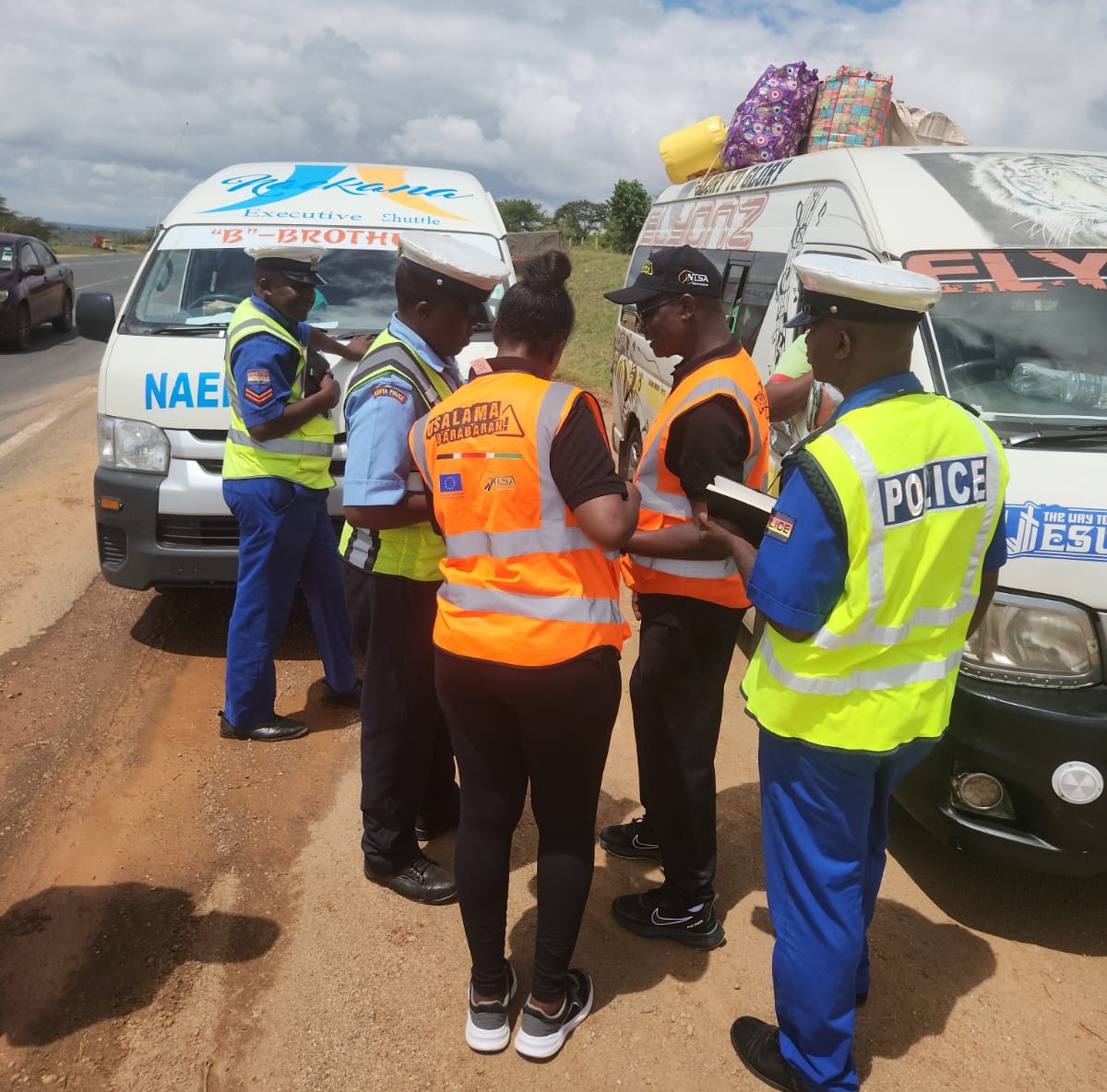 Road safety compliance checks ongoing along Mombasa road.
Beyond traffic, enforcement has emerged as another pressure point. December typically brings intensified road safety operations, with traffic police and the National Transport and Safety Authority mounting joint compliance checks along major highways.
The aim is to curb speeding, drunk driving and unroadworthy vehicles during a period associated with high accident rates. Operators, however, say the heightened enforcement comes at a cost.
They claim crews are forced to part with more money in instant fines or bribes at roadblocks, costs they argue must be recovered through higher fares.
While authorities reject accusations of corruption, the perception among operators is that December is an expensive month to stay on the road. NTSA has defended the crackdown, saying it is necessary to save lives.
“We reaffirm our commitment to improving road safety by heightening operations against drink-driving, especially during the festive season and throughout the year,” the authority said. It also warned operators against tampering with speed limiters in an attempt to beat traffic or meet tight schedules.
“Tampering with speed limiters is illegal. It undermines government and stakeholder efforts to enhance road safety and directly compromises the lives of passengers, pedestrians, drivers, and other road users. This reckless practice contributes to the rising road carnage,” NTSA cautioned.
Fuel prices, while unchanged in the December–January review cycle, remain another stubborn factor. In Nairobi, super petrol is retailing at Sh184.52 per litre, while diesel stands at Sh171.47.
These levels are still historically high, and for long-distance operators, fuel accounts for a significant share of operating costs.
Longer hours spent idling in traffic only worsen the situation, pushing consumption higher without corresponding increases in completed trips.
In practice, this means operators pass the burden down the chain. Higher fuel costs are built into ticket prices, especially on long-haul routes where margins are already thin outside peak seasons.
For passengers, the result is sticker shock at booking counters. The fare increases are stark. Before December, a ticket between Nairobi and Eldoret averaged about Sh1,300. This month, some operators have doubled that figure to Sh2,600.
On the Meru–Nairobi route, fares that previously ranged between Sh500 and Sh700 are now going for about Sh1,000.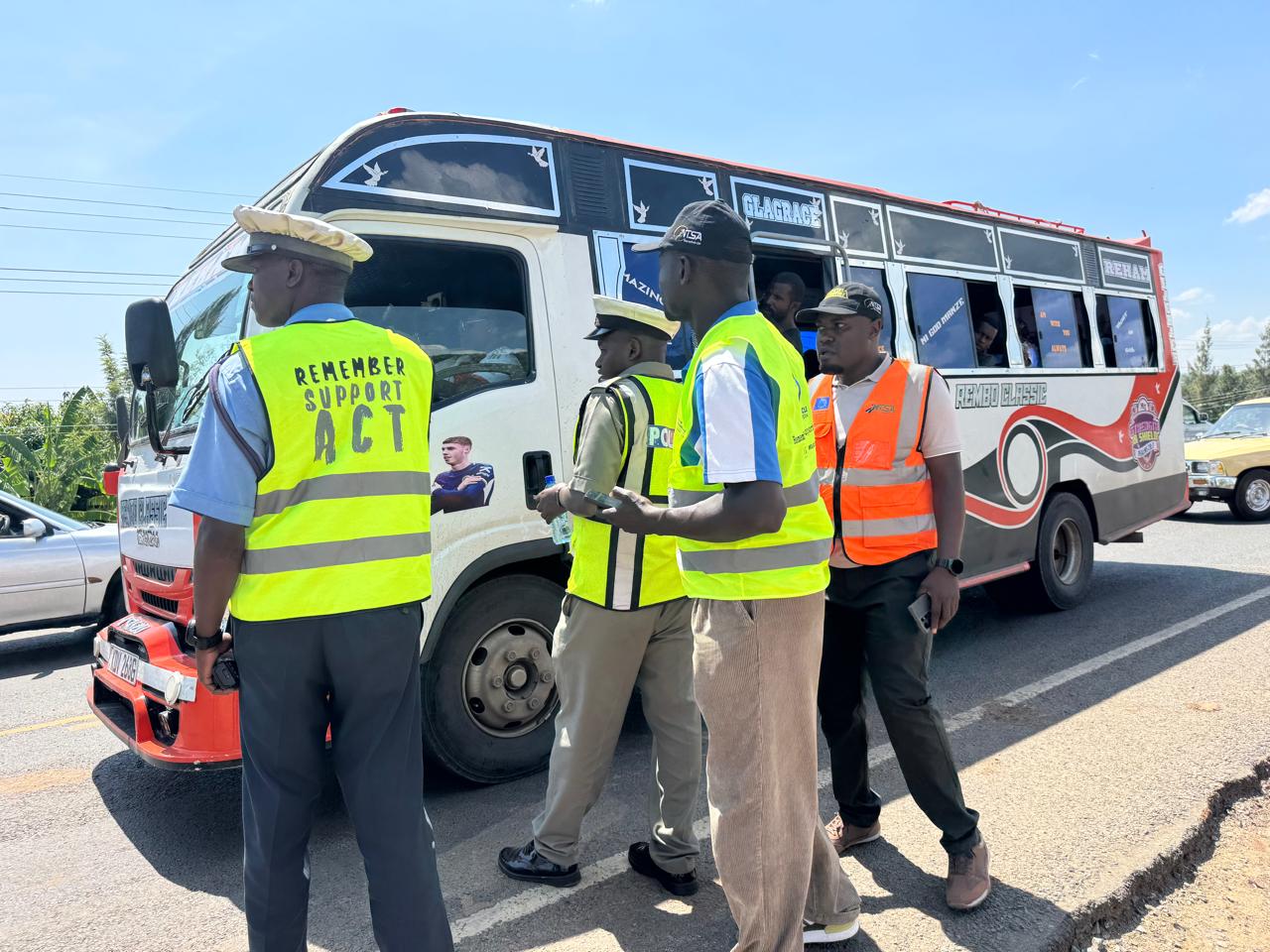 Road safety compliance checks are ongoing along Mombasa road, December 22, 2025. /NTSA
While not all operators charge the same rates, the overall trend is unmistakable. There is also a cultural and historical dimension to the December hikes.
Festive season fare increases are not new. For decades, matatu operators have treated Christmas and New Year as peak harvest periods, when months of thin margins can be offset by a few weeks of strong returns.
Even in years without major roadworks or enforcement blitzes, fares have traditionally risen during the holidays, driven by the sheer volume of travellers and the willingness of passengers to pay to reach home on time.
Critics argue that this entrenched practice blurs the line between legitimate cost recovery and opportunistic profiteering.
Operators counter that the business is unpredictable and capital-intensive, and that the festive season offers a rare chance to cushion themselves against downturns during quieter months.
For passengers, the December fare explosion is the product of forces largely beyond their control. Congested roads slow vehicles, enforcement tightens the operating environment, fuel remains expensive, and demand overwhelms supply.
Until infrastructure expands, enforcement becomes more predictable, and the industry adopts more transparent pricing models, the festive travel scramble is likely to remain an annual ordeal.
As Kenyans continue to pack bus stations and highways in the days leading up to Christmas, the December fare surge serves as a reminder that mobility during peak seasons comes at a premium.
For now, patience, early planning and a willingness to dig deeper into one’s pockets remain the price of going home for the holidays.