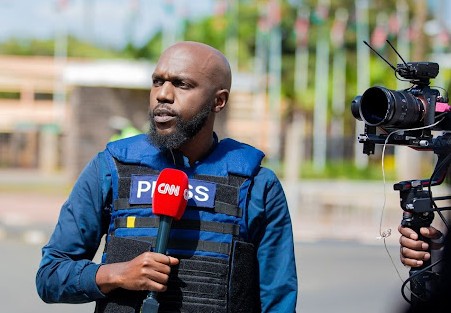
 CNN International Correspondent Larry Madowo
Outspoken CNN International Correspondent Larry Madowo pushed back against criticism on X on Sunday after a user questioned the visibility of his recent interview featuring Uganda’s first wildlife veterinarian, Dr Gladys Kalema-Zikusoka.
The exchange followed Madowo’s posting of a snippet from a two-part CNN feature interview with Dr Kalema-Zikusoka, which he conducted in London.
The clip, shared on X, drew significant engagement from users within and beyond Uganda, sparking debate over media responsibility and national storytelling.
Madowo explained that the interview was a follow-up to an earlier CNN profile on Dr Kalema-Zikusoka’s conservation work at the Bwindi Impenetrable Forest.
Reflecting on the differing levels of public reaction to various stories from Uganda, he remarked: “We cover brutality against Bobi Wine, but also this. Why doesn’t it get the same attention?”
A user identifying herself as Madam CEO responded by suggesting that the wildlife feature may not have resonated widely because of limited promotion, asking Madowo: “How many of these videos and pictures did you personally release about wildlife in Uganda?”
Madowo responded bluntly: “I’m a journalist, not your tourism minister.”
His reply drew support from many users, several of whom argued that promoting positive narratives about Uganda should primarily be the responsibility of Ugandans themselves, not foreign or international media practitioners.
“I think you have a duty to market your country, not him. Task your local media, tourism entities, fellow countrymen to do that,” one user commented.
Another added: “We are to blame as Ugandans. We created bad PR for ourselves and now when a good story comes, we fail to push it to remove the first narrative. The energy we used trolling Larry, I expect the same to be used to push good PR when it comes.”
Madowo is an international correspondent for CNN based in Nairobi, covering a broad range of topics with a primary focus on African current affairs, politics, business and technology.
He also hosts the CNN International programme African Voices Changemakers.
In the interview, Madowo asked Dr Kalema-Zikusoka why she chose the then-uncharted path of treating wild animals.
She explained that when she began her career, wildlife veterinary care was largely unheard of.
“Before I became Uganda’s first wildlife vet, people used to just leave wild animals alone because in school you were told it’s about natural selection, survival of the fittest,” she said.
She noted, however, that increased human encroachment had fundamentally altered that thinking.
“Humans have disturbed the wildlife so much, we’ve encroached on their habitat. The mountain gorilla is only in a space of 321 square kilometres at Bwindi, which serves the world’s population,” she said.
Dr Kalema-Zikusoka recalled first arriving at Bwindi Forest as a veterinary student in 1994, at a time when wildlife tourism in Uganda was beginning to grow.
She observed signs of stress among gorilla groups frequently visited by tourists, prompting her to write to the head of Uganda National Parks to advocate for the need for a wildlife veterinarian, citing the growing importance of conservation and tourism to the country.