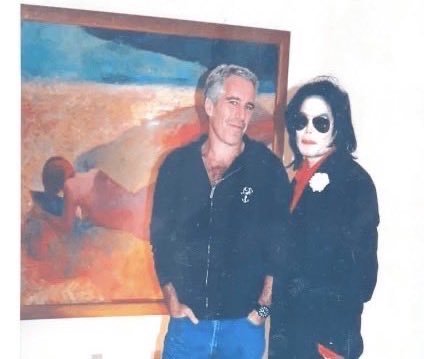
 Late Jeffrey Eipstein alongside late star Michael Jackson/US Department of Justice
Renewed focus on his life, the probe into alleged sexually related criminal activities, and unresolved questions surrounding his case have brought his controversial legacy back into the spotlight.
Who was Jeffrey Epstein?
Epstein was an American financier who built a reputation in elite social circles. Born in Brooklyn, New York in 1959, he began his career as a teacher before moving into finance.
Over time, he built a reputation — and a social circle — among the wealthy, powerful, and influential.
Epstein cultivated friendships with politicians, business leaders, and celebrities, which later fueled intense public interest and speculation about the depth of his connections.
His prominence rested not on his ability to navigate elite social networks.
Over the years, he maintained close ties with figures who would later become subjects of media spotlight — including former US presidents and members of European royalty.
Sexual related allegations
Epstein came to public attention in the mid-2000s after allegations emerged that he had sexually abused minors at his homes in Florida and New York.
In 2005, police in Palm Beach, Florida, began investigating complaints from the parents of a 14-year-old girl who said Epstein had molested her.
A search of his Palm Beach property reportedly found photographs of underage girls throughout the estate, and subsequent complaints suggested a pattern of abuse involving numerous young victims.
Prosecutors described not an isolated incident but a broader pattern of exploitation, although the case initially culminated in a controversial plea deal in 2008 in which Epstein pleaded guilty to state prostitution charges and avoided more serious federal prosecution.
Under that deal, he served an arguable light sentence, was allowed work release, and largely evaded the harsher penalties that federal trafficking charges might have carried.
This plea agreement, however, drew widespread mixed reactions.
His death
Subsequent legal actions against Epstein culminated in his arrest on July 6, 2019, on federal charges of sex trafficking minors in Florida and New York.
Prosecutors accused him of operating an extensive network through which underage girls were abused at his homes, flights and private island.
Epstein pleaded not guilty to the charges against him. He consistently denied any wrongdoing throughout the legal process.
Before he could stand trial on federal charges, Epstein was found unresponsive in his jail cell at the Metropolitan Correctional Center in New York City on August 10, 2019, and was later pronounced dead.
The New York City medical examiner and the Department of Justice inspector general ruled his death a suicide by hanging.
Partial release of Epstein files
Throughout the years, portions of the investigative files related to Epstein’s alleged crimes have trickled into the public domain through court proceedings, civil lawsuits and targeted disclosures.
These previously released materials included flight logs, contact lists and victim testimony, some of which named prominent figures.
Global media organisations such as the BBC reports have reported that these files sometimes mention well‑known individuals, but they have emphasised that appearance in a document does not constitute evidence of wrongdoing by those named.
Much of the material, however, remained sealed under legal restrictions protecting victim privacy and grand jury secrecy, prompting ongoing calls for broader disclosure.
Why have files been released now?
In late 2025, the U.S. Congress passed the Epstein Files Transparency Act, which legally requires the U.S. Department of Justice (DOJ) to make publicly available all unclassified records, communications, and investigative materials connected to Epstein’s criminal cases, his associates, and related government handling of the case.
The Act set a firm deadline for release, Friday, December 19, 2025, for all such documents.
The law comes after years of pressure from survivors, lawmakers, and public advocates who argued that official files should not remain under lock and key.
This is especially given Epstein’s early 2008 plea deal and the widespread belief that powerful people might be implicated through his contacts and activities.
The U.S. Department of Justice has since released an initial batch of documents related to Jeffrey Epstein.
The release, which includes photos, videos, and investigative records, was highly anticipated following the passage of a congressional law mandating that the files be made public by Friday.
However, both Democrats and some Republicans have criticised the Justice Department for failing to meet the full disclosure deadline, citing the agency’s announcement that not all documents could be released on time.
Many of the thousands of files are also heavily redacted.
The first tranche includes images and references to a number of well-known figures, such as former U.S. President Bill Clinton, Prince Andrew, and musicians Mick Jagger and Michael Jackson, according to a BBC report.
Being named or pictured in the files does not imply wrongdoing. Many individuals identified in these or previous Epstein-related releases have denied any involvement in criminal activity.
The release of thousands of pages of documents related to the late sex offender has also left some who were anxiously awaiting the files disappointed due to the redactions.
The lawmakers who pushed for these documents to see the light of day have described the DOJ's efforts as insincere, and some legal experts say that the redactions may only fuel ongoing conspiracy theories.
"We just want all of the evidence of these crimes out there," Epstein survivor Liz Stein told the BBC.
Marina Lacerda, who was 14 when she was abused by Epstein, also told the BBC some of the survivors were "still nervous and sceptical about how they are going to release the rest of the files".
"We are very worried that it will still be redacted in the same way that it was today.
"We are a little disappointed that they're now still lingering on and distracting us with other things," she said.