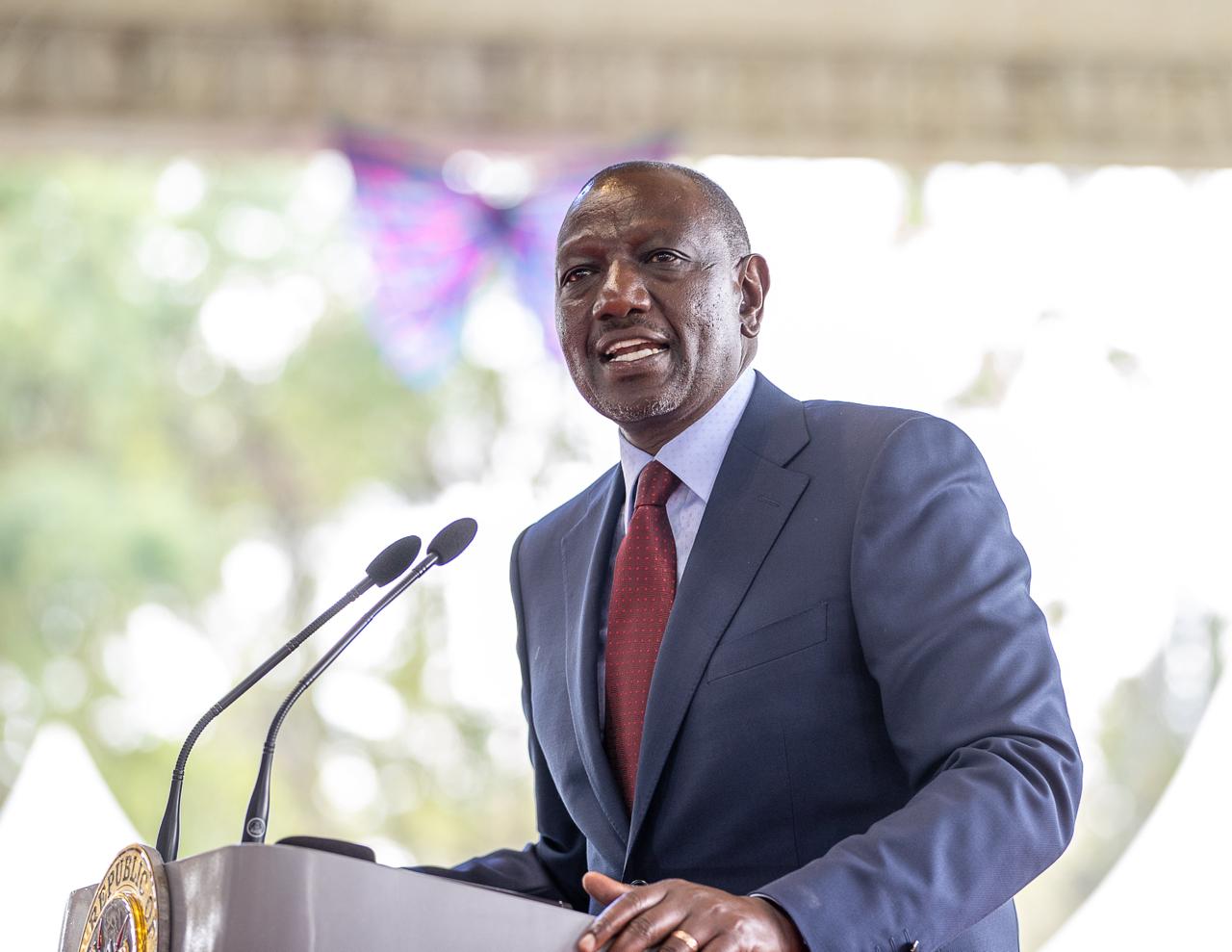
President William Ruto speaking at State House, Nairobi/PCS
President William Ruto has defended the government’s development agenda,
saying the administration is implementing a Sh5 trillion programme aimed at
accelerating economic transformation and breaking from what he described as
decades of slow progress.
Speaking on Thursday, the President said Kenya could not afford
to continue operating in the same manner it had over the past 60 years if it
hoped to achieve meaningful growth and development.
Advertisement
Advertisement
“We are rolling out a Sh5 trillion programme. If we continue at the rate at
which we have in the last 60 years, Kenya will lag behind. We must do things
differently,” Ruto said.
He argued that repeating old approaches had limited the country’s progress
and called for bold and deliberate reforms to change Kenya’s development
trajectory.
“It is said madness is doing the same thing year after year and expecting
different results. We are not mad people. We know what we want to do,” the
President added.
Ruto said the government’s strategy was anchored on clear priorities and a
willingness to depart from past practices, insisting that sustained change
would only come through new methods and decisive action.
“We cannot continue doing things the same way and Kenya will change,” he
said.
Advertisement
Advertisement
The President’s remarks come amid ongoing debate over the scale and impact
of government programmes, with the administration maintaining that its policies
are designed to drive long-term growth and improve the livelihoods of Kenyans.
This comes a few days after the
Cabinet approved the
establishment of the National Infrastructure Fund and the Sovereign Wealth
Fund, kicking off an ambitious Sh5 trillion long-term development and economic
transformation agenda.
The two
funds will serve as the backbone of the government’s plan to transition Kenya
into a first-world economy through a sustainable, investment-led growth model
that reduces overreliance on borrowing and taxation.
Approved as a limited liability company, the National
Infrastructure Fund will act as the central vehicle for aligning public
financial resources with national development priorities.
The fund is
expected to play a critical role in mobilising domestic capital, monetising
mature public assets and crowding in private sector investment for large-scale
infrastructure projects.
Through
innovative resource mobilisation, strategic asset monetisation, democratisation
of ownership via capital markets and the deployment of national savings, the
government aims to unlock long-term private capital to finance priority
investments.
This
approach is designed to shift infrastructure financing away from debt-heavy
models toward partnerships that preserve public value while accelerating
delivery.
Under the
new framework, all proceeds from privatisation will be ring-fenced and invested
exclusively in public infrastructure projects that generate and preserve
long-term economic value.
State House
said this move will ensure that the sale of public assets translates directly
into productive investments that benefit current and future generations.
“Every
shilling invested through the Fund is expected to crowd in up to Sh10
additional shillings from long-term investors, including pension funds,
sovereign partners, private equity funds and development finance institutions,”
the Cabinet dispatch stated.


 President William Ruto speaking at State House, Nairobi/PCS