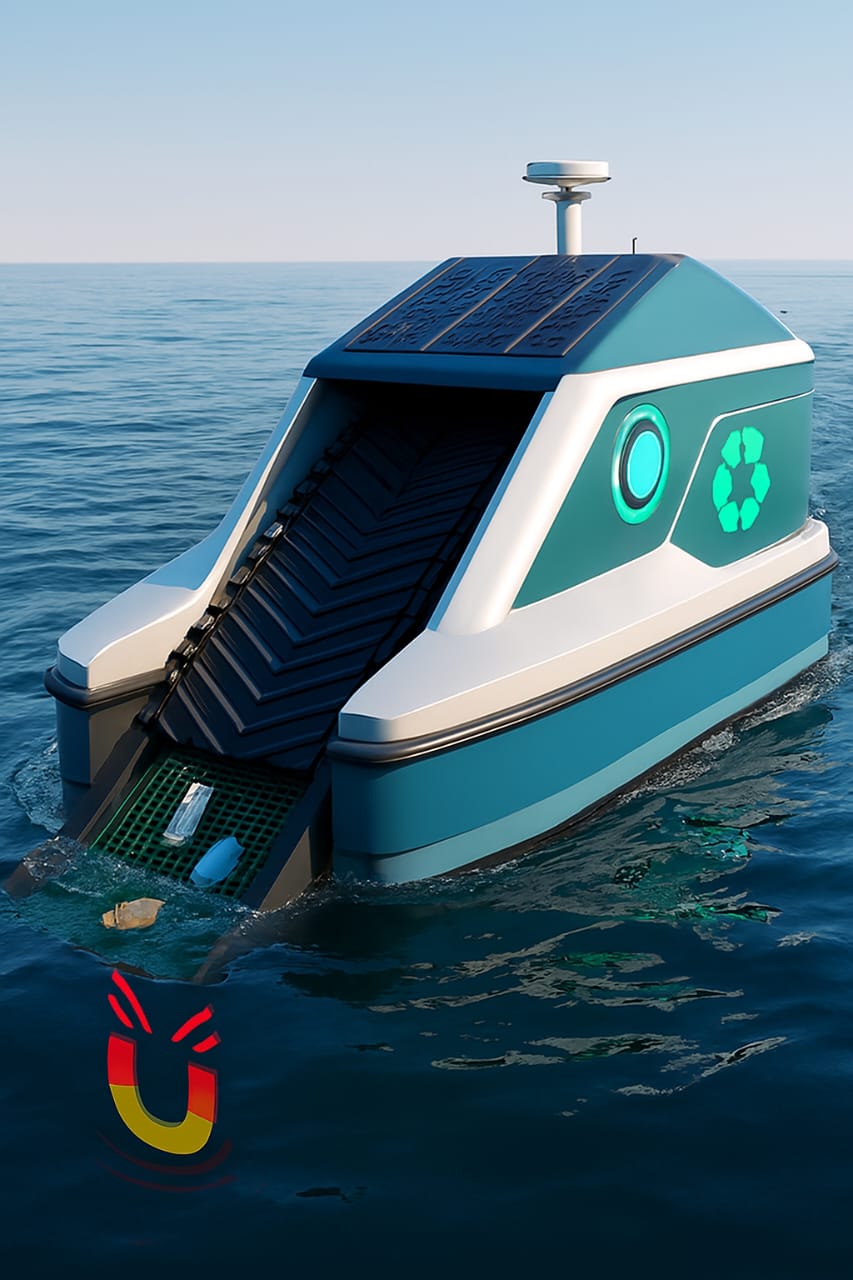
 An illustration of what the real vessel would look
like in the end / BRIAN OTIENO
An illustration of what the real vessel would look
like in the end / BRIAN OTIENO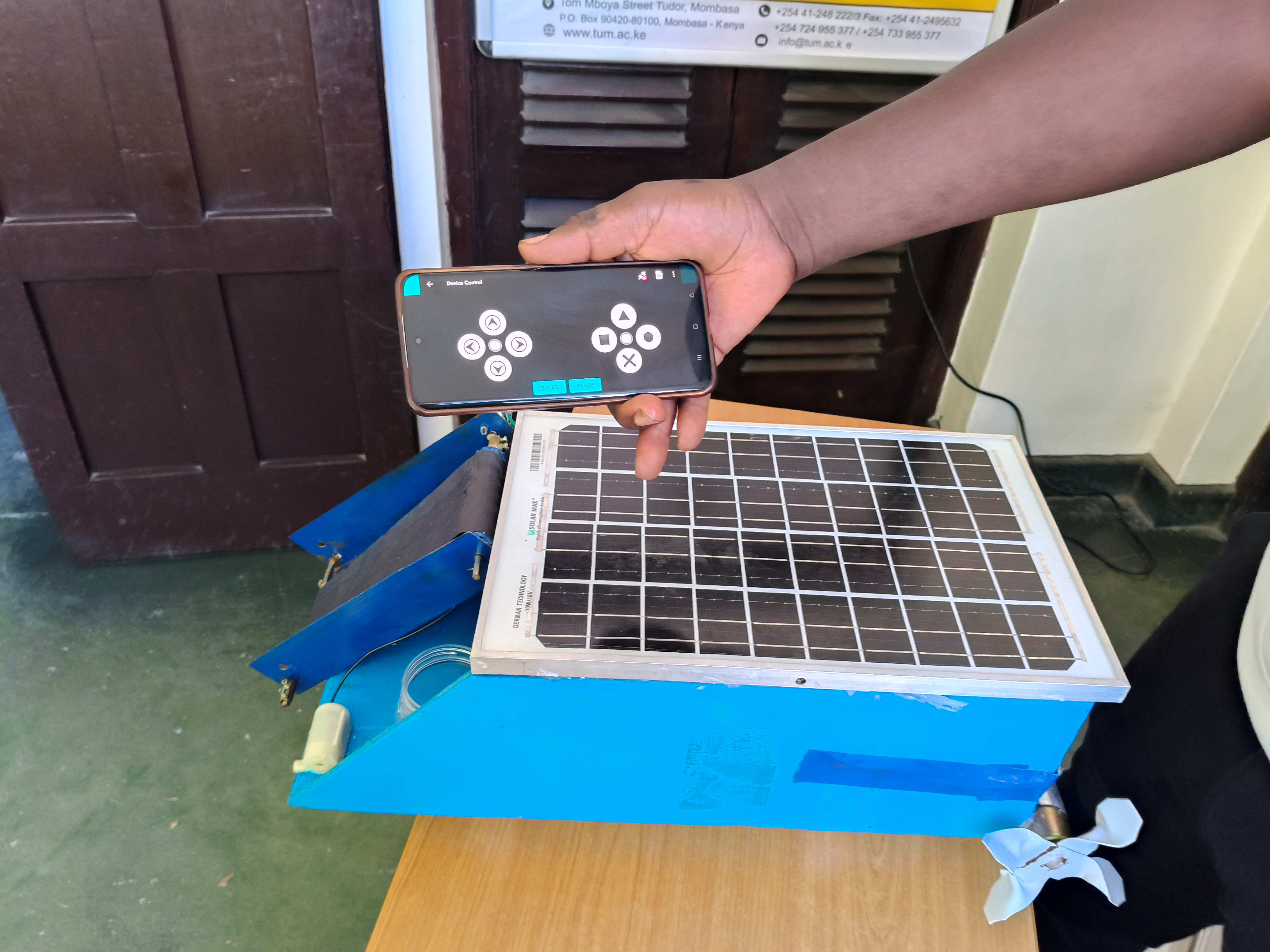 John Opanda shows the control system that the
innovation could use / BRIAN OTIENO
John Opanda shows the control system that the
innovation could use / BRIAN OTIENO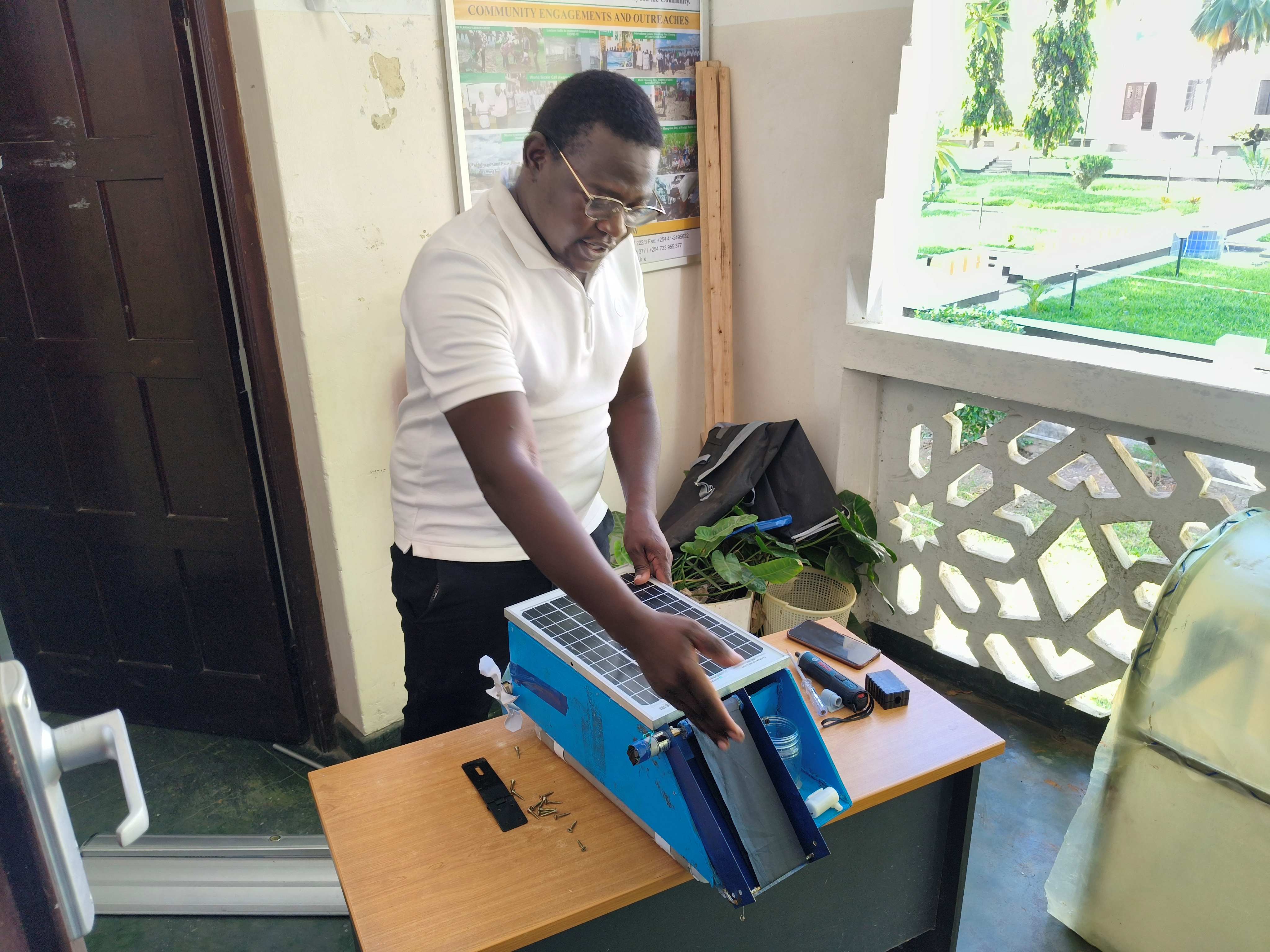 John Opanda demonstrates how his innovation works /
BRIAN OTIENO
John Opanda demonstrates how his innovation works /
BRIAN OTIENO
A fresh graduate from the Technical University of Mombasa is making waves with an innovation that could transform how Kenya tackles water pollution.
John Opanda, who completed a diploma in electrical and electronic engineering just three weeks ago, has developed a solar-powered auto marine vessel designed to clean up polluted water bodies.
The invention, still at the prototype stage, has already attracted attention from top officials in the Ministry of Science, Research and Innovation, highlighting its potential to address one of the country’s most pressing environmental challenges.
Opanda said the vessel is designed to operate autonomously, removing waste from water in a multi-dimensional approach. It combines solar power and battery storage to ensure uninterrupted functionality even during cloudy conditions or at night.
“We want this vessel to operate for as long as it can without worrying about power shortages,” he said.
Intelligent energy management allows the vessel to switch seamlessly between solar input and stored battery power, optimising efficiency while minimising its environmental footprint.
The vessel is equipped with propellers that give it full navigational control, allowing it to move forward, reverse, turn laterally and stop on command.
It can be operated remotely through a smartphone, joystick or controller, giving users flexibility in how they manoeuvre it in different water conditions.
For Opanda, the innovation is not only about technology but also about practical environmental impact.
The vessel employs a three-pronged cleaning system.
A surface conveyor belt collects floating plastics and other debris, depositing them into a container.
Once the container reaches capacity, sensors automatically stop the conveyor belt to prevent overflow.
In addition, the vessel features a spill detection and filtration module that can remove oil contamination from water, filtering the oil into a separate tank and releasing clean water back into the environment.
An underwater magnet attracts light metal objects, ensuring even submerged debris is captured.
“The majority of pollution in our water comes from plastics,” Opanda said. “That’s why the conveyor belt is central to the vessel’s function. We are also designing it to handle oil spills and metal waste, ensuring comprehensive cleanup.”
The vessel is controlled using an application created by Opanda himself, which allows the user to determine its direction and track its operations in real time.
He is exploring artificial intelligence integration, which could eventually allow the vessel to navigate autonomously to a GPS location.
“Right now, I control it manually, but with more research and support, it could become fully autonomous,” Opanda said.
Beyond its technical specifications, the innovation carries a vision for environmental and social impact.
Opanda hopes the vessel will be used in oceans, rivers, lakes and dams, scaling its operations depending on the size and type of water body.
He also envisions building the final version from durable plastic to minimise corrosion and prolong its lifespan.
“This vessel can be adapted to meet the needs of communities, governments, or environmental organisations that want to make a difference in cleaning up water bodies,” he said.
The young engineer showcased the prototype during the 6th edition of the Pwani Innovation Week, where Science, Research and Innovation PS Shaukat Abdulrazak expressed keen interest.
The PS pledged support to help Opanda bring the concept to full-scale production, saying the potential of the technology to address the growing problem of water pollution.
“When I presented the project, he asked questions about cost and scalability, which made me rethink the project from a holistic perspective,” Opanda said.
Experts say innovations like Opanda’s vessel could be a game-changer for Kenya, a country grappling with plastic pollution in rivers, lakes and coastal areas.
Water pollution has become a significant environmental and economic challenge, affecting fisheries, human health, tourism and livelihoods.
If fully realized, this vessel could offer a sustainable and cost-effective solution to keeping water bodies clean while promoting the use of renewable energy.
Opanda’s journey reflects the growing ingenuity among young Kenyan innovators, who are increasingly turning their academic knowledge into practical solutions for societal challenges.
“This project shows what young people can achieve when given the right support and opportunities,” he said.
With more backing, he believes the vessel could be deployed in multiple locations, adapting to different water conditions and types of waste, ultimately contributing to cleaner, healthier water for communities across the country.
As Kenya and the world grapple with environmental degradation, innovations like Opanda’s solar-powered vessel represent a new wave of practical solutions driven by young engineers.
For a nation with vast water resources, this project is more than a technological experiment—it is a blueprint for sustainable environmental stewardship and a hopeful vision for future generations.
Instant Analysis:
The innovative solution could be used on both large and small water bodies depending in the requirement. This can be in oceans, rivers, lakes and dams. Opanda says water pollution can be a thing of the past if well utilised.