Some county governments would require at least two full financial years to clear their pending bills, even if they were to suspend all operations, including development projects and payment of salaries.
This grim reality has once again brought into focus the deepening debt crisis facing devolved units and the severe strain it continues to place on suppliers and contractors.
The latest revelations are contained in the County Governments Budget Implementation Review Report by the Controller of Budget for the first three months of the 2025-26 financial year, covering the period ending September 30, 2025.
The report shows that counties have accumulated pending bills dating back to the early years of devolution, highlighting a persistent failure to address historical obligations.
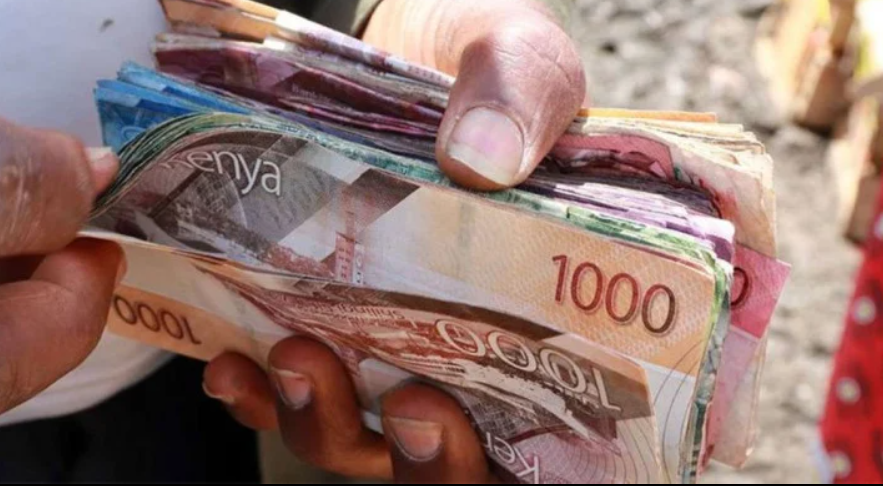
According to the report, the 47 county governments jointly owed suppliers and contractors a staggering Sh177.47 billion by the end of the reporting period.
Of this amount, Sh171.92 billion was owed by county executives, while county assemblies accounted for Sh5.55 billion in trade payables.
Worryingly, nearly half of the outstanding bills—amounting to Sh85.15 billion or 48 per cent—have been outstanding for more than three years, raising serious concerns about the viability of businesses that rely on county contracts.
Bills aged under one year stood at Sh46.83 billion (26 per cent), those between one and two years at Sh24.12 billion (14 per cent), while Sh19.62 billion (11 per cent) were aged between two and three years.
The Controller of Budget noted that several county governments failed to adhere to their scheduled payment plans, further compounding the problem.
This is despite clear legal provisions requiring counties to prioritise the settlement of pending bills.
Regulation 55(2)(b) of the Public Finance Management (County Governments) Regulations, 2015, stipulates that eligible trade payables should be treated as a first charge in county budgets, including for the 2025-26 financial year.
Nairobi City County stands out as the worst offender, with pending bills amounting to Sh82.89 billion.
The county’s debt is equivalent to 186 per cent of its Sh44.62 billion budget for the 2025-26 financial year.
This means that even if Nairobi were to suspend both development and recurrent expenditure, it would still take at least two financial years to fully clear its outstanding bills.
Senator Samson Cherargei has attributed the persistent accumulation of pending bills to a mix of political and administrative failures.
He cited political patronage, where incoming governors deliberately refuse to honour obligations incurred by their predecessors, corruption, and the voiding of payments for unintended purposes as key drivers of the crisis.
“There is an urgent need for the Senate, the Controller of Budget and the Auditor General to sit down and interrogate this issue comprehensively because it is getting out of hand,” Cherargei said, warning that traders and contractors are being pushed to the brink.
Other counties are also grappling with heavy debt burdens relative to their budgets.
Kilifi would need to allocate at least half of its Sh19.87 billion budget to clear pending bills amounting to Sh6.9 billion.
Machakos would have to spend 38 per cent of its Sh15.19 billion budget to settle Sh5.80 billion in outstanding bills.
Busia and Narok counties would each spend about 32 per cent of their budgets on pending bills, while Bungoma, Kiambu, Wajir and Taita Taveta would require 27 per cent of their budgets for the same purpose.
Trans Nzoia would spend 26 per cent, Tana River 24 per cent, Kisumu 22 per cent and Kajiado 20 per cent.
At the other end of the spectrum, only Elgeyo Marakwet reported zero pending bills. Makueni county would require just three per cent of its current budget to clear pending bills of Sh401.54 million.
West Pokot, Turkana, Nyeri and Kitui would each need only four per cent of their budgets, while Baringo and Kisii would require five per cent. Samburu would need six per cent, Nyamira and Marsabit eight per cent, Meru eight per cent and Migori nine per cent.
In its recommendations, the Controller of Budget urged county governments to prioritise the settlement of all eligible trade payables as a first charge on their budgets and to strictly adhere to the trade payables action plans submitted for the 2025-26 financial year.
She warned that failure to do so would continue to undermine service delivery and public trust in devolution.
INSTANT ANALYSIS
As of September 30, 2025, the Controller of Budget reported that county governments had cumulative trade payables amounting to Sh177.47 billion, a decrease from Sh183.03 billion reported as of June 30, 2025. As indicated in Chapter 3 of this report, several governments did not adhere to their payment plans for trade payables for the first quarter of financial year 2025-26. The accumulation of trade payables hinders service delivery and disrupts business operations.