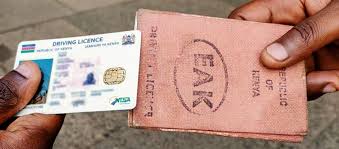
On Monday, December 15, the Cabinet, chaired by President William Ruto, approved the rollout of a second-generation smart driving licence, a move the government says is aimed at improving road safety and addressing impunity on Kenyan roads.
According to a Cabinet dispatch, the issuance and management of the new smart driving licences will be transferred from the National Transport and Safety Authority (NTSA) to a private investor under a public-private partnership (PPP) framework.
“Through innovative financing, Cabinet approved the rollout of Second-Generation Smart Driving Licences under a public-private partnership, integrating smart licences with an instant fines system, a mobile licence wallet, and driver merit and demerit points to enhance road safety and modernise licensing,” the State House dispatch said.
The approval has raised questions about how the proposed system will work and how it differs from the current smart driving licence.
Kenya first introduced smart driving licences in 2020.
The licence includes a driver’s Kenya Revenue Authority PIN, national identity number and blood group.
At the time, former NTSA director-general Francis Mejja said the system was intended to capture drivers’ records, which could be shared with relevant institutions, including insurance companies.
Speaking then, Mejja said discussions were ongoing with insurers to explore risk-based premiums linked to driving behaviour.
He also said the system could allow employers to assess driving records when hiring and enable authorities to withdraw licences for serious traffic offences.
The licence is fitted with an electronic chip that stores driver information, including records of traffic offences committed by the holder.
Based on the Cabinet’s announcement, the key distinction between the earlier smart licence and the newly approved second-generation system appears to be the proposed management structure, with the latter to be overseen by a private entity under the PPP model.
The government says the new system is expected to support digitisation, real-time licence verification, automated issuance of fines, and continuous tracking of driver behaviour through a merit and demerit points framework.
Under this model, traffic violations would be electronically recorded, with notifications and fines sent to motorists through their mobile phones.
Accumulation of offences beyond a set threshold could lead to licence suspension or deactivation, subject to the applicable regulations.
Comparable systems have been implemented in other countries.
In Nigeria, the Federal Road Safety Corps has rolled out a fully digitalised driver’s licence processing system.
The framework, unveiled by Corps Marshal Shehu Mohammed, introduces contactless biometric capture and on-the-spot printing of permanent driving licences, replacing the temporary licences that had been in use.
Speaking in Abuja on October 21, 2025, Mohammed said the system marked the beginning of a digital, one-stop process for licence issuance, aimed at addressing longstanding backlogs.
India operates an electronic traffic enforcement system known as e-challan. The system generates digital tickets for traffic violations and notifies offenders via SMS or email.
Vehicle registration details are accessed through government databases, enabling authorities to issue fines without physical interaction. The system is designed to reduce cash handling and improve transparency.
In Dubai, driving licences are integrated with vehicle ownership records. Traffic violations detected through surveillance systems trigger instant notifications to vehicle owners, who are required to settle fines within a stipulated period to avoid further penalties, including possible licence suspension.
The United States uses a penalty points system in which drivers accumulate points for traffic violations.
Licence suspension or revocation is triggered once a driver exceeds prescribed thresholds, with records retained in official databases for several years. Similarly, in the United Kingdom, drivers may be disqualified if they accumulate 12 or more penalty points within three years.
Although Kenya rolled out smart driving licences in 2020, features such as instant electronic fines linked directly to the licence have not yet been fully implemented.
Full execution of such a system would require expanded deployment of traffic surveillance cameras and integration of vehicle ownership data with licence records, reducing reliance on physical traffic stops by police.