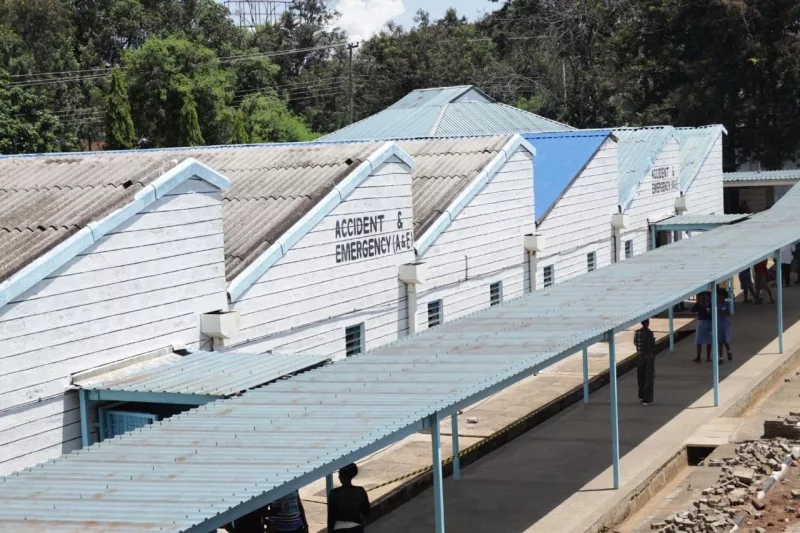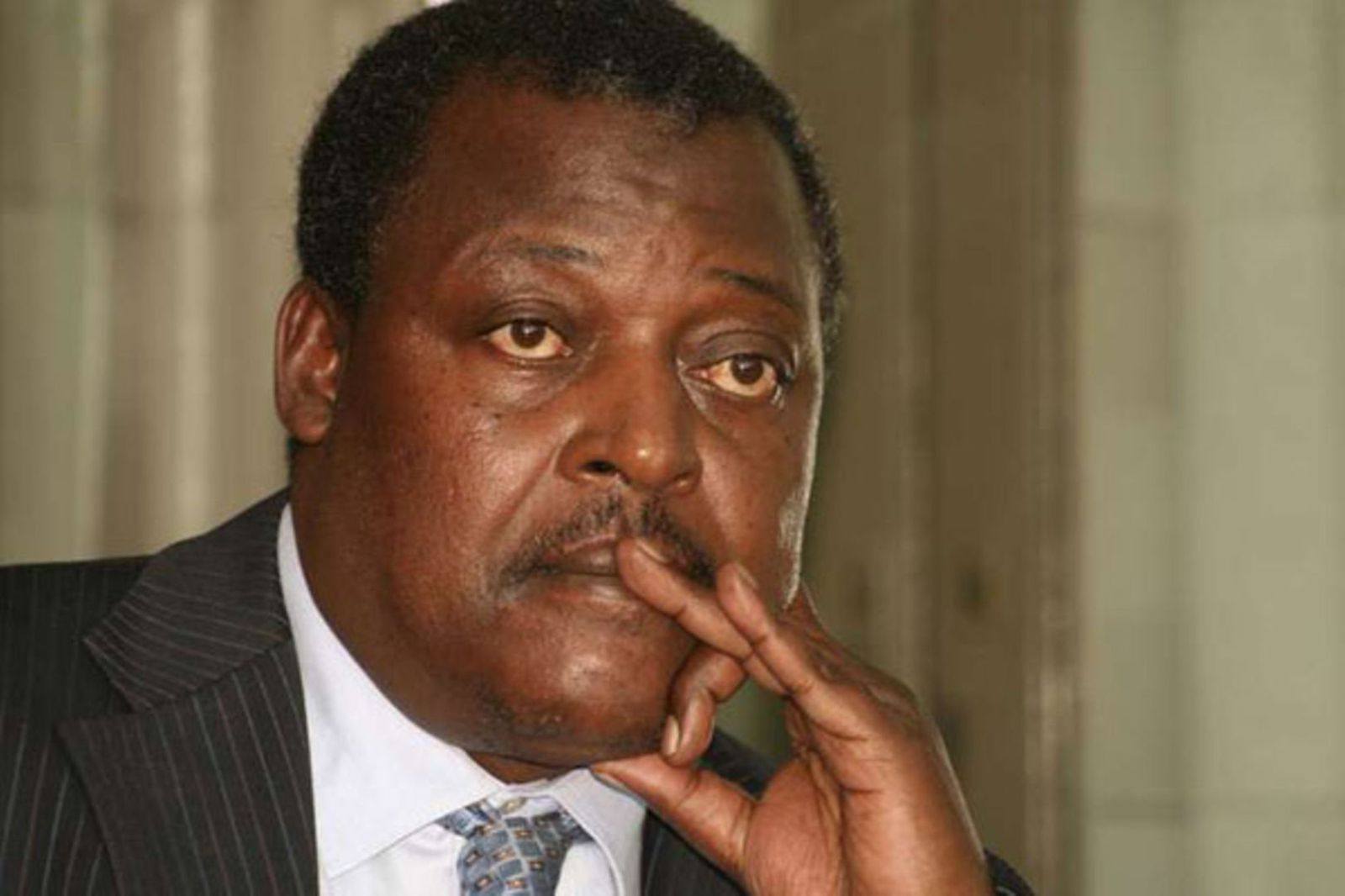
Former Lugari MP Cyrus Jirongo passed away on Saturday morning, at around 3 am, in an accident along the Nairobi-Nakuru Highway.
The 64-year-old died when his car collided with a passenger bus, according to a police report.
Jirongo was a prominent politician whose career spanned decades and whose influence cut across politics, business and public life.
He was born on March 21, 1961, in what was then the Kenya Colony.
For more than three decades, the name Cyrus Jirongo has been inseparable from Kenya’s political folklore around money, power and patronage.
The late businessman and politician, who rose to prominence in the early 1990s, earned the enduring moniker “Mr Money Bags” after becoming one of the most visible symbols of the sudden influx of vast sums of cash into Kenyan politics at the height of the one-party era and the transition to multiparty democracy.
Jirongo’s reputation was forged during a defining moment in Kenya’s political history.
The early 1990s marked the collapse of the Cold War order and intense pressure on President Daniel Arap Moi’s government to reintroduce multiparty politics.
The repeal of Section 2A of the Constitution in 1991 opened the political space but also ushered in a fiercely competitive, cash-heavy political environment.
It was in this context that Jirongo, then a relatively young but politically connected figure, emerged as a central financier and mobiliser.
At the time, Jirongo was closely associated with the ruling Kenya African National Union (KANU).
He chaired the Youth for KANU ’92 (YK’92), a lobby group formed ahead of the landmark 1992 General Election.
YK’92 was officially presented as a youth mobilisation outfit, but it quickly became synonymous with unprecedented spending on political campaigns.
Contemporary reporting by local and international media described helicopters, fleets of vehicles, mass rallies and generous handouts that dwarfed anything previously seen in Kenyan politics.
It was this spectacle that cemented Jirongo’s “Mr Money Bags” image.
Newspapers chronicled rallies where cash was openly distributed, food and alcohol were supplied in abundance, and logistical operations appeared virtually limitless.
Diplomats and election observers at the time remarked on the sheer scale of spending, noting that money had become a decisive political tool in swaying loyalties during the fragile transition.
Questions soon arose about the source of the funds.
Critics alleged that YK’92 was bankrolled through opaque channels linked to state resources and powerful individuals within the administration.
These claims were never conclusively adjudicated in court, but they persisted in public discourse and parliamentary debates for years.
Jirongo consistently defended himself, maintaining that he was a successful businessman with the capacity to mobilise resources and that his role was political, not criminal.
“I was not stealing from anyone,” he said in later interviews.
“I was a businessman. I had friends. People supported a cause they believed in.”
What distinguished Jirongo from other political financiers of the era was not only the volume of money associated with him, but his visibility.
Unlike traditional power brokers who operated discreetly, Jirongo was front and centre—addressing rallies, coordinating campaign machinery and speaking openly about the role of resources in politics.
His flamboyant style, confidence and willingness to embrace the image of a political kingmaker amplified public fascination.
The 1992 election entrenched the idea that money could decisively shape political outcomes, and Jirongo became its most recognisable face.
Analysts later observed that YK’92 set a template for future campaign operations in Kenya, where fundraising, patronage networks and high-cost mobilisation became standard features.
Academic studies on Kenyan elections, including work by political scientists such as Joel Barkan and Michela Wrong’s journalistic accounts of the Moi era, frequently cite YK’92 as a turning point.
Jirongo’s “Mr Money Bags” reputation followed him well beyond the 1990s.
When he later fell out with KANU and charted an independent political path—founding parties, contesting presidential elections and aligning with various coalitions—the perception of immense personal wealth remained.
Supporters viewed him as proof that political success did not always require state backing, while critics saw him as emblematic of the monetisation of democracy.
The nickname also reflected broader anxieties about governance and inequality. Kenya in the early 1990s was grappling with economic hardship, structural adjustment programmes and rising unemployment.
Against this backdrop, images of politicians dispensing cash fed public resentment and cynicism.
Jirongo, fairly or unfairly, became the personification of that contradiction: vast political spending amid widespread poverty.
“I understand why people get angry,” he once said.
“But politics everywhere in the world costs money.”
Credible historical accounts suggest that while Jirongo did not invent money politics in Kenya, he mainstreamed it.
Veteran journalists and historians have noted that previous elections involved inducements, but never on the industrial scale witnessed in 1992.
The open deployment of cash during that period changed public expectations and political behaviour, a legacy that continues to shape Kenyan elections today.
In later years, Jirongo occasionally reflected on that era with a mix of defiance and pragmatism, arguing that politics had simply adapted to its environment.
“We created a system where people expect something for their vote,” he admitted in one interview, adding that changing that mindset would take time.