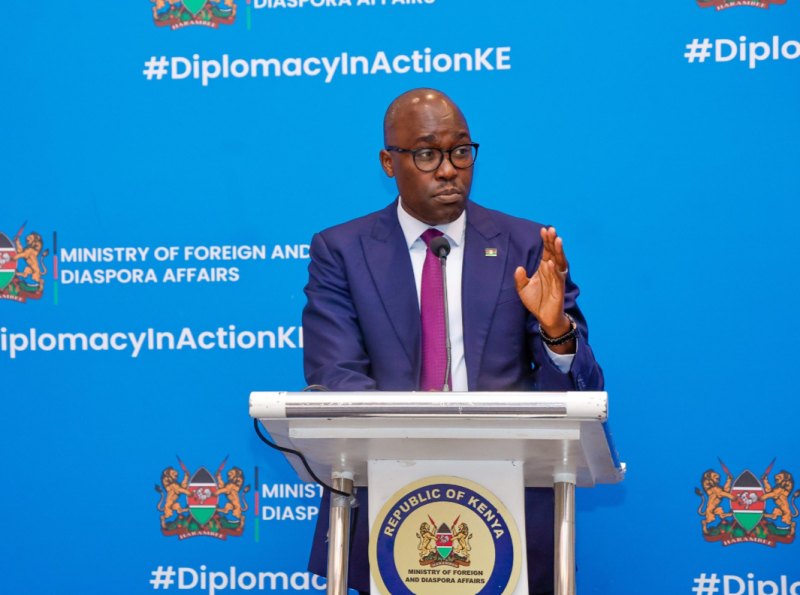
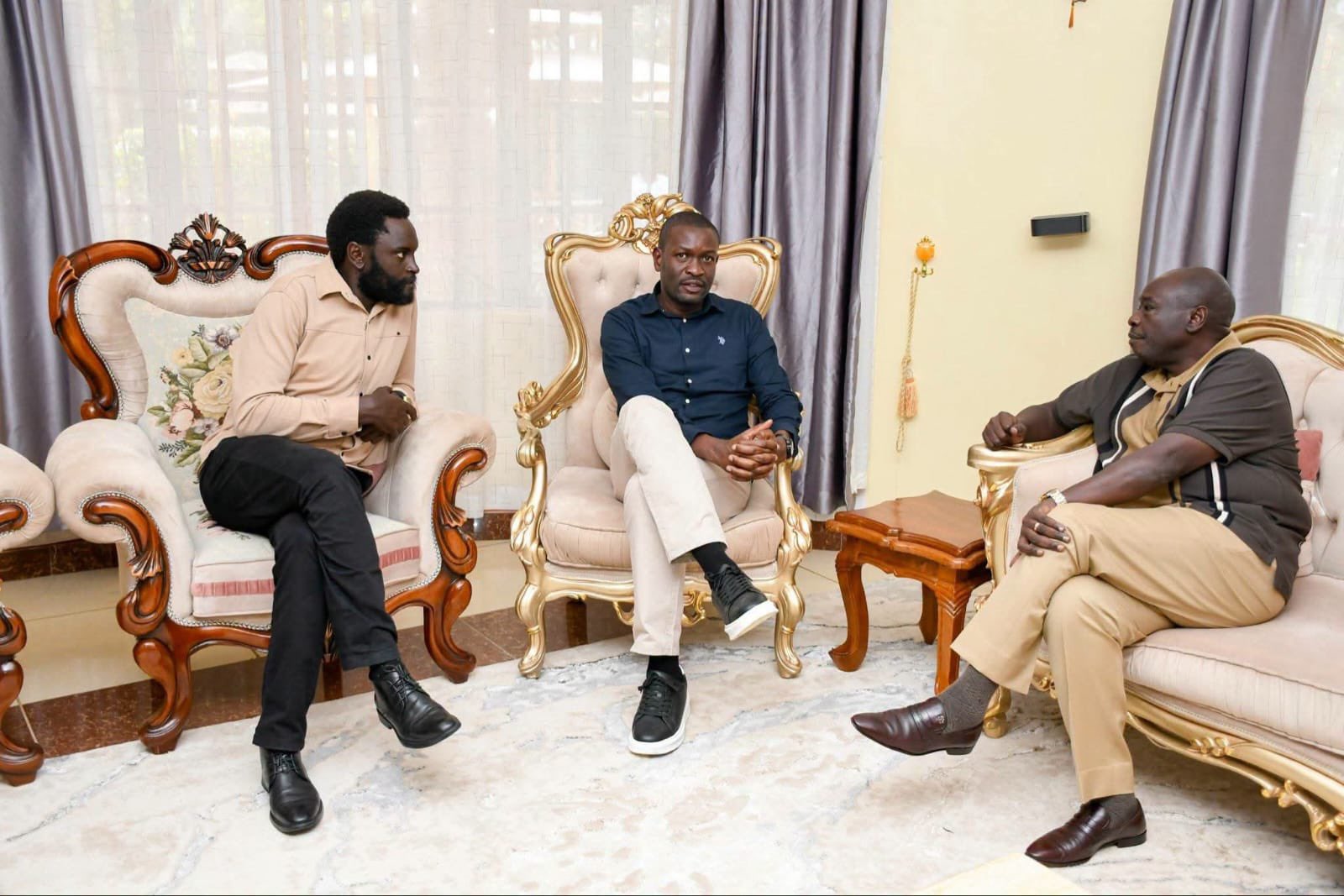
Migori Governor Ochilo Ayacko has come under sustained criticism from sections of the political class over what they term poor performance in service delivery and development. Leading the charge is Uriri MP Mark Nyamita, who has openly declared his intention to unseat the governor in 2027 and popularised the “Ochilo Bye” catchphrase that has gained traction on social media.
Nyamita accuses the governor of failing to deliver on his mandate, claims Ochilo has strongly dismissed as politically motivated half-truths and deliberate disinformation.
In an exclusive one-on-one interview with the Star, Governor Ochilo speaks candidly about his development record, responds to the “Ochilo Bye” narrative, and weighs in on ODM politics.
You are in the third year of your first term as governor. What would you say you have achieved for the people of Migori county?
We have achieved a great deal in the last three years, despite the challenges. Let me start with the health sector, which is a critical service. We have modernised health facilities across the county, stocked essential medicines, and improved diagnostic and patient management capacity.
Our facilities consistently have basic medicines. The only gaps may be in very expensive specialised drugs, which even some national referral hospitals struggle with. We have also strengthened staffing by recruiting new nurses and doctors. Health is labour-intensive, and we have ensured the required personnel are in place.
We committed adequate budgetary resources to health, and as a result, many development partners who had previously withdrawn from Migori have returned. That is not accidental—it is because they see seriousness and accountability.
Critics claim the Migori Teaching and Referral Hospital has deteriorated under your leadership. What do you say?
That narrative is being pushed almost exclusively by Uriri MP Mark Nyamita. He is obsessed with becoming governor, and I am not surprised that he cannot see anything positive in what we are doing.
What I find ironic is that when his own supporters were seriously injured after fighting among themselves, he rushed them to the Migori Teaching and Referral Hospital. They were treated and discharged successfully. So when it comes to actual illness or injury, he trusts the hospital. When it comes to politics, he spreads falsehoods.
Nyamita is rarely in Migori county. He spends most of his time on social media trying to trend. He does not have facts about the status of our referral hospital. What he has is ambition—unchecked ambition for 2027.
What about education, particularly Early Childhood Development Education (ECDE)?
ECDE is a devolved function, and we have invested heavily in it. In three years, we have constructed 306 ECDE classrooms across all 40 wards in Migori county. No ward has received fewer than eight new classrooms.
Beyond infrastructure, we have improved the welfare of ECDE teachers by introducing allowances. Through the First Lady’s Foundation, we have partnered with development organisations that are equipping nearly three-quarters of the classrooms we have built with learning materials and furniture.
Ironically, members of Nyamita’s own family attend ECDE centres built by my administration. Unfortunately, political ambition blinds him from acknowledging progress.
Trade and empowerment are major concerns for residents. What has your administration done in this area?
Trade development revolves around market infrastructure and empowering small businesses. We have officially supported 450 small-scale businesses through grants of Sh1 million per ward, benefiting about 10 groups per ward across all 40 wards.
In addition, we supported another 80 groups, roughly 10 per subcounty, across our eight subcounties. These groups include families and associates of my critics. Empowerment programmes are not selective or partisan.
We have also prioritised market construction. Every subcounty has at least two modern markets under construction. These projects are funded through partnerships with the national government but are firmly anchored in our CIDP.
Some leaders argue that these are national government projects, not county initiatives. Is that true?
That argument is misleading. These projects are in our County Integrated Development Plan. It is our strategy to partner with the national government. The law requires us to work in tandem.
There is nothing to be ashamed of in cooperation. Development does not happen in isolation. Envy should not drive public discourse. People are not elected through jealousy or lies.
What progress has been made in water provision?
We have drilled more than 220 boreholes across Migori county, including several in Uriri constituency. When we assumed office, many water schemes were non-functional due to unpaid electricity bills and neglect. We cleared the bills, repaired schemes, and operationalised dormant boreholes.
Given the resources available to us, I believe our performance in water provision over the last three years is commendable.
I must add that politicising funerals by turning them into platforms for water or campaign rhetoric is disrespectful. Funerals are for mourning, not political theatrics.
What is Migori county’s budget, and how do you manage competing priorities?
Migori county receives about Sh8.4 billion annually. Sometimes the budget rises to about Sh10 billion due to rolled-over funds and donor commitments.
When we took office, Migori did not even have a stadium. Today, through our engagement with the President and the national government, the stadium will be ready in a few months. Sports infrastructure is a county function, but partnerships make delivery faster and more effective.
How has urbanisation progressed under your administration?
When I came into office, Migori had three municipalities—Migori, Awendo and Rongo. We now have a fourth, Kihancha Municipality.
We have partnered with the World Bank and other donors to strengthen urban planning, staff capacity and service delivery. Migori is also among counties leading in the Affordable Housing Programme. The land for these housing projects has been identified by the county government.
The county previously lacked a proper headquarters. Has that changed?
Absolutely. We inherited a county without proper headquarters. Both the executive and the assembly were operating from old local authority buildings.
Today, we are constructing modern headquarters for both arms of government. These structures will be ready within the next few months and will significantly improve service delivery and working conditions.
Transport and air connectivity have been highlighted as key achievements. Tell us about that.
Migori previously had a runway but no terminal, making the airstrip unusable. In partnership with the Kenya Airports Authority, we constructed a terminal.
Today, Migori has three flights per week, and all are fully booked. Some may argue this is a national government function, but development has no monopoly. If a county wants air connectivity, it must play its role.
Roads remain a challenge in many counties. How is Migori faring?
Road infrastructure is indeed a challenge due to limited resources. We can only allocate about Sh800 million annually for roads across 40 wards.
Despite this, we have constructed nearly 14 kilometres of tarmac roads, built over 10 bridges, and maintained thousands of kilometres of county roads. Our roads may be rough in some areas, but they are motorable. You cannot get stuck anywhere in Migori.
What about the blue economy and agriculture?
We have made significant strides in the blue economy. A modern pier is under construction at Miuru Bay, with another smaller one at Sori. We have also built fish landing bays at Miuru, Got Kachola, and Sori, complete with cold storage facilities.
In aquaculture, we have distributed fish cages, boats, safety gear, and quality fingerlings. We have fish ponds in 20 wards.
In agriculture, we supply quality seeds, have recruited 140 agripreneurs, support dairy farming through mixed-breed cows, and strengthened cooperatives at the ward level.
How do you respond to the “Ochilo bye” slogan?
That slogan is meant to provoke a reaction. I am here to stay. If anyone is saying bye, it is the person abandoning the work they were elected to do.
I am not a pushover. I am a seasoned politician. Migori does not lack intelligent voters.
As an ODM stalwart, what is the state of the party after Raila Odinga’s death?
The ODM party is recovering from the loss of Baba. If the results in Ugunja, Kasipul, and Magarini are anything to go by, ODM is about to make a full recovery. Those who may think that ODM is divided, there may be different shapes of opinion as we speak today, but I am not seeing anybody leave ODM. If it were divided, people would have left already. Kenyans have not left the party.
Finally, what message do you have for Kenyans?
Elections come and go. Kenyans should reject leaders who promote hate, division, and personal attacks. Leadership must be about service, vision, and unity. On issues and performance, I am confident. An election based on facts is a walkover for us.