The late Cyrus Jirongo belonged to a rare political generation whose rise and evolution mirrors Kenya’s transition from one-party dominance to the competitive, high-stakes politics of today.
Brash, influential, and often debated, Jirongo emerged in the early 1990s as one of the most recognisable faces of the Kenya African National Union (KANU) establishment, a period that shaped both his career and his public image.
It was during this era that Jirongo crossed paths with a young, ambitious activist named William Ruto, now the President of Kenya.
The two men were involved in the Youth for KANU ’92 (YK92) movement, a political mobilisation outfit formed to support the late President Daniel Arap Moi as Kenya embraced multiparty politics.
Jirongo chaired the group, while Ruto held a leadership role, forming a connection that influenced their early political trajectories.
YK92 became associated with the active defence of the KANU regime during the 1992 elections. Reflecting on the period, Jirongo said in a candid interview: “YK92 was formed to protect the government of the day. We did what we believed was right at the time,” acknowledging both the impact and debates surrounding the group’s activities.
The movement introduced a new generation of politicians into the national arena.
Jirongo went on to win the Lugari parliamentary seat and later served as a Cabinet minister, while Ruto captured Eldoret North, gradually consolidating his base in the Rift Valley. Both were seen as political protégés of Moi and participants in KANU’s patronage networks.
For a time, their paths ran parallel. They were young, influential, and considered symbols of KANU’s future.
The party’s defeat in the 2002 General Election, which ended its 39-year hold on power, marked a turning point. Differences in political direction became apparent.
Ruto moved to reorient his political career, leaving behind the KANU old guard, aligning with the Orange Democratic Movement (ODM), and later forging alliances that would contribute to his eventual rise to the presidency in 2022. His capacity to adapt, build coalitions, and navigate shifting political dynamics became central to his political journey.
Jirongo’s trajectory followed a different path. After losing his parliamentary seat, he faced challenges in regaining national prominence. He formed new political parties and pursued several attempts at a comeback, though he did not return to the centre of national influence that he had once held.
As Ruto’s political influence grew, the two men’s relationship evolved, with public disagreements becoming more evident.
By the mid-2010s, observers noted a clear divergence in their political positions. Jirongo, at times, voiced criticism of Ruto, highlighting what he described as particular approaches to governance and leadership.
In 2013, at a public event in the Western region, Jirongo addressed residents about political engagement, stating: “Kwa hawa watu wote hakuna mtu anajua Ruto kunishinda. Mimi niliandika yeye miaka sita.”
Ruto responded during a public meeting in the region: “Kwani hii Western si Kenya? Inatakikana mtu akuwe na visa ndiyo akuje hapa?” He also said: “Wale wanasumbuka na mimi kuja hapa watasumbuka bure kwa sababu mimi nitakuja na nitakuja tena...sasa watafanya nini...watakimbia?”
The political differences between the two continued to draw attention over the years.
At the funeral service of former minister Soita Shitanda in June 2016, Ruto, then Deputy President, characterised some of Jirongo’s remarks as expressions of personal disappointment. “Some people are angry because they thought I was just their errand boy. They cannot accept that I have succeeded,” he said.
Jirongo publicly expressed scepticism about Ruto’s presidential prospects, noting that he was open to collaboration with other leaders but not with Ruto. “Mbio za sakafuni ni ukingoni. Uende juu urudi chini hutakuwa rais...na mimi nikisema nimesema,” he said.
Ruto went on to win the presidency in 2022, where Jirongo congratulated him.
While earlier tensions were observed, there were no legal proceedings arising from their disagreements, illustrating the personal and political nature of their divergence.
Beyond their individual interactions, the Jirongo-Ruto dynamic reflected wider changes in Kenya’s political landscape. It highlighted the evolution of older political networks and the rise of a new political class adept at coalition-building, public messaging, and realignment.
Their histories remained linked. Both men were associated with YK92, a period that continues to generate discussion about political mobilisation in Kenya’s democratic development.
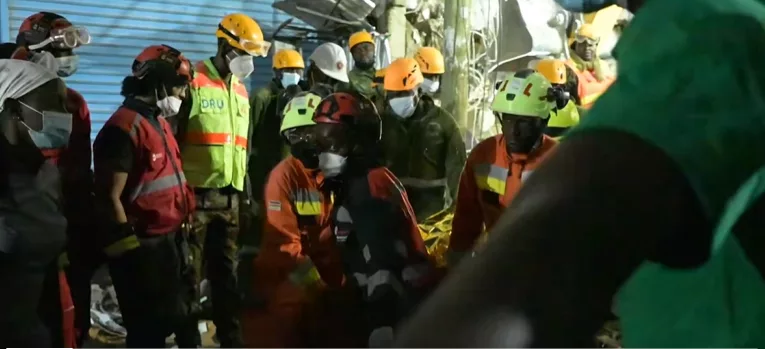
Jirongo died on Saturday, December 13, morning in a road accident at Karai along the Nairobi-Nakuru highway.
According to family and friends, Jirongo was driving himself to his rural home in Lugari, Kakamega, when his vehicle collided with a bus. Rift Valley Traffic Enforcement Officer Sarah Chumo reported that the crash occurred at around 3 a.m. He was alone at the time.
President Ruto joined other leaders across the political spectrum in mourning Jirongo. In a condolence message, he described Jirongo as “a bold mobiliser and a key figure in Kenya’s political journey,” recognising their shared past while avoiding past disagreements.
In a statement, the President said Jirongo was “a relentless go-getter, a seasoned businessman, and a consummate politician who refused to be defined, let alone defeated, by life’s challenges.”
He added that Jirongo “was a fighter in every sense: blunt yet warm, bold yet approachable, enlightened and endlessly entrepreneurial.”
“Above all, he was generous to a fault; always willing to give, to uplift, and to back others with his time, resources, and belief,” Ruto said.
He also praised Jirongo’s fearless approach to life and politics. “Never one to shrink from a tough stand or a grand idea, he lived on his own terms and left an indelible mark on our political landscape. Rest in peace, my friend,” he said.