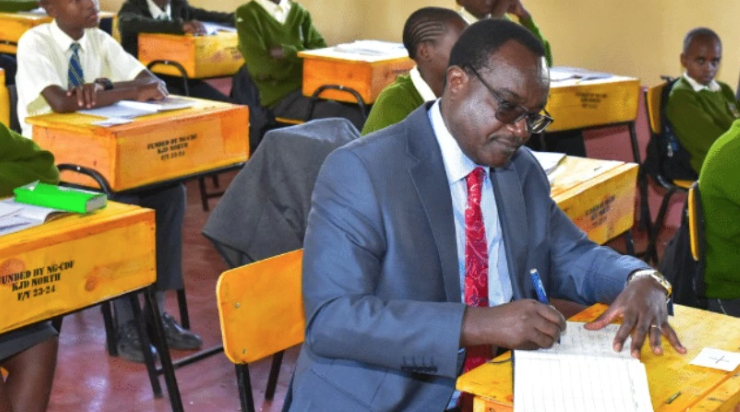
After months of intensive preparation and the stress of examinations, 1,130,669 grade nine students who sat the 2025 Kenya Junior Secondary Education Assessment (KJSEA) will finally get to see how they performed.
For many, this is the first major assessment in their secondary school journey, and the results are not just numbers—they represent years of hard work, dedication, and the promise of future opportunities.
As the results are released today, students are expected to experience a mix of excitement and anxiety.
Families, teachers, and communities will be closely following the outcome, as performance in the KJSEA plays a key role in shaping students’ academic pathways.
Beyond personal achievement, these results also determine which senior secondary schools students will transition to, making the next steps in their educational journey both thrilling and consequential.
Students will eagerly wait to learn which senior secondary school they have been assigned to, a moment that often brings a blend of relief, pride, and a touch of nervousness.
For many, the placement decision opens doors to schools that match their academic performance and aspirations, setting the stage for the next chapter of their education and the pursuit of their dreams.
Once the results are out, the process moves swiftly. According to the Ministry of Education, after the KJSEA results are released, senior school placement letters will be issued within one week.
The ministry said admission to senior schools begins on January 12, 2026.
Placement decisions will consider merit, learner preferences, aptitude, equity, and school capacity.
This tight schedule means parents need to be prepared. They are advised to have their child’s assessment number ready, ensure they have sufficient airtime or internet access, and start planning financially for the transition.
The Competency-Based Curriculum (CBC) has introduced a new dimension to senior school placement. Senior schools are now categorised into four tiers: National (C1), Extra-County (C2), County (C3), and Sub-County (C4). More importantly, they admit learners based on specialised learning pathways, which include: STEM (Science, Technology, Engineering, and Mathematics), Social Sciences (Humanities, social studies, and related fields), Arts & Sports (Creative arts, performing arts, and athletics) and STEAMS (Emerging blended pathways combining multiple areas)
This structure ensures that students can pursue areas aligned with their interests, strengths, and career aspirations, setting the foundation for holistic learning and development.
The Ministry of Education has already unveiled steps for parents and guardians of grade nine students to confirm the schools their children have been placed in.
Education Cabinet Secretary Julius Ogamba assured that the ministry is ready to implement the placement system seamlessly.
Under the new system, learners are required to select 12 schools based on preferred pathways: seven first-choice, three second-choice, and two third-choice schools. Of these, nine must be boarding schools (three within the home county and six outside), while three must be day schools within the learner’s sub-county.
Placement decisions consider learner choice, merit (from KJSEA and prior assessments), psychometric test results, regional equity or affirmative action, and school capacity.
Ogamba emphasised the importance of readiness in senior secondary schools.
“Senior schools should be ready to receive their first cohort of grade 10 learners by the 12th or from the 12th of January 2026. These learners transitioning under the competency-based education framework will require support to adapt successfully and coexist with students still undertaking the 844 curriculum in the institutions that they are joining," he said on December 5.
Special arrangements have also been made to ensure top-performing learners and those with special needs are given priority in their preferred schools.
The Ministry of Education indicated that the KJSEA examination results will be released before December 11 and that learners will be able to access their placement letters before December 25.
Ahead of the release of exam results, the ministry, in partnership with Safaricom, activated a secure service that allows parents and guardians to verify school selections quickly via SMS.
According to Safaricom, parents and guardians are expected to send the learner’s assessment number to 22263 at a cost of KSh 30, and they will receive the placement results.
“To check a KJSEA learner’s selected schools, send their assessment number to 22263. The SMS costs Sh30,” Safaricom said in a text message.
In addition to the SMS service, parents can also check school selections online by visiting the ministry’s dedicated portal at https://selection.education.go.ke/my-selections
Parents will be required to enter the learner’s assessment number, after which they can view the school's chosen learning pathways and the learning pathways selected.
The Kenya National Examinations Council (KNEC) has also activated a portal where parents can review the schools and academic pathways chosen by learners who have completed the KJSEA, ensuring transparency and ease of access to critical information.
The release of the KJSEA is expected to be a celebration of achievement, resilience, and the first major step under Kenya’s Competency-Based Curriculum.
For students, it is a stepping-stone to the next phase of learning, while for parents and educators, it provides an opportunity to guide learners into pathways that align with their strengths and aspirations.