Tanzania is grappling with a severe political and human rights crisis following its disputed general elections of October 29, 2025.
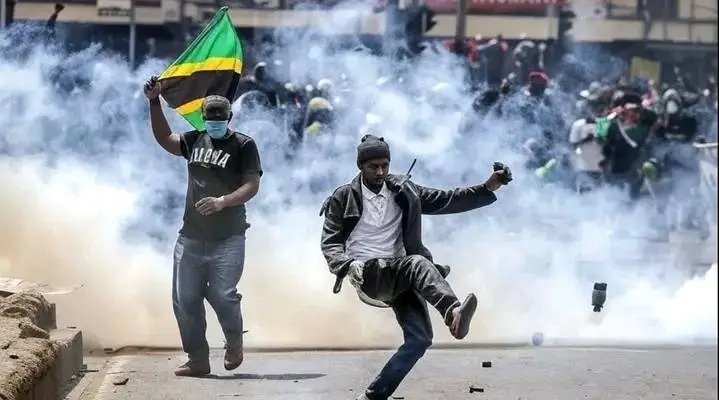
What began as post-election unrest has escalated into sustained calls for nationwide demonstrations, prompting a sweeping crackdown by government authorities.
The planned protests, collectively dubbed “D9” for the intended date of December 9—also Tanzania’s Independence Day—are viewed by activists as a continuation and expansion of the demonstrations that rocked major cities immediately after the polls.
The core issues driving the dissent are deep-seated, revolving around electoral legitimacy, accountability for alleged violence, and a perceived erosion of democratic space.
The surge in tensions is rooted in the aftermath of the October 29 general elections, in which incumbent President Samia Suluhu Hassan was declared the winner.
The polls were heavily criticised by opposition parties, international observers, and human rights organisations.
The Southern African Development Community (SADC) Electoral Observation Mission noted that conditions surrounding the vote fell short of the SADC Principles and Guidelines Governing Democratic Elections.
“In view of the Mission’s observations, and mindful of the preliminary nature of this statement, it is SEOM’s tentative conclusion that the 2025 General Election in Tanzania did not meet the standards of democratic elections,” the mission, led by former Malawi Speaker of Parliament Richard Msowoya, stated.
Ahead of the elections, the main opposition party, Chama cha Demokrasia na Maendeleo (CHADEMA), was barred from participating in the presidential race, while its leader, Tundu Lissu, was imprisoned on treason charges months earlier.
The candidate for the second-largest opposition party, ACT-Wazalendo, was also disqualified.
Reports of mass arbitrary detentions, media restrictions, internet shutdowns, and a general lack of transparency further marred the electoral process.
Protests erupted on Election Day in Dar es Salaam, Mwanza, and Arusha. According to credible human rights reports, the government response involved excessive and lethal force, including live ammunition, resulting in hundreds of deaths and more than 2,000 detentions.
Activists, including diaspora groups, rallied around December 9 as a focal point for renewed peaceful demonstrations.
The primary objective of the D9 movement is to demand justice and accountability for alleged extrajudicial killings, enforced disappearances, and mass detentions during the October crackdown. Social media has been a key mobilisation tool, prompting heightened surveillance and digital harassment by authorities.
Tanzanian authorities have taken a hardline stance, labelling the planned demonstrations as acts of “violence and destruction.”
On December 3, the police issued a nationwide ban on all Independence Day protests, warning that anyone attempting to participate would be arrested and characterising the D9 movement as a continuation of October’s unrest.
In the days leading up to December 9, major cities were placed under heightened security, with heavy deployment of police and military units, patrols, and roadblocks near key government installations.
Prime Minister Mwigulu Nchemba urged nonessential workers to stay home, a message echoed by Home Affairs Minister George Simbachawene.
“Those protests are not permitted and are unlawful … that is not a protest, that is a coup. Our security organs will handle them,” Simbachawene said.
Official Independence Day celebrations were cancelled, with President Hassan stating that funds would instead be used to repair infrastructure damaged during the election unrest.
Human Rights Watch reported a wave of wrongful arrests, including at least 10 activists and opposition supporters detained for online posts promoting the planned demonstrations.
In one case, police confirmed the arrest of an opposition member for “organising and promoting crime through a WhatsApp group under the umbrella of peaceful protests.”
Amid domestic and international criticism, the Office of the President announced the formation of an independent commission to investigate the post-election violence.
However, opposition and civil society groups criticised the commission for lacking independence, noting that it is composed entirely of former state officials and retired civil servants, with no representation from civil society or opposition parties.
On Tuesday, President Samia Suluhu Hassan urged citizens to uphold the country’s values of peace, unity, and solidarity as Tanzania marked its 64th Independence Day.
In a message on X, she congratulated citizens and reflected on the foundations that have sustained national stability since 1961.
“As we celebrate this important day, let us remind each other of the importance of safeguarding our national values of peace, unity, and solidarity,” she said, noting that these values remain central to Tanzania’s progress and sovereignty.