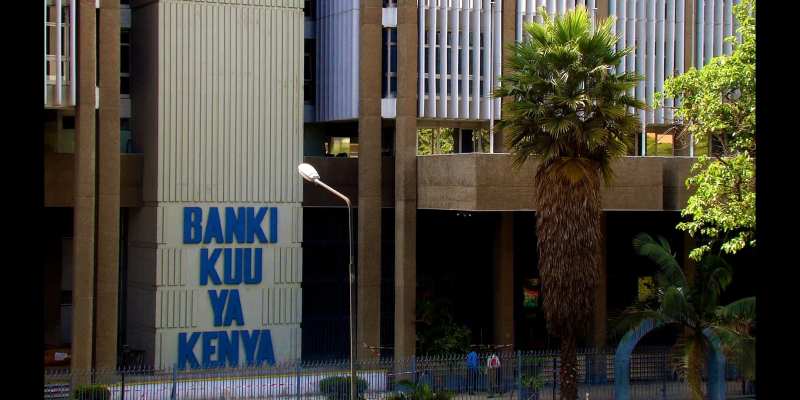
TODAY marks a shift in Kenya's banking sector as commercial banks begin implementing a new loan pricing model, a move poised to make credit more affordable and transparent for millions of borrowers.
Major lenders led by KCB Group have already adopted the revised formula that directly links interest rates to a market-driven benchmark, rewarding financially disciplined customers with lower costs.
This new framework replaces opaque internal bank rates with the Kenya Shilling Overnight Interbank Average as the new foundation for pricing variable-rate loans.
The final interest rate for a customer will be the KESONIA rate plus a premium, known as 'K', which reflects the borrower's individual risk profile, the bank's operational costs, and return to shareholders.
The core change for the average Kenyan is that a good repayment history will now directly translate into more affordable loans.
While borrowers with strong credit scores stand to benefit, those with a history of late payments could face higher interest rates, as the risk premium ('K') will be more explicit.
Central Bank of Kenya CBK Governor Kamau Thugge says the goal is not to lock anyone out of the credit market, but to ensure pricing is fair and reflects the actual risk.
Market experts say that the change in loan pricing will have minimal effect on banking counters at the Nairobi Securities Exchange, which have remained bullish on impressive Q3 results.
“The change is expected to foster transparency in loan pricing, cementing a more solid relationship between borrowers and lenders. It is a win-win situation. While good borrowers gain cheaper loans, the formula will help banks manage risks more effectively,’’ Chris Mungai, a money and capital markets analyst, told the Star.
The financial sector is expected to continue to dominate trading at NSE. Almost all listed lenders have gained over 40 per cent on that price valuation.
For instance, KCB began the year with a share price of Sh41.60 but has since gained 41.2 per cent on that price valuation, ranking it 29th on the NSE in terms of year-to-date performance.
\Co-operative Bank, on the other hand, began the year with a share price of Sh16.45 but has since gained 39.2 per cent on that price valuation, ranking it 30th on the NSE in terms of year-to-date performance.
Equity Bank has gained 29.9 per cent, Absa Kenya 21.1 per cent, BK Group 28.4 per cent, while HF Group and NCBA are leading, having gained 121 and 79 per cent respectively.
Last week, NSE generally reported reduced activities after the NASI, NSE 25 and NSE 20 share price indices decreased by 4.19 per cent, 4.51 per cent, and 4.78 per cent, respectively.
Market capitalization decreased by 4.19 percent while equity turnover and total shares traded increased by 3.74 per cent and 0.46 per cent respectively.
In the money market Treasury bill auction of November 27 received bids totalling Sh44.8 billion against an advertised amount of Sh24 billion, representing a performance of 186.7 per cent. Interest rate on the 91-day and 364-day Treasury bills declined marginally, and the 182-day remained stable.